
Arikok covers nearly 20% of Aruba’s total land area, making it one of the most significant protected spaces in the Caribbean. This vast extension not only safeguards fragile ecosystems but also allows visitors to understand the island’s true geography. While many travelers associate Aruba exclusively with tranquil beaches, Arikok reveals a rugged and surprisingly diverse terrain.
The transformation begins as soon as you leave the hotel zone and head east. Urban avenues gradually disappear, replaced by more rustic roads. Vegetation becomes lower and tougher, dominated by tall, twisted cacti that resemble natural sculptures. The ground shifts to ochre, reddish, and brown tones that contrast sharply with the brilliant blue sky.
From a sensory perspective, Arikok feels raw and powerful. The wind blows stronger here than on the western coast, bending trees and shrubs in a single direction. The sound of the ocean along the eastern shoreline is not soft or subtle—it is loud, rhythmic, and relentless, pounding against rocky cliffs. The air is dry, tinged with salt, constantly reminding you of the sea’s proximity.
One of Arikok’s most fascinating aspects is its geological diversity. The island blends ancient volcanic formations with coral limestone and sedimentary layers that tell millions of years of history. Walking through the park is like exploring an open-air geological museum. Rocks reveal visible strata, eroded textures, and dramatic shapes carved by centuries of wind and water.
The park’s caves are another highlight. Stepping inside creates an immediate contrast with the bright, sun-drenched exterior. The temperature feels slightly cooler, and natural light filters through openings in the rock, casting dramatic shadows along the walls. Some caves contain evidence of early human presence, adding cultural and historical depth to the natural setting.
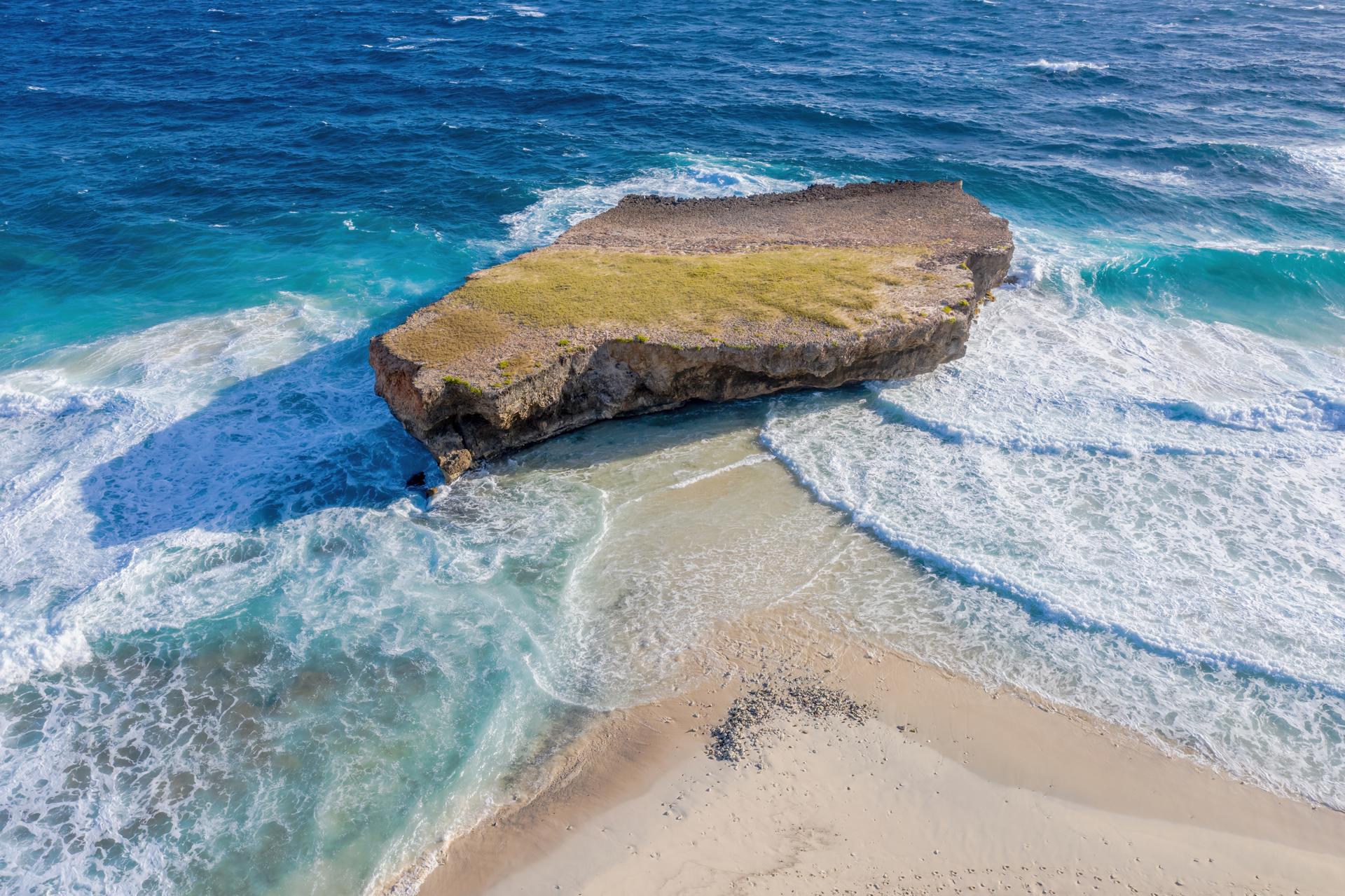
The eastern coastline is perhaps the most striking area of all. Here, the sea displays its full strength. Waves crash against rocky formations, sending plumes of white spray high into the air. The spectacle is hypnotic and a powerful reminder that the Caribbean is not always calm. Standing on these cliffs evokes a profound respect for nature’s force.
Another iconic feature within the park is the natural pool formed among volcanic rocks. This basin creates a sheltered space where seawater enters in a controlled flow, forming a relatively calm swimming area surrounded by dark stone. Reaching it requires planning—and often a suitable vehicle—but the reward is a uniquely dramatic scene.
From a time-efficiency standpoint, Arikok requires clear planning. It is not a destination for spontaneous wandering without preparation. However, with a focused itinerary, you can explore key highlights in four to five hours: a representative cave, a panoramic viewpoint, and a section of the eastern coast.
For travelers who value clear logistics and budget-conscious planning, here are key practical details:
Arikok National Park
Aruba, AW
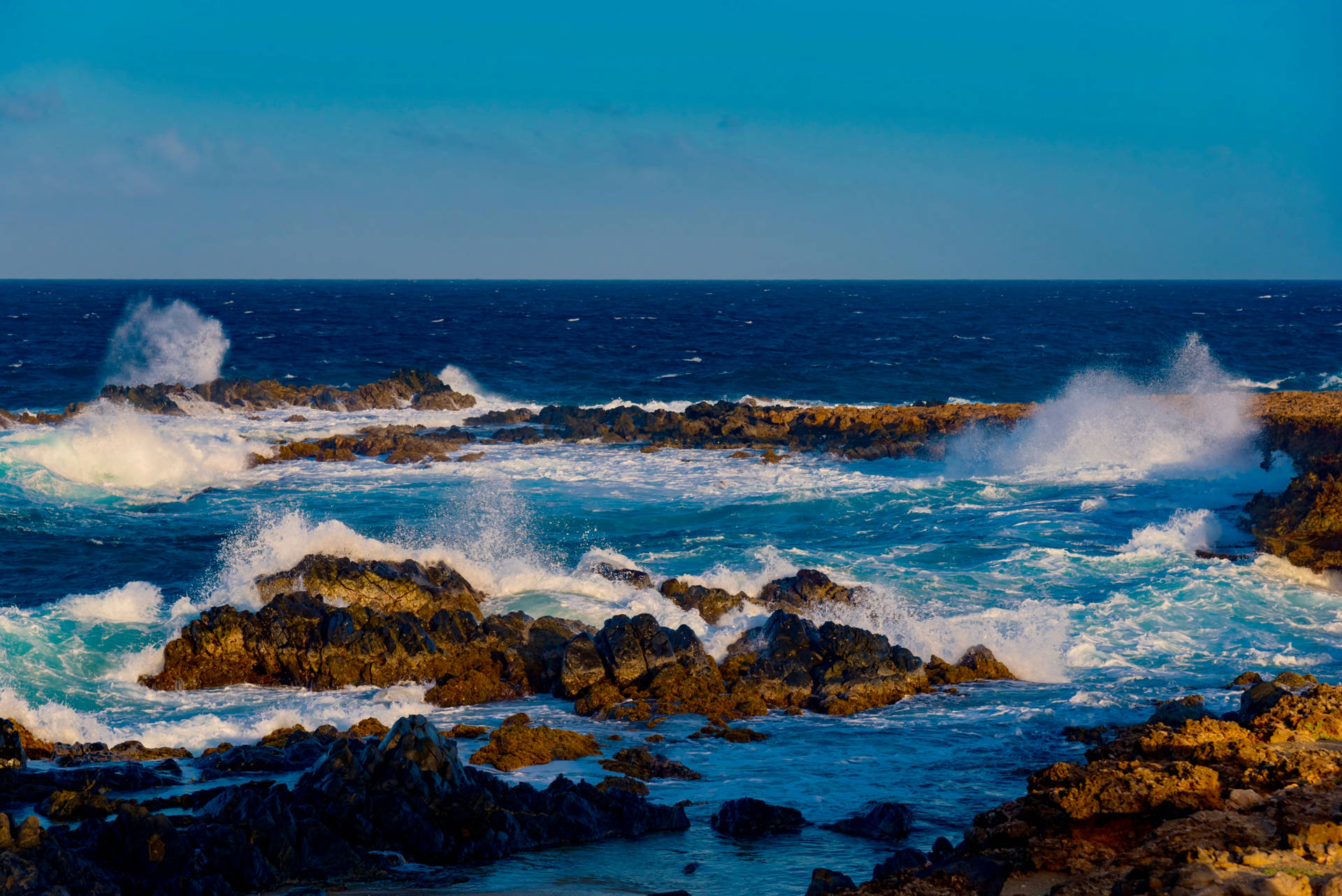
On the eastern edge of Aruba, where the landscape shifts dramatically and the Caribbean reveals its wildest character, stretches one of the island’s most impressive natural treasures: Arikok National Park. Here, you won’t find the classic postcard of endless white sand and calm turquoise waters. Instead, you’ll discover arid hills, wind-sculpted rock formations, mysterious caves, and a coastline where the ocean crashes with untamed force. For travelers arriving in Aruba through Arajet’s destination network and looking for what to do in Aruba beyond the traditional beach circuit, Arikok offers a strategic, authentic, and powerfully contrasting experience that can be efficiently organized in half a day or expanded into a full, well-planned adventure.
Important information before your visit
- Location: Eastern side of Aruba
- Distance from Oranjestad: Approximately 20 kilometers
- Estimated travel time: 30 to 45 minutes.
- Admission: Entrance fee required
- Best time to visit: Early morning, before peak heat and when light enhances the rock formations.
The ideal amount of time to explore Arikok ranges from 4 to 6 hours for a relaxed yet complete experience. With a full day available, you can venture onto additional trails and linger at multiple viewpoints without feeling rushed.
For photography enthusiasts, the park offers exceptional opportunities. Rocky textures capture light dramatically. Cacti create striking silhouettes against the open sky. The eastern coastline, with waves colliding against stone, provides high-impact compositions. Golden hour adds warmth and depth to the arid landscape.
Preparation is essential. Closed, sturdy footwear is recommended due to uneven terrain. Sun protection—including a hat and sunglasses—is crucial. Carrying sufficient water is vital, as the climate is dry and exposure can be prolonged. In some areas, a vehicle with higher traction makes access easier.
Beyond its visual drama, Arikok National Park plays a crucial role in the Aruba experience. It reveals the island’s authentic and less commercial side. There are no beachfront resorts here, no dense tourism infrastructure—only raw landscapes, steady wind, and terrain sculpted by time.
The experience also invites introspection. Walking in silence among towering cacti and ancient rock formations fosters a connection to the natural environment that is difficult to replicate in more developed areas.
As you return to the western coast and its calm turquoise waters, the contrast becomes striking. Aruba is no longer just a beach destination—it reveals itself as a diverse and multifaceted island.
For those flying with Arajet and searching for what to do in Aruba in a smart, varied, and well-organized way, Arikok National Park is essential. Dramatic, authentic, and visually powerful, it offers a different perspective of the Caribbean that perfectly complements the island’s famous beaches. It proves that making the most of your time also means exploring Aruba’s wild side—where wind, rock, and ocean tell a completely different story.
For photography enthusiasts, the park offers exceptional opportunities. Rocky textures capture light dramatically. Cacti create striking silhouettes against the open sky. The eastern coastline, with waves colliding against stone, provides high-impact compositions. Golden hour adds warmth and depth to the arid landscape.
Preparation is essential. Closed, sturdy footwear is recommended due to uneven terrain. Sun protection—including a hat and sunglasses—is crucial. Carrying sufficient water is vital, as the climate is dry and exposure can be prolonged. In some areas, a vehicle with higher traction makes access easier.
Beyond its visual drama, Arikok National Park plays a crucial role in the Aruba experience. It reveals the island’s authentic and less commercial side. There are no beachfront resorts here, no dense tourism infrastructure—only raw landscapes, steady wind, and terrain sculpted by time.
The experience also invites introspection. Walking in silence among towering cacti and ancient rock formations fosters a connection to the natural environment that is difficult to replicate in more developed areas.
As you return to the western coast and its calm turquoise waters, the contrast becomes striking. Aruba is no longer just a beach destination—it reveals itself as a diverse and multifaceted island.
For those flying with Arajet and searching for what to do in Aruba in a smart, varied, and well-organized way, Arikok National Park is essential. Dramatic, authentic, and visually powerful, it offers a different perspective of the Caribbean that perfectly complements the island’s famous beaches. It proves that making the most of your time also means exploring Aruba’s wild side—where wind, rock, and ocean tell a completely different story.