
The approach to the caves already hints at the site’s dual nature. From Willemstad, the drive is short and passes through areas where vegetation is low, sun-resistant, and shaped by constant wind. Nothing on the surface suggests that beneath this dry, rocky terrain lies a subterranean complex filled with millennia-old formations. That element of surprise is part of the appeal.
Upon entering the caves, the temperature shifts slightly. The air feels cooler and more humid. Natural light gradually fades, replaced by carefully placed illumination that highlights the irregular shapes of the stone. Stalactites descend from the ceiling like natural columns, while stalagmites rise from the floor, creating formations that appear sculpted by invisible hands.
From a sensory perspective, the experience is immersive and almost introspective. The soft echo of voices and footsteps expands through the underground chambers. A mineral scent—an earthy blend of moisture and ancient rock—reinforces the feeling of being in a space suspended in time. The texture of the walls, rough and undulating, reveals millions of years of slow, steady formation.
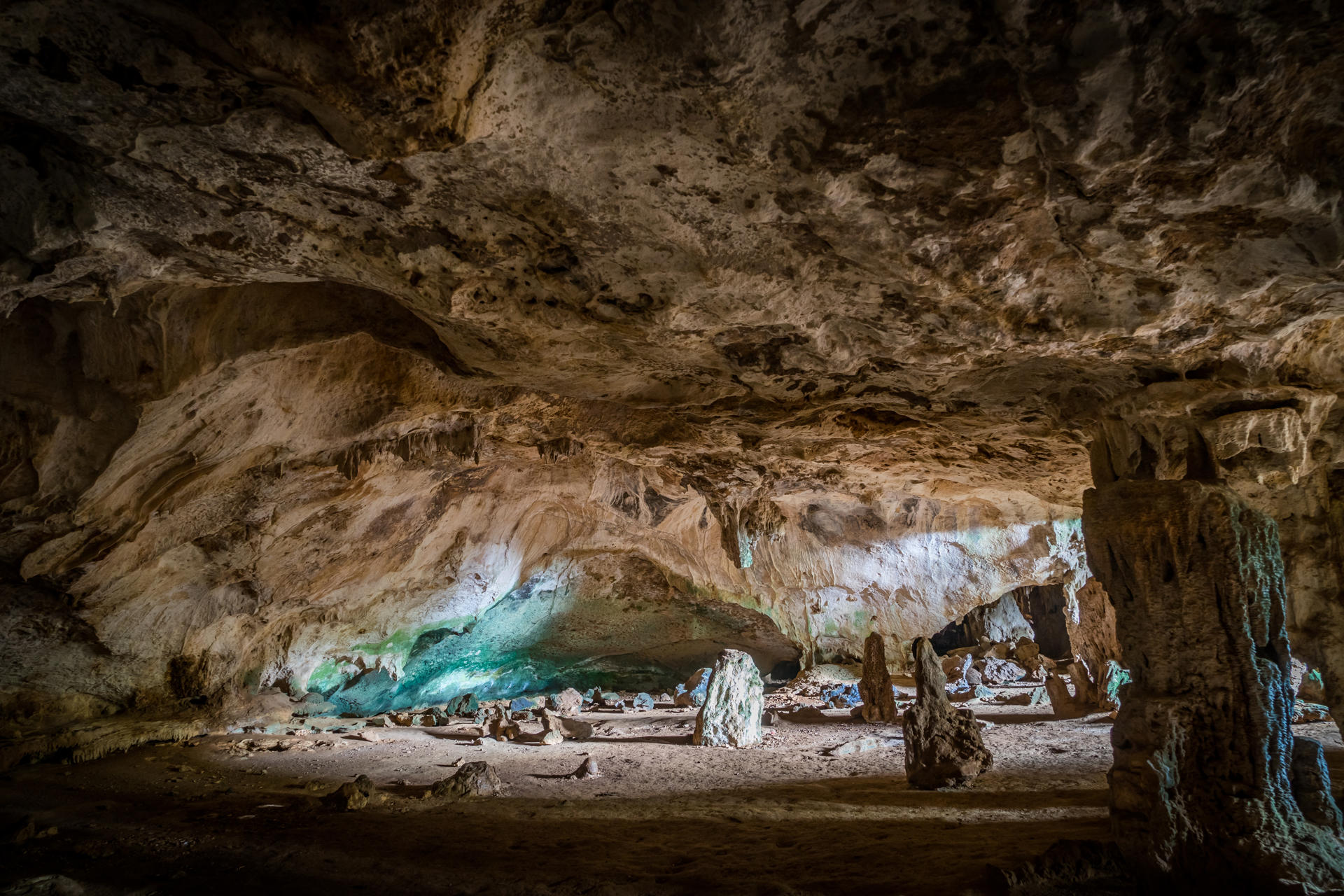
Geologically, the Hato Caves were formed when sea levels were higher and water eroded the limestone, creating tunnels and chambers that became exposed after the sea receded. This process left visible traces on the cave walls: horizontal lines marking former sea levels and cavities shaped by persistent water flow. Walking through the caves is, in essence, a lesson in Earth’s natural history.
One of the most fascinating aspects of the tour is the variety of mineral formations. Some stalactites are thin and elongated, others thick and curved. Strategic lighting creates dramatic shadow play, giving each chamber its own personality. In certain sections, formations cluster together in patterns that resemble curtains, columns, or abstract sculptures.
Beyond their geological value, the caves also carry historical significance. At different times, they served as shelter for local populations. In some areas, traces of early human presence remain visible, adding cultural depth to the visit and reinforcing the caves’ role not only as natural wonders but also as historical refuges.
From a time-efficiency standpoint, the Hato Caves are an excellent addition to a well-planned itinerary. The guided tour typically lasts between 45 minutes and one hour, making it easy to incorporate into a half-day schedule. It pairs seamlessly with a visit to Willemstad or a nearby beach later in the day, offering a contrasting experience without requiring a full-day commitment.
For travelers who appreciate clear logistics and budget-conscious planning, consider these practical details:
Hato Caves
Curazao, CW
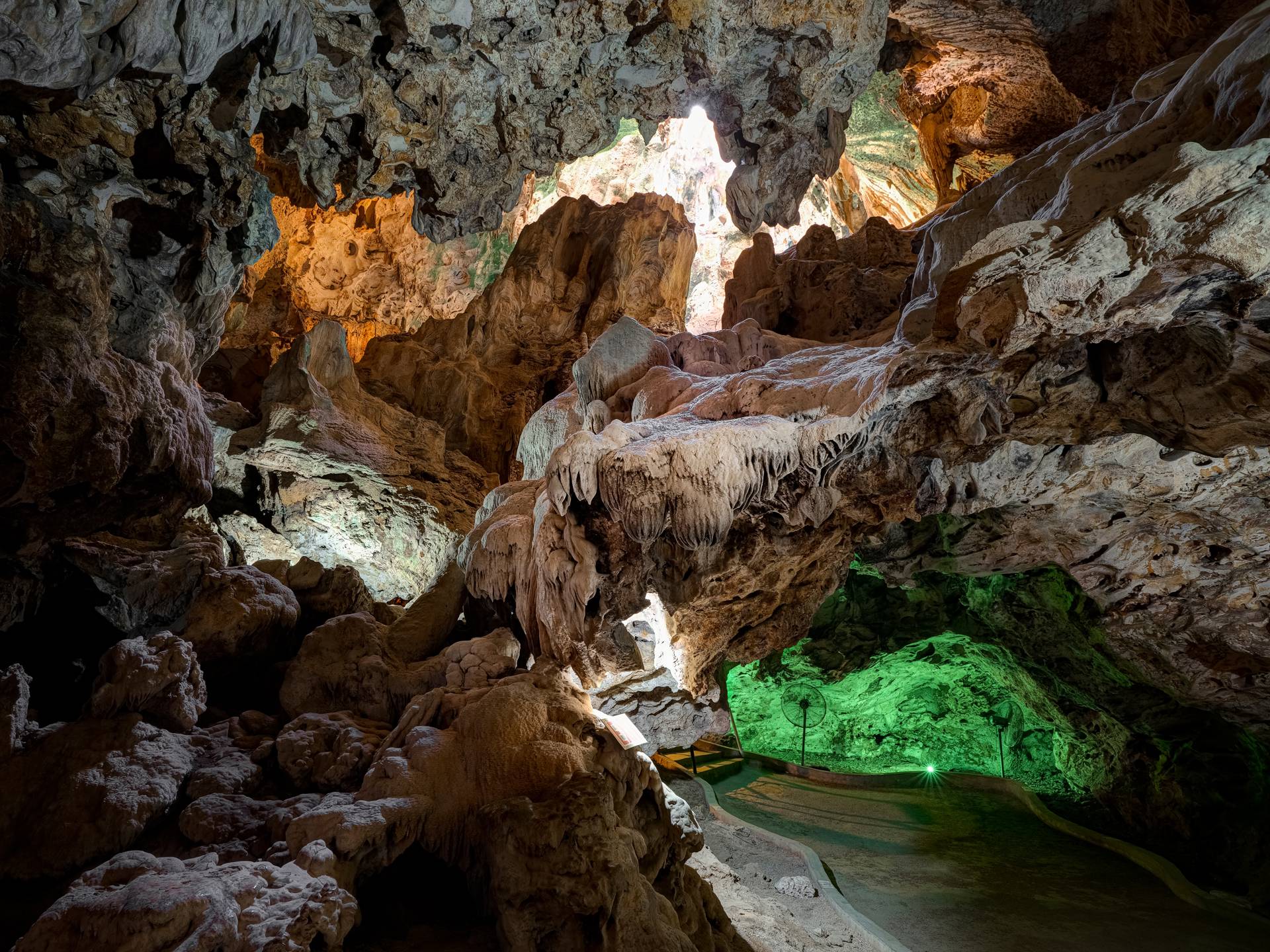
On Curaçao’s northern coast, where arid landscapes dominate the surface and towering cacti seem to guard the horizon, an entirely different world lies hidden underground: the Hato Caves. This limestone cave system, formed thousands of years ago by the persistent action of the sea and natural erosion, offers an experience that contrasts radically with the traditional image of the Caribbean. There is no white sand or turquoise water here—only stalactites hanging like mineral sculptures, subterranean chambers wrapped in shadow, and a silence that amplifies every step. For travelers arriving in Curaçao through Arajet’s destination network and looking for what to do on the island beyond the beaches, the Hato Caves represent a strategic, cultural, and geological experience that can be enjoyed in just a few perfectly organized hours.
Important information before your visit
- Location: Northern coast of Curaçao, near the airport
- Distance from Willemstad: Approximately 10 kilometers
- Estimated travel time: 15 to 20 minutes by car.
- Entrance: Admission fee required
- Tour duration: 45 minutes to 1 hour
- Best time to visit: Morning hours, when crowds are lighter.
The ideal total time for the experience is about 1.5 to 2 hours, including arrival, the guided tour, and brief exploration of the surrounding area. This makes it a smart option for travelers with limited time who want a meaningful cultural activity without dedicating an entire day.
For photography enthusiasts, the caves present an intriguing challenge. Low-light conditions require steady hands and appropriate camera settings to capture the formations clearly. Shadows and contrasts create dramatic compositions, especially in larger chambers where stalactites gather in intricate clusters. Protecting equipment from humidity is essential.
In terms of preparation, closed-toe shoes with good grip are recommended, as some surfaces may be damp. The interior temperature is slightly cooler than outside but does not require heavy clothing. Following the guide’s instructions is important to preserve the delicate natural environment, as these formations take centuries to grow just a few centimeters.
Beyond their visual impact, the Hato Caves play an important role in any trip to Curaçao: they reveal the island’s geological and subterranean dimension. While the beaches showcase surface beauty, the caves allow visitors to understand the natural processes that shaped the territory over thousands of years.
The experience also invites reflection. Walking through a space that formed over millennia offers a new perspective on time. Each drop of water that contributed to a stalactite’s growth required centuries to create just a few centimeters. That slow transformation stands in stark contrast to the fast pace of modern life.
Stepping back into the Caribbean sunlight after the tour is striking. The bright sky and arid landscape feel even more intense after the underground dimness. This duality—sunlit surface and shadowed interior—deepens one’s appreciation of the island’s complexity.
For those flying with Arajet and searching for what to do in Curaçao in a smart, diverse, and well-organized way, the Hato Caves are an essential experience. Accessible, educational, and visually surprising, they offer a different perspective on the Caribbean in just a few strategically planned hours. They prove that making the most of your time also means exploring beneath the surface, discovering how nature sculpts stone over millennia, and allowing underground silence to tell a story the sea began writing thousands of years ago.
For photography enthusiasts, the caves present an intriguing challenge. Low-light conditions require steady hands and appropriate camera settings to capture the formations clearly. Shadows and contrasts create dramatic compositions, especially in larger chambers where stalactites gather in intricate clusters. Protecting equipment from humidity is essential.
In terms of preparation, closed-toe shoes with good grip are recommended, as some surfaces may be damp. The interior temperature is slightly cooler than outside but does not require heavy clothing. Following the guide’s instructions is important to preserve the delicate natural environment, as these formations take centuries to grow just a few centimeters.
Beyond their visual impact, the Hato Caves play an important role in any trip to Curaçao: they reveal the island’s geological and subterranean dimension. While the beaches showcase surface beauty, the caves allow visitors to understand the natural processes that shaped the territory over thousands of years.
The experience also invites reflection. Walking through a space that formed over millennia offers a new perspective on time. Each drop of water that contributed to a stalactite’s growth required centuries to create just a few centimeters. That slow transformation stands in stark contrast to the fast pace of modern life.
Stepping back into the Caribbean sunlight after the tour is striking. The bright sky and arid landscape feel even more intense after the underground dimness. This duality—sunlit surface and shadowed interior—deepens one’s appreciation of the island’s complexity.
For those flying with Arajet and searching for what to do in Curaçao in a smart, diverse, and well-organized way, the Hato Caves are an essential experience. Accessible, educational, and visually surprising, they offer a different perspective on the Caribbean in just a few strategically planned hours. They prove that making the most of your time also means exploring beneath the surface, discovering how nature sculpts stone over millennia, and allowing underground silence to tell a story the sea began writing thousands of years ago.