
From the very first step into the center, one thing becomes clear: this is not a space frozen in time, but a place that continues to function. The streets are full of movement—people working, walking, talking, crossing paths without pause. History is not presented as a backdrop, but as an active part of daily life. This coexistence between past and present is one of the most powerful aspects of Lima’s Historic Center.
The urban layout preserves its colonial logic, with straight streets, broad plazas, and buildings organized around central public spaces. Walking these streets allows visitors to read the city easily, even on a first visit. Everything seems to follow a clear hierarchy: plazas create order, streets connect, and buildings frame the experience. This spatial clarity is a major advantage for travelers who want to make the most of their time.
The architecture of the Historic Center is varied and expressive. Balconies, façades, and interior courtyards tell stories from different eras without the need for formal explanations. Some buildings visibly show the passage of time; others remain more restrained and solid. What stands out is not just each individual structure, but the cohesive visual identity they form together recognizable and deeply rooted in place.
From a sensory perspective, the center is intense and stimulating. The soundscape is constant: footsteps on pavement, overlapping conversations, nearby vehicles, occasional music drifting in and out. The eye is drawn to details, colors, and contrasts between shadow and light. The air carries the distinctive scent of a living historic district—one where activity never fully stops. All of this creates an authentic and direct urban experience.
One of the Historic Center’s greatest strengths is its human dimension. Despite its historical and political importance, it does not feel distant or solemn. It is a place where everyday life unfolds in full view. Sitting for a few minutes in a plaza or wandering without a fixed route allows visitors to observe social dynamics that reveal more than any guidebook could. Here, the city shows itself as it truly is.
The center also helps visitors understand Lima’s role in the countries and the region’s history. Without needing academic detail, it becomes evident that this was a key hub of organization, power, and administration for centuries. That importance is reflected in the scale of its public spaces and in the way the center remains a fundamental reference point within today’s city.
From a time-efficiency standpoint, the Historic Center is a strategic choice. Within a relatively compact area, it concentrates some of Lima’s most significant elements: plazas, historic buildings, and vibrant urban life. This allows travelers to gain a deep understanding of the destination without dedicating full days or making long transfers.
For those who value clear logistics and budget-friendly travel, here are some practical details to keep in mind:
Historic Center of Lima
Lima, PE
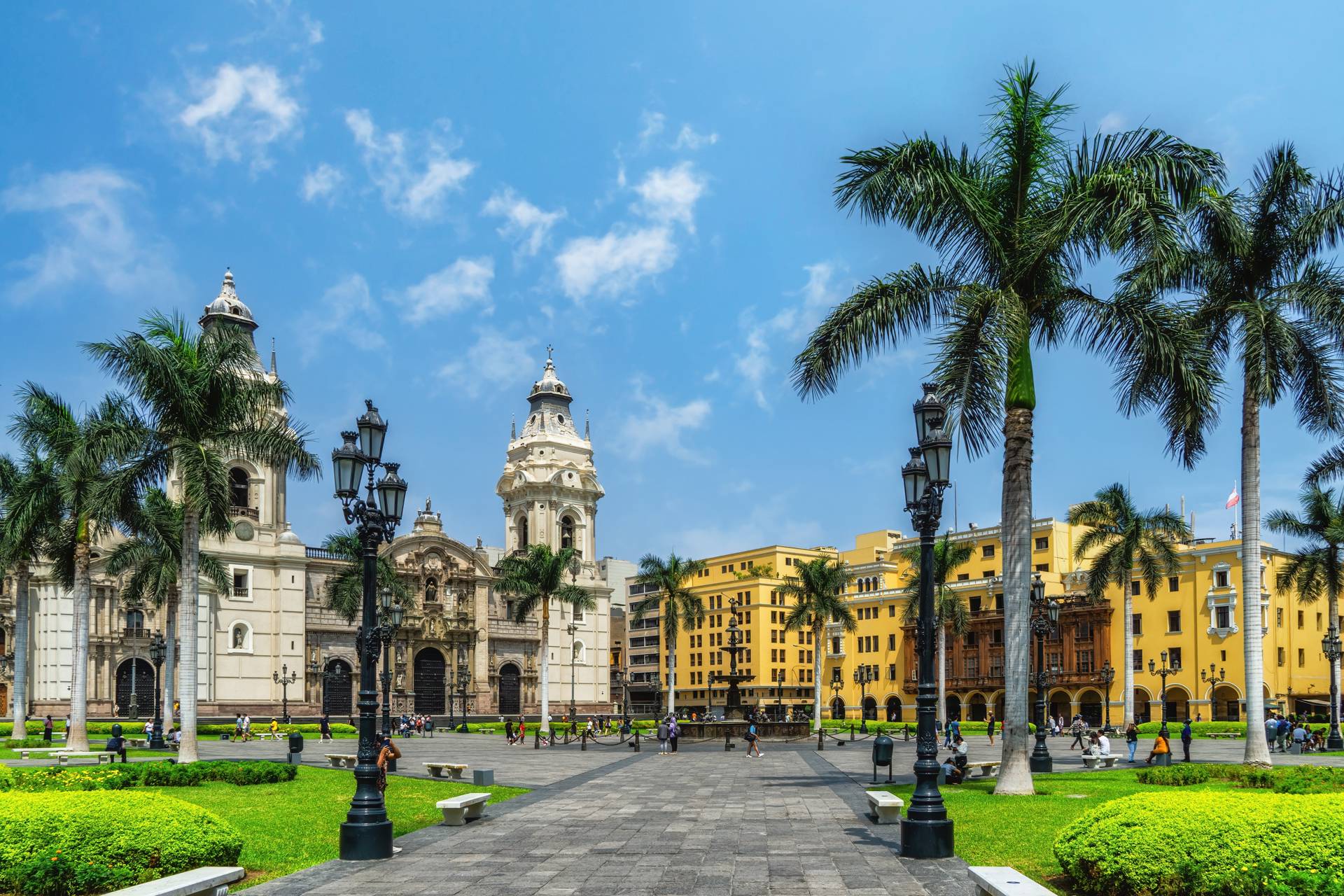
Lima is a complex, expansive city shaped by layers of history that overlap one another. To truly understand it, there is no better starting point than its Historic Center. This is where the city was born, where its first streets were laid out, and where an essential part of its identity still beats today. For travelers arriving in Peru through Arajet’s destination network and looking for what to do in Lima efficiently—without getting lost in long distances or scattered itineraries—the Historic Center offers a concentrated experience that brings centuries of history into focus in just a few hours.
Important information before your visit
- Location: situated in the city’s original founding core.
- Estimated travel time: 15 to 30 minutes from modern central districts.
- Admission: free, as it is a public area.
- Recommended visiting hours: during the day.
- Best time to go: in the morning, when activity is lively but more orderly.
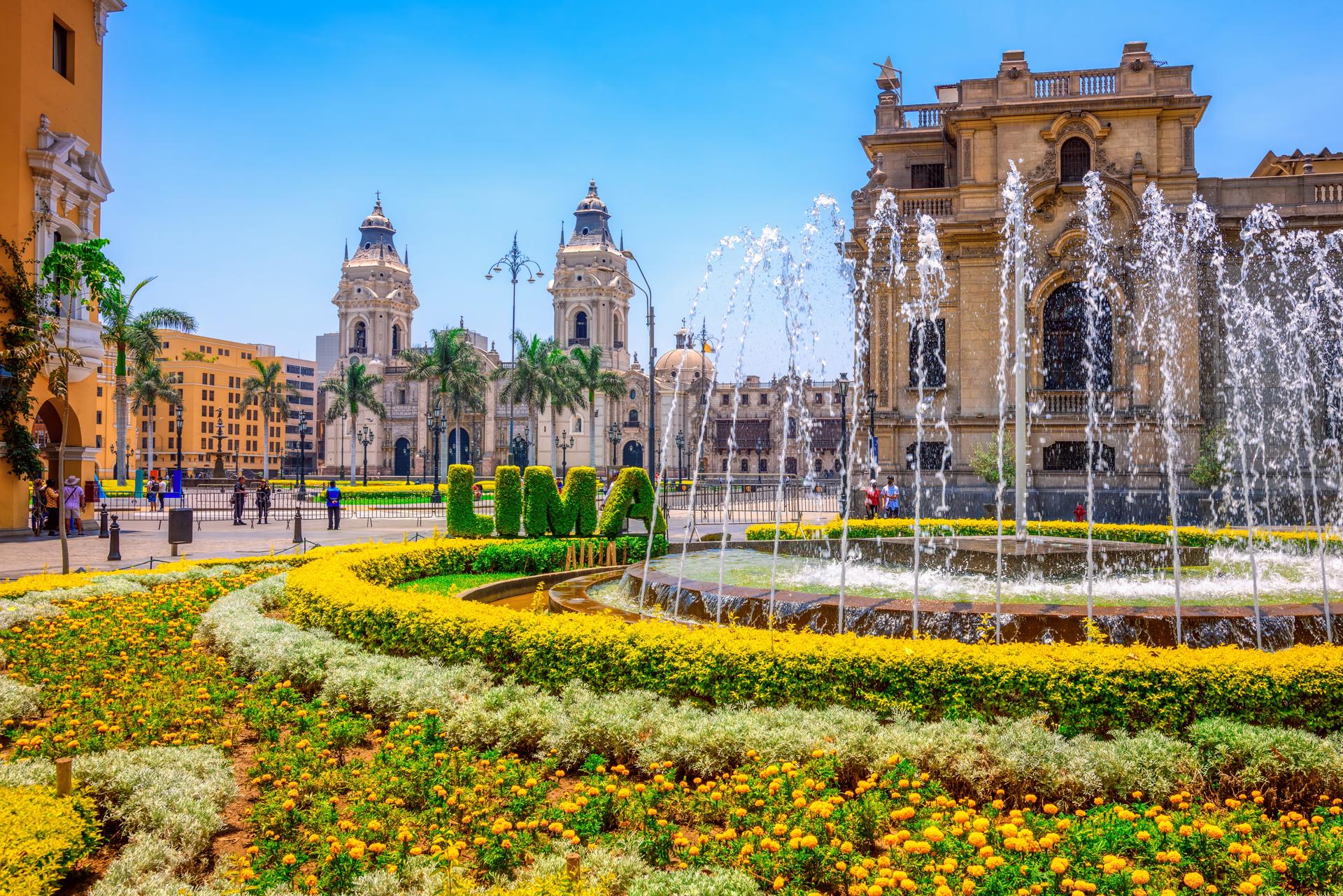
The ideal time to explore the Historic Center ranges from one to two hours. This allows for a relaxed walk, time to observe architectural details, sit in a plaza, and absorb the atmosphere without feeling overwhelmed. For those who wish to go deeper, it is easy to extend the visit and uncover additional layers in subsequent walks.
Photography enthusiasts will find constant opportunities here. It’s not only about capturing buildings, but about documenting life-filled urban scenes. Balconies, narrow streets, open plazas, and people in motion create rich and expressive compositions. Morning light is often the most favorable, highlighting volumes and casting defined shadows without harsh contrasts.
Preparation is simple but important. Comfortable footwear is essential, as most of the experience is on foot. Light clothing and sun protection are recommended during the day. Keeping personal belongings secure is part of responsible urban travel, as in any active historic district.
On a deeper level, Lima’s Historic Center plays a key role in the journey: it provides context. It explains how the city was formed, how power was organized, and how that legacy continues to shape contemporary Lima. This understanding transforms the rest of the visit, allowing other neighborhoods to be seen as extensions of a shared story.
The center also invites reflection on continuity. Here, the past was not replaced but adapted. Spaces continue to be used, reinterpreted, and inhabited. That capacity for adaptation is one reason the Historic Center remains relevant—not merely as a memory, but as a living part of the city.
As you move through its streets, Lima stops being abstract. It becomes tangible, walkable, and understandable. Visitors begin to recognize rhythms, contrasts, and patterns they will later notice elsewhere in the city. That clarity is one of the visit’s greatest rewards.
When leaving the Historic Center for other areas of Lima, perception shifts. The city no longer feels fragmented, but connected by a historical thread that gives it coherence. That connection stays with travelers throughout the rest of their journey, enriching each subsequent experience.
For those flying with Arajet and wondering what to do in Lima in a smart and well-planned way, the Historic Center is an essential stop. Accessible, intense, and deeply authentic, it offers one of the destination’s most complete experiences in a short amount of time. It is clear proof that making the most of your time does not always mean going farther—it means walking thoughtfully through the places where the city first began to tell its story.
Photography enthusiasts will find constant opportunities here. It’s not only about capturing buildings, but about documenting life-filled urban scenes. Balconies, narrow streets, open plazas, and people in motion create rich and expressive compositions. Morning light is often the most favorable, highlighting volumes and casting defined shadows without harsh contrasts.
Preparation is simple but important. Comfortable footwear is essential, as most of the experience is on foot. Light clothing and sun protection are recommended during the day. Keeping personal belongings secure is part of responsible urban travel, as in any active historic district.
On a deeper level, Lima’s Historic Center plays a key role in the journey: it provides context. It explains how the city was formed, how power was organized, and how that legacy continues to shape contemporary Lima. This understanding transforms the rest of the visit, allowing other neighborhoods to be seen as extensions of a shared story.
The center also invites reflection on continuity. Here, the past was not replaced but adapted. Spaces continue to be used, reinterpreted, and inhabited. That capacity for adaptation is one reason the Historic Center remains relevant—not merely as a memory, but as a living part of the city.
As you move through its streets, Lima stops being abstract. It becomes tangible, walkable, and understandable. Visitors begin to recognize rhythms, contrasts, and patterns they will later notice elsewhere in the city. That clarity is one of the visit’s greatest rewards.
When leaving the Historic Center for other areas of Lima, perception shifts. The city no longer feels fragmented, but connected by a historical thread that gives it coherence. That connection stays with travelers throughout the rest of their journey, enriching each subsequent experience.
For those flying with Arajet and wondering what to do in Lima in a smart and well-planned way, the Historic Center is an essential stop. Accessible, intense, and deeply authentic, it offers one of the destination’s most complete experiences in a short amount of time. It is clear proof that making the most of your time does not always mean going farther—it means walking thoughtfully through the places where the city first began to tell its story.