
The journey to Atitlán is an essential part of the experience. From Guatemala City or Antigua, the road gradually climbs into the highlands. The scenery shifts: vegetation becomes denser in certain stretches, crops appear in natural terraces, and the air grows noticeably cooler as the altitude increases. Then, after a panoramic curve, the lake reveals itself in full magnitude. It is a moment that often inspires silence. The deep blue surface contrasts dramatically with the green mountains and the imposing silhouettes of the surrounding volcanoes.
Lake Atitlán fills an ancient volcanic caldera formed by a massive eruption thousands of years ago. This geological origin explains its remarkable depth and almost circular shape. The volcanoes that encircle it are not merely scenic backdrops; they are integral to the structure that gave birth to the lake. This connection between water and fire is one of the destination’s most fascinating elements.
From a sensory perspective, Atitlán is dynamic and immersive. The water’s color shifts throughout the day: deep blue under the intense midday sun, silvery in the early morning when mist hovers above the surface, and golden at sunset when the sky turns warm with layered hues. Winds can rise unexpectedly, creating small waves that gently break along the shore. The air feels fresh, carrying subtle aromas of mountain vegetation and moisture.
One of Lake Atitlán’s greatest strengths is the cultural diversity surrounding its shores. The lakeside towns maintain traditional textile craftsmanship, vibrant local markets, and community-based ways of life that are central to Guatemalan identity. Each town has its own character, palette of colors, and rhythm. Yet visitors do not need to explore every village to grasp the essence of the lake. Even a focused, well-planned experience reveals the harmony between culture and landscape.
Traveling across the lake by boat is one of the most recommended experiences. From the water, the volcanoes appear even more monumental, and the houses lining the shore resemble delicate brushstrokes of color against the green hillsides. The perspective changes entirely: the lake is no longer a scenic background—it becomes the protagonist.
From a time-efficiency standpoint, Lake Atitlán requires strategic planning due to its distance from the capital. However, the travel investment is more than justified by the richness of the experience. Spending at least one night allows visitors to enjoy both sunset and sunrise—two moments when the lake reveals its most dramatic character.
Sunrise at Atitlán is particularly memorable. The water is often calmer, and the sky gradually brightens behind the volcanoes. The first rays of sunlight paint the surface with soft reflections while silence prevails. It is an ideal time for quiet contemplation.
Sunset, on the other hand, transforms the landscape into a warm and immersive scene. The mountains turn into dark silhouettes, and the sky fills with orange and pink tones mirrored across the water. This natural spectacle occurs daily, yet it never feels the same twice.
For travelers who prioritize clear logistics and budget-friendly travel, consider these practical details before planning your visit:
Lake Atitlan
Ciudad de Guatemala, GT
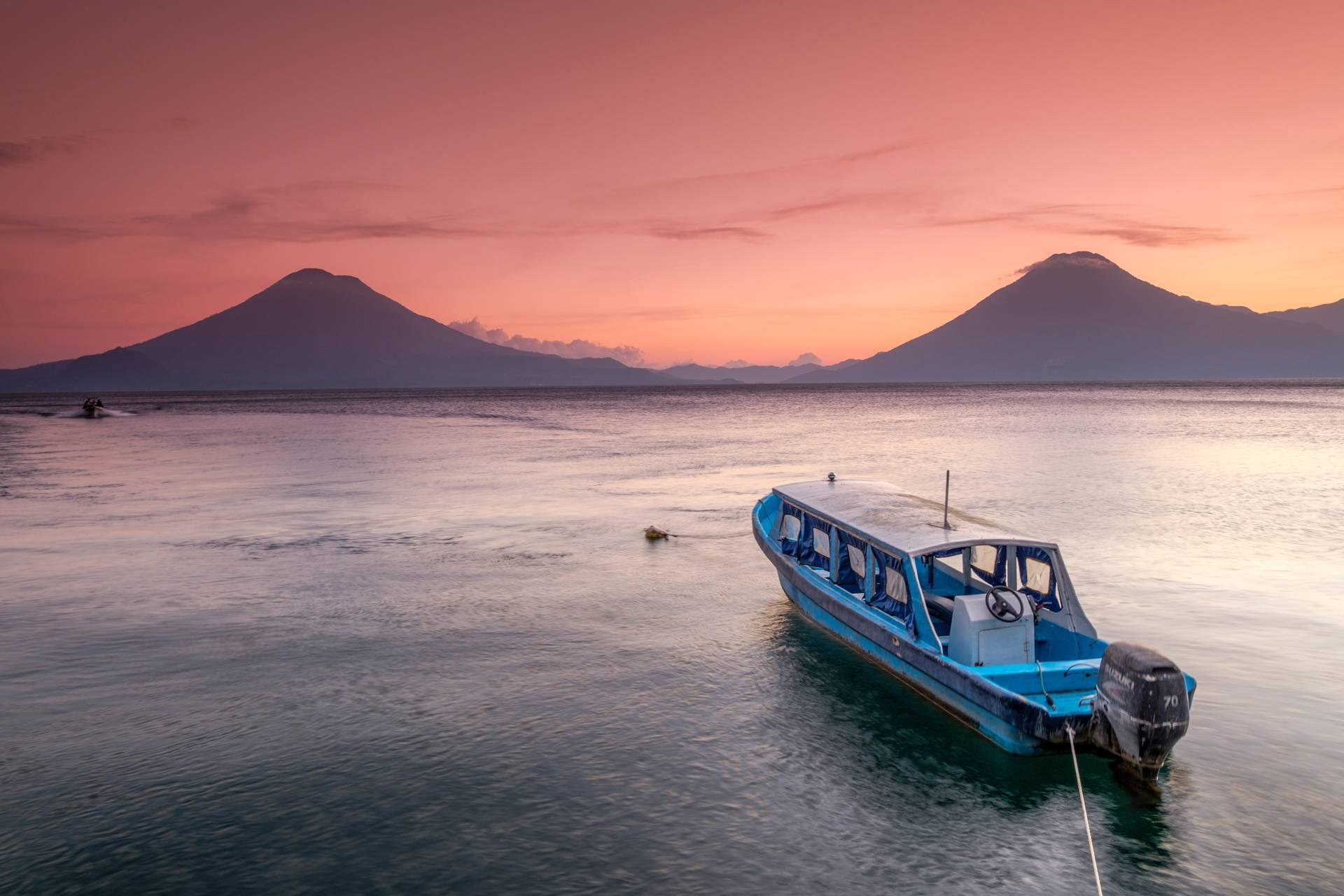
In Guatemala’s western highlands, surrounded by three volcanoes that seem to guard the horizon and by Indigenous communities that preserve centuries-old traditions, lies one of the most breathtaking landscapes in Latin America: Lake Atitlán. It is not simply a lake; it is an experience that blends geology, living culture, and an atmosphere that invites you to slow down and observe with intention. For travelers arriving in Guatemala through Arajet’s destination network and searching for what to do in the country in a strategic, meaningful, and memorable way, Lake Atitlán represents one of the most complete experiences in Guatemala tourism.
Important information before your visit
- Distance from Guatemala City: Approximately 125 kilometers
- Estimated travel time: Between 3 and 4 hours by road.
- Lake access: Free; boat transfers between towns require payment.
- Recommended visiting hours: All day, with special emphasis on sunrise and sunset.
- Best time to visit: During the dry season, when skies are clearer and volcano visibility is higher.
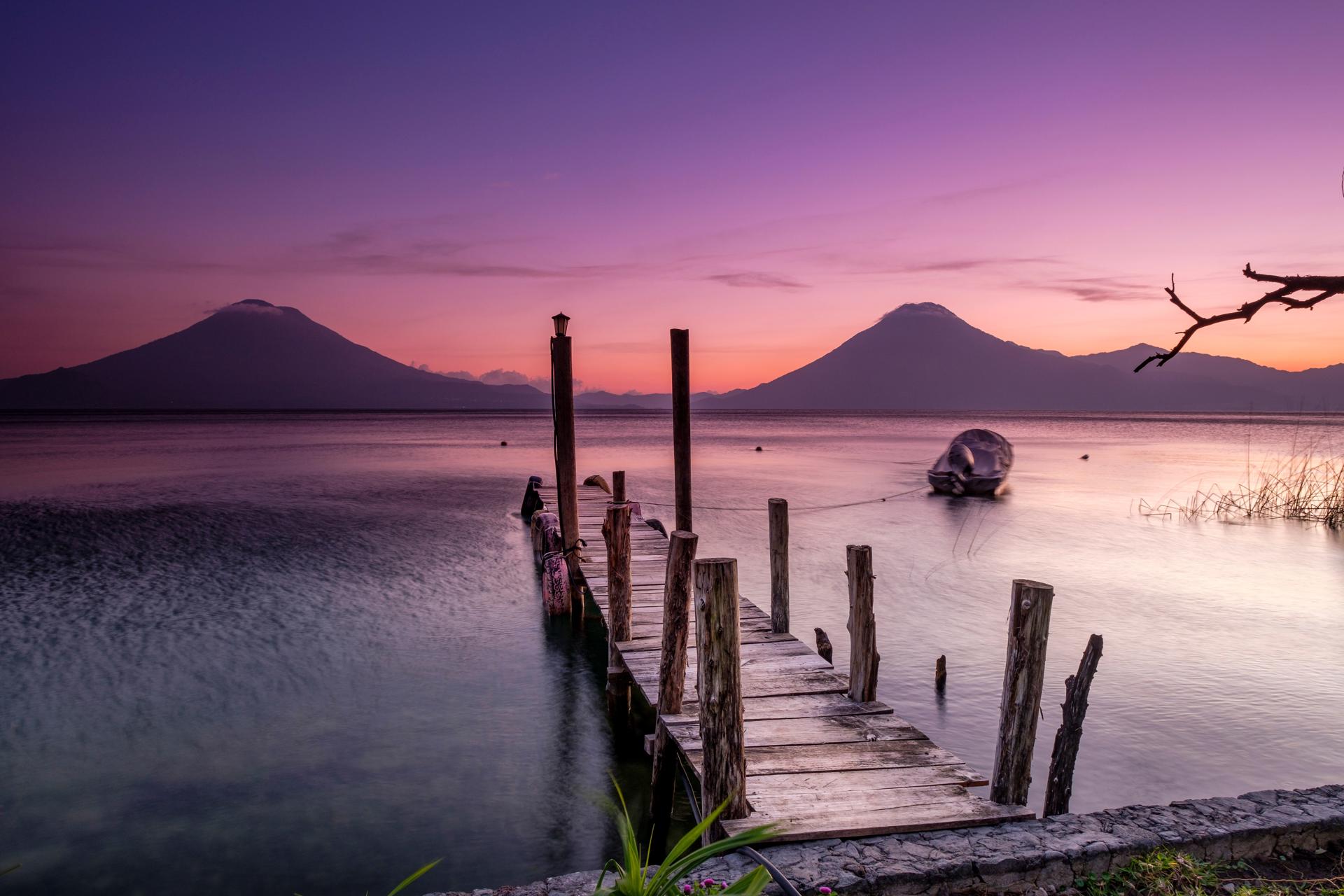
The ideal amount of time to experience Lake Atitlán is at least 24 hours. This allows for exploring one or two lakeside towns, taking a boat ride, and observing the changing light throughout the day. With two nights, the experience becomes more relaxed and immersive.
For photography enthusiasts, the lake offers extraordinary opportunities. Compositions that combine water, volcanoes, and local architecture create visually striking images. Sunrise typically provides the softest light and the clearest reflections. Wide-angle perspectives help capture the full magnitude of the landscape.
In terms of preparation, lightweight clothing works well during the day, but bringing an extra layer is advisable for the evening, as temperatures drop significantly in the highlands. Sun protection is essential due to the altitude and strong UV exposure. Comfortable footwear is helpful for walking along cobblestone streets or nearby trails.
Beyond its evident beauty, Lake Atitlán plays a fundamental role in any trip to Guatemala: it showcases the harmonious interaction between nature and culture. Here, the landscape is not merely a backdrop—it is an integral part of daily life for surrounding communities.
The experience also encourages introspection. Sitting by the lake, watching the shifting colors of the water, and listening to the wind creates a mental pause that is rare in urban environments. That quiet moment often becomes one of the most powerful memories of the journey.
As you leave Atitlán and return toward the capital, the image of volcanoes reflected in the water lingers in your mind. It is more than a postcard view—it is a feeling of vastness, serenity, and connection to the natural world.
For those flying with Arajet and looking for what to do in Guatemala in a smart, authentic, and well-planned way, Lake Atitlán is an essential experience. Although it requires a longer journey than destinations closer to the capital, its visual and cultural impact justifies every kilometer traveled. It proves that making the most of your time also means dedicating it to places where water rests inside an ancient volcanic crater and the landscape achieves a harmony that is truly unforgettable.
For photography enthusiasts, the lake offers extraordinary opportunities. Compositions that combine water, volcanoes, and local architecture create visually striking images. Sunrise typically provides the softest light and the clearest reflections. Wide-angle perspectives help capture the full magnitude of the landscape.
In terms of preparation, lightweight clothing works well during the day, but bringing an extra layer is advisable for the evening, as temperatures drop significantly in the highlands. Sun protection is essential due to the altitude and strong UV exposure. Comfortable footwear is helpful for walking along cobblestone streets or nearby trails.
Beyond its evident beauty, Lake Atitlán plays a fundamental role in any trip to Guatemala: it showcases the harmonious interaction between nature and culture. Here, the landscape is not merely a backdrop—it is an integral part of daily life for surrounding communities.
The experience also encourages introspection. Sitting by the lake, watching the shifting colors of the water, and listening to the wind creates a mental pause that is rare in urban environments. That quiet moment often becomes one of the most powerful memories of the journey.
As you leave Atitlán and return toward the capital, the image of volcanoes reflected in the water lingers in your mind. It is more than a postcard view—it is a feeling of vastness, serenity, and connection to the natural world.
For those flying with Arajet and looking for what to do in Guatemala in a smart, authentic, and well-planned way, Lake Atitlán is an essential experience. Although it requires a longer journey than destinations closer to the capital, its visual and cultural impact justifies every kilometer traveled. It proves that making the most of your time also means dedicating it to places where water rests inside an ancient volcanic crater and the landscape achieves a harmony that is truly unforgettable.