
For travelers arriving in Ecuador through Arajet's destination network, Las Peñas provides a unique opportunity to experience the city's historical essence without leaving the urban center. Its strategic location, pedestrian-friendly atmosphere, and rich architecture make it an ideal stop for visitors looking to maximize limited travel time while discovering the most traditional side of Guayaquil.
The first impression upon entering Las Peñas is immediate. The atmosphere changes completely compared to the modern avenues and commercial districts of the city. Cobblestone streets, historic houses, and brightly painted facades create a calm and bohemian environment where every corner seems to hold a different story.
Las Peñas is considered the oldest neighborhood in Guayaquil. Its origins date back to the colonial era, when this riverside sector began developing due to its strategic and commercial importance. For centuries, merchants, sailors, and traditional families lived along these streets, turning the neighborhood into one of the city's main cultural and economic centers.
Despite fires, reconstructions, and urban transformation throughout its history, Las Peñas managed to preserve much of its architectural identity. Today, walking through the neighborhood allows visitors to observe a fascinating blend of coastal tradition, colonial influence, and modern urban restoration.
One of the district's greatest strengths is precisely its sense of authenticity. Unlike some tourist areas that feel heavily reconstructed or artificial, Las Peñas maintains an organic personality. The facades do not resemble decorative scenery; instead, they reflect the atmosphere of a neighborhood that continues to live and evolve naturally alongside the city.
The experience often begins near the Guayas River, where the contrast between historic architecture and Guayaquil's modern skyline becomes immediately striking. From several viewpoints, visitors can observe how the contemporary city expanded around this original urban core while maintaining a strong visual connection to the river.
Walking through the neighborhood is meant to be a slow and immersive experience. Las Peñas is not a place to rush through. Architectural details constantly encourage visitors to pause: decorative windows, wooden balconies, antique doors, and brightly colored walls create a highly photogenic environment.
Light plays a major role in shaping the visual atmosphere of Las Peñas. During the morning, sunlight illuminates the facades with warm tones that enhance the textures of wood and weathered paint. In the late afternoon, long shadows stretch across the cobblestone streets, creating a more intimate and cinematic feeling.
One of the most interesting aspects of the neighborhood is the way it blends history with artistic and cultural life. Throughout the streets, visitors encounter creative spaces, local art displays, and small cultural corners that contribute energy and personality to the district. This combination of historical preservation and contemporary expression helps keep the neighborhood vibrant rather than static.
From a sensory perspective, Las Peñas offers an experience completely different from the rest of Guayaquil. Traffic noise fades into the background and is replaced by distant conversations, soft music drifting from nearby homes, and the echo of footsteps against stone streets. The humid air from the river mixes with the scent of aged wood and tropical weathered walls.
The atmosphere also changes noticeably depending on the time of day. During the morning, the neighborhood feels calmer and more relaxed, ideal for slow exploration and photography. In the late afternoon and early evening, the area becomes more energetic, especially near the riverfront and the main pedestrian entrances.
One of Las Peñas' greatest advantages is its tourism efficiency. In a relatively short amount of time, visitors can gain a meaningful understanding of Guayaquil's urban history without requiring long transfers or complicated logistics. This makes the neighborhood especially appealing for travelers with short layovers or compact itineraries.
In addition, Las Peñas can easily be combined with nearby attractions, allowing travelers to optimize their schedule even further. Its strategic location within the city makes it possible to create a complete urban itinerary in just a few hours.
For photography enthusiasts, Las Peñas is one of the most visually captivating places in Ecuador. Every street offers a different composition: colorful facades, antique balconies, narrow perspectives, and river views combine to create scenes that perfectly capture the city's historical essence.
The best times for photography are usually early morning or sunset. Warm natural light intensifies the tropical colors and creates dramatic contrasts on the historic structures. Temperatures are also much more comfortable during these hours, making the walking experience more enjoyable.
For travelers planning their visit, here are some useful practical details:
Las Peñas
Guayaquil, EC
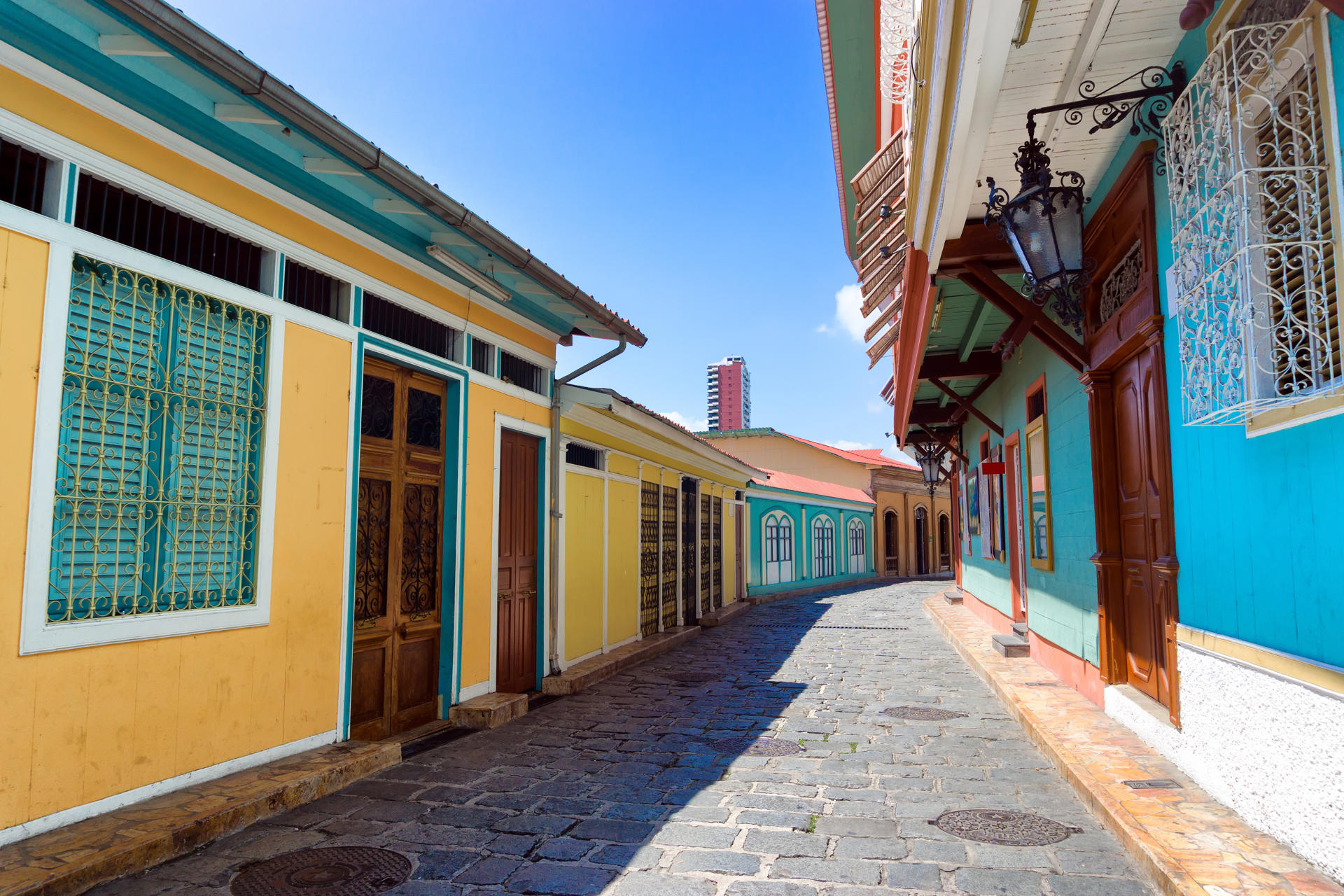
Along the banks of the Guayas River, among narrow streets, colorful facades, and wooden balconies that seem suspended in time, lies one of Ecuador's most historic and authentic neighborhoods: Las Peñas. This traditional district not only represents the urban origins of Guayaquil, but also offers one of the most culturally enriching experiences for travelers searching for things to do in Guayaquil in an efficient, visually engaging, and historically meaningful way.
Important information before your visit
- Distance from downtown Guayaquil: approximately 1 kilometer.
- Estimated travel time: between 5 and 10 minutes depending on the starting point.
- Entrance fee: free.
- Recommended visiting hours: during the morning or late afternoon.
- Best time to visit: at sunset, when lighting and temperatures create the most pleasant atmosphere.

The ideal visit usually lasts between one and a half and two hours. This allows enough time to walk slowly, appreciate the architecture, and enjoy the surroundings without rushing.
Because of Guayaquil's warm and humid tropical climate, lightweight clothing and comfortable shoes are highly recommended. While the route is not physically demanding, the cobblestone streets can be less comfortable with certain types of footwear. Staying hydrated is also important, particularly during hotter months.
Beyond its tourism appeal, Las Peñas represents a fundamental part of Guayaquil's historical identity. The neighborhood reflects how the city evolved from a colonial commercial port into one of South America's major urban centers.
The experience also highlights the resilience of Guayaquil itself. Throughout its history, the city faced fires, economic transformation, and modernization processes, yet neighborhoods like Las Peñas managed to preserve part of the original identity that continues to define Ecuador's coastal spirit today.
As visitors leave the district and return to the faster pace of the modern city, their perception of Guayaquil often changes completely. The city no longer appears simply as a large tropical commercial center, but as a place with visible historical roots, streets full of memory, and a deep relationship with the river that shaped its development.
For travelers flying with Arajet and searching for things to do in Guayaquil in a smart, cultural, and time-efficient way, Las Peñas is an essential visit. Accessible, authentic, and filled with character, this neighborhood offers one of the most complete tourism experiences in Ecuador. It is the perfect place to discover how history still lives among the colorful streets and historic balconies of Guayaquil today.
Because of Guayaquil's warm and humid tropical climate, lightweight clothing and comfortable shoes are highly recommended. While the route is not physically demanding, the cobblestone streets can be less comfortable with certain types of footwear. Staying hydrated is also important, particularly during hotter months.
Beyond its tourism appeal, Las Peñas represents a fundamental part of Guayaquil's historical identity. The neighborhood reflects how the city evolved from a colonial commercial port into one of South America's major urban centers.
The experience also highlights the resilience of Guayaquil itself. Throughout its history, the city faced fires, economic transformation, and modernization processes, yet neighborhoods like Las Peñas managed to preserve part of the original identity that continues to define Ecuador's coastal spirit today.
As visitors leave the district and return to the faster pace of the modern city, their perception of Guayaquil often changes completely. The city no longer appears simply as a large tropical commercial center, but as a place with visible historical roots, streets full of memory, and a deep relationship with the river that shaped its development.
For travelers flying with Arajet and searching for things to do in Guayaquil in a smart, cultural, and time-efficient way, Las Peñas is an essential visit. Accessible, authentic, and filled with character, this neighborhood offers one of the most complete tourism experiences in Ecuador. It is the perfect place to discover how history still lives among the colorful streets and historic balconies of Guayaquil today.