
From the moment you leave the urban area behind, the trip becomes quieter and more contemplative. Roads stretch between cultivated fields, open land, and expansive views where the Andes stand as a constant, solid, and dominant presence. This is not a landscape that overwhelms instantly; rather, it reveals itself through repetition, order, and the harmonious relationship between land and environment. That harmony is one of the valley’s strongest characteristics.
The valley unfolds along the natural course of the river, which acts as an invisible axis of the landscape. Even when it is not in direct view, its presence can be felt in the vegetation, the shape of the terrain, and the life organized around it. This connection between water, land, and mountain defines not only the valley’s appearance but also its cultural identity. Here, the landscape is not decorative—it is functional, cultivated, and lived.
Traveling through the Maipo Valley invites you to slow down. Time seems to move differently, guided more by daylight than by the clock. Morning brings clarity and freshness, with crisp colors and clean air. As the day progresses, the light grows warmer and the scenery softens, reinforcing the sense of calm. Each stretch of the journey feels coherent, without abrupt contrasts or sudden shifts.
From a sensory perspective, the valley expresses itself constantly yet subtly. The air is dry and clean, carrying aromas of earth, vegetation, and sun. Sound remains minimal—mostly wind or distant noises that never dominate the atmosphere. The view extends unobstructed, allowing for a direct connection with the natural surroundings. It is a landscape that does not demand constant attention but rewards patient observation.
The Maipo Valley also provides a clear understanding of the relationship between people and a demanding environment. The land here is not naturally abundant; it requires care, planning, and consistent work. Observing how fields are organized in precise lines and how the terrain is used without disrupting its balance adds a profound cultural dimension to the experience. It is not merely a scenic drive, but a quiet lesson in how this territory is inhabited.
For modern travelers accustomed to packed itineraries and tight schedules, the valley represents balance. It does not require strenuous hikes or complex routes. Being present, observing, and allowing the surroundings to set the pace is enough. This simplicity makes it a particularly efficient experience within a Santiago itinerary—ideal for those who want to maximize their time without feeling overwhelmed.
From a time-efficiency standpoint, the Maipo Valley is surprisingly accessible. Its proximity to the capital makes it easy to include in a half-day escape or a full-day outing without restructuring an entire travel plan. The short distance allows the experience to feel fluid, like a natural extension of the urban exploration.
For travelers who value clear logistics and budget-friendly travel, consider these practical details before planning your visit:
Maipo Valley
Santiago, CL
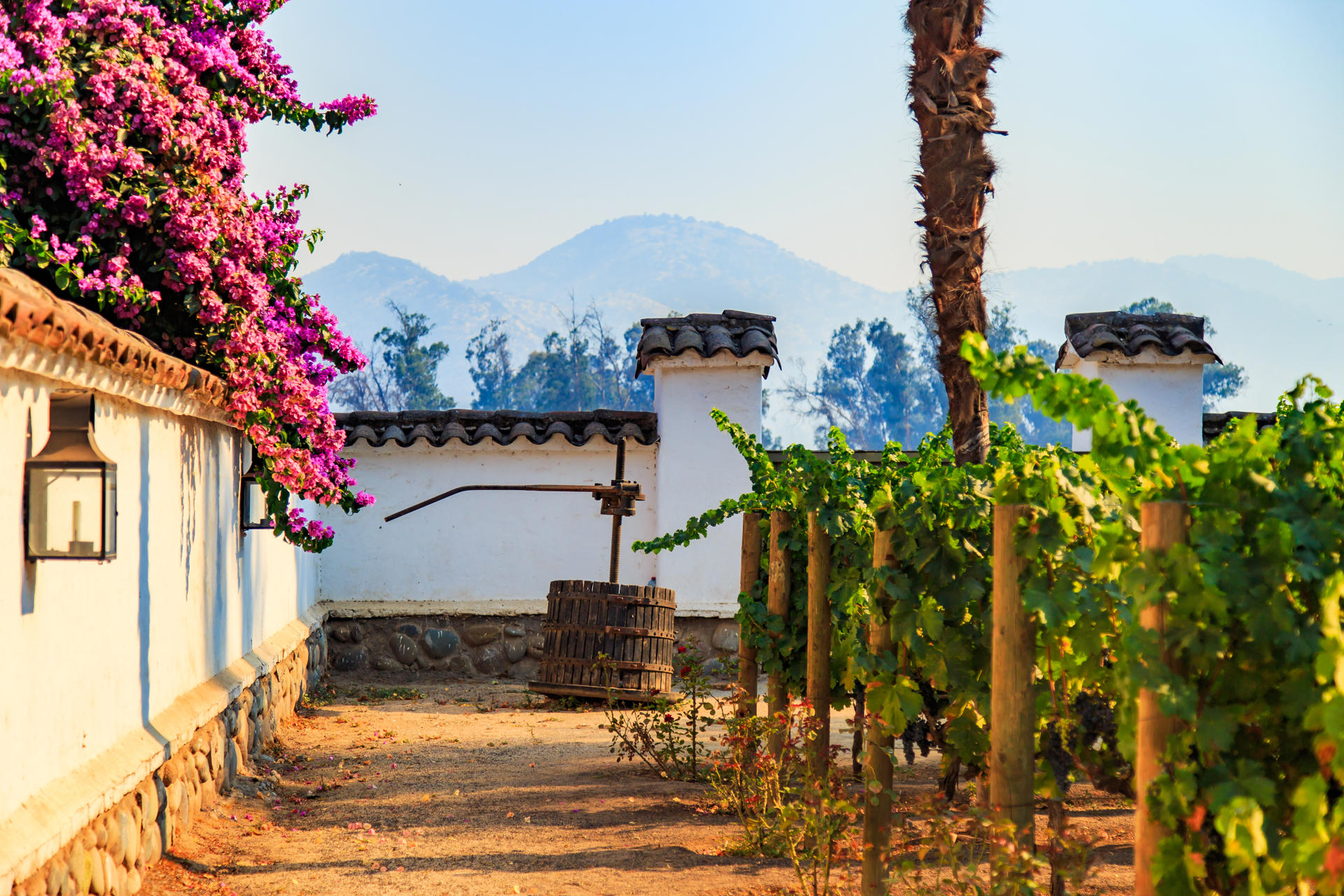
The Maipo Valley is the gateway to the deepest relationship between Santiago de Chile and its natural surroundings. Just a few kilometers from the urban center, the landscape changes gradually yet decisively: the city fades, the horizon widens, and the Andes begin to set the rhythm of the journey. For travelers arriving in Chile through Arajet’s destination network and looking for what to do in Santiago beyond concrete and constant movement, the Maipo Valley offers a complete experience that combines scenery, productive identity, and a sense of pause that is difficult to find within the city.
Important information before your visit
- Distance from downtown Santiago: between 30 and 50 kilometers, depending on the chosen area of the valley.
- Estimated travel time: between 45 minutes and 1.5 hours.
- Admission: free access to rural areas and valley roads.
- Recommended visiting hours: from mid-morning to mid-afternoon.
- Best time to go: in the morning, when temperatures are cooler and the light enhances the landscape.
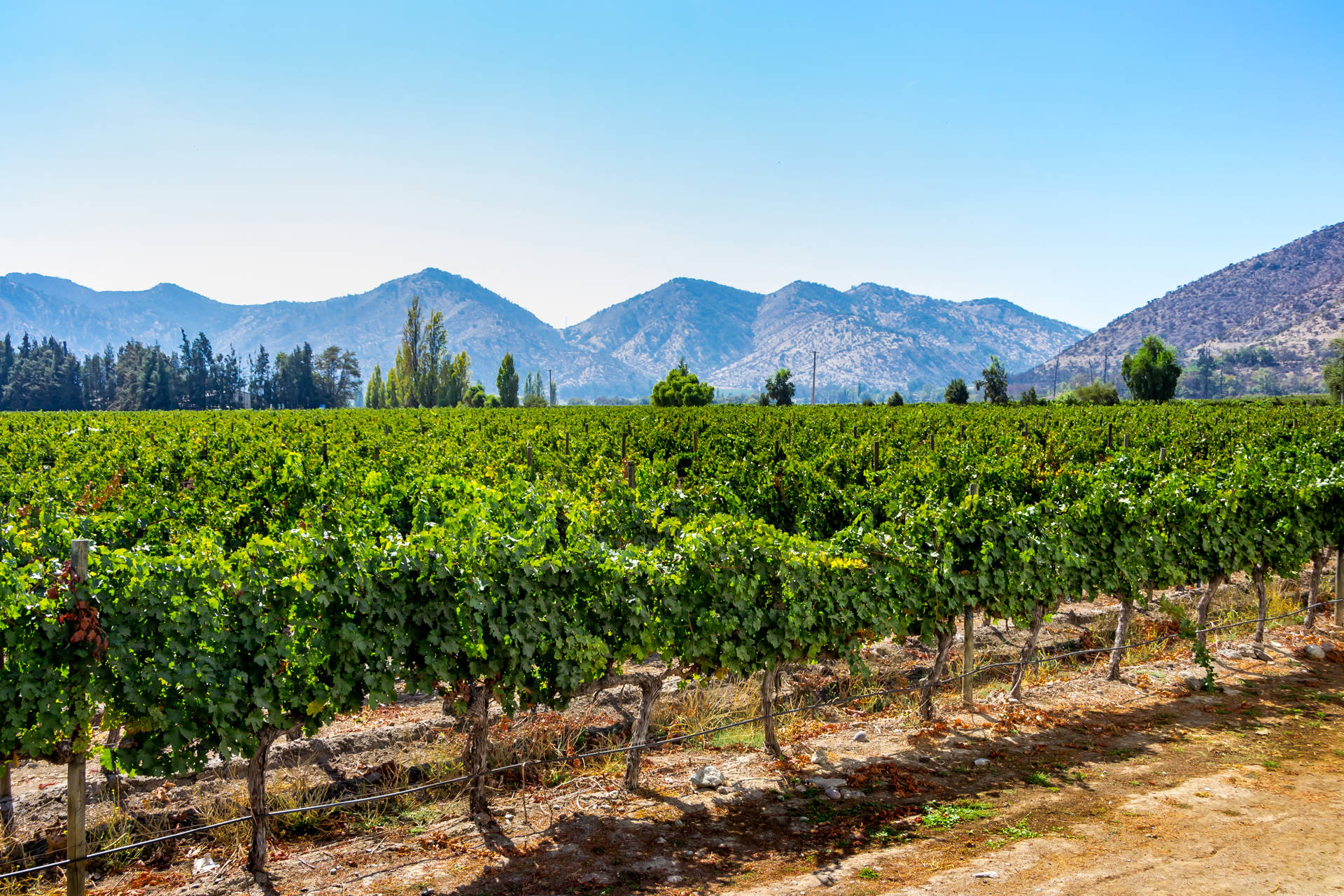
The ideal amount of time to explore the Maipo Valley depends on your travel style. A brief visit can focus on one specific sector and last just a few hours, while a full-day experience allows for a slower pace, longer pauses, and deeper immersion in the environment. In both cases, the experience feels complete because the landscape itself is the main attraction.
For photography enthusiasts, the valley offers constant opportunities. The orderly lines of the fields, the contrast between green tones and the drier hues of the surrounding terrain, and the ever-present Andes create naturally powerful compositions. Morning light provides clarity and definition, while sunset bathes the landscape in golden tones that transform the entire scene.
Preparation is simple but important. Comfortable clothing and footwear suitable for walking on dirt or uneven surfaces are essential. Sun protection is crucial—even on cooler days—due to the intensity of the sunlight. Bringing water is key to staying hydrated and enjoying the surroundings without interruption.
On a deeper level, the Maipo Valley plays an essential role in any visit to Santiago: it connects the city to its natural and productive environment. It reveals that the capital does not exist in isolation, but as part of a broader territory that directly shapes its identity, economy, and way of life. This understanding enriches the entire journey and brings coherence to the travel experience.
The valley also encourages a more conscious type of tourism. It is not about accumulating activities, but about observing, listening, and feeling. For many travelers, this experience contrasts positively with more intense urban tours, offering a necessary pause that organizes impressions and restores energy.
As the day draws to a close, the landscape changes once more. The light softens, shadows lengthen, and the Andes gain an even stronger presence. These shifts make even the return journey feel like part of the experience, bringing the day to a natural and reflective conclusion.
Back in Santiago, the city feels different. The Maipo Valley provides context, revealing where an essential part of local identity originates and how the natural environment continues to influence daily life. That connection lingers long after the visit, shaping the way travelers perceive the capital.
For those flying with Arajet and looking for what to do in Santiago de Chile in a smart and well-balanced way, the Maipo Valley is an essential experience. Close, deeply sensory, and rich in identity, it proves that making the most of your time does not always mean moving faster—but choosing places where landscape, culture, and the rhythm of travel align naturally.
For photography enthusiasts, the valley offers constant opportunities. The orderly lines of the fields, the contrast between green tones and the drier hues of the surrounding terrain, and the ever-present Andes create naturally powerful compositions. Morning light provides clarity and definition, while sunset bathes the landscape in golden tones that transform the entire scene.
Preparation is simple but important. Comfortable clothing and footwear suitable for walking on dirt or uneven surfaces are essential. Sun protection is crucial—even on cooler days—due to the intensity of the sunlight. Bringing water is key to staying hydrated and enjoying the surroundings without interruption.
On a deeper level, the Maipo Valley plays an essential role in any visit to Santiago: it connects the city to its natural and productive environment. It reveals that the capital does not exist in isolation, but as part of a broader territory that directly shapes its identity, economy, and way of life. This understanding enriches the entire journey and brings coherence to the travel experience.
The valley also encourages a more conscious type of tourism. It is not about accumulating activities, but about observing, listening, and feeling. For many travelers, this experience contrasts positively with more intense urban tours, offering a necessary pause that organizes impressions and restores energy.
As the day draws to a close, the landscape changes once more. The light softens, shadows lengthen, and the Andes gain an even stronger presence. These shifts make even the return journey feel like part of the experience, bringing the day to a natural and reflective conclusion.
Back in Santiago, the city feels different. The Maipo Valley provides context, revealing where an essential part of local identity originates and how the natural environment continues to influence daily life. That connection lingers long after the visit, shaping the way travelers perceive the capital.
For those flying with Arajet and looking for what to do in Santiago de Chile in a smart and well-balanced way, the Maipo Valley is an essential experience. Close, deeply sensory, and rich in identity, it proves that making the most of your time does not always mean moving faster—but choosing places where landscape, culture, and the rhythm of travel align naturally.