
The experience begins at the riverbank, where the atmosphere shifts immediately. The air feels cooler and more humid, infused with the scent of green leaves and fertile earth. The sound of gently moving water replaces any trace of urban noise. Here, the protagonist is not the open sea, but the quiet interior of Jamaica’s tropical landscape.
The traditional way to explore the Martha Brae River is aboard hand-crafted bamboo rafts guided by skilled local captains who navigate the current with calm precision. These rafts, built from thick bamboo poles, glide slowly along the river, propelled by long poles that push against the riverbed. The sensation is unlike any motorized boat ride: there is no engine, no vibration—just a smooth, quiet drift over clear water.
From a sensory perspective, the experience is deeply relaxing. The water reflects shades of green from the dense vegetation lining both banks. Trees lean gently over the river in certain stretches, forming natural canopies that create the feeling of floating through a tropical corridor. Sunlight filters through the leaves, casting golden reflections across the surface.
The dominant soundtrack is nature itself: tropical birds calling from hidden branches, the soft rustle of wind moving through leaves, and the gentle splash of the raft gliding forward. There is no rush. The pace is intentionally slow, inviting reflection and observation.
Historically, the Martha Brae River is tied to local legend and the agricultural traditions of the region. Stories passed down through generations give the river a cultural depth beyond its scenic beauty. While the exact origin of its name varies depending on who tells it, what remains constant is the connection between the river and the surrounding community.
From a time-efficiency standpoint, the Martha Brae River is an excellent excursion. The typical rafting journey lasts about one hour, making it easy to incorporate into a half-day plan. It pairs well with nearby beach visits or a cultural exploration of Falmouth, allowing travelers to balance relaxation with discovery.
For those who value clear logistics and budget-conscious travel, here are some practical details to keep in mind:
Martha Brae River
Kingston, JM
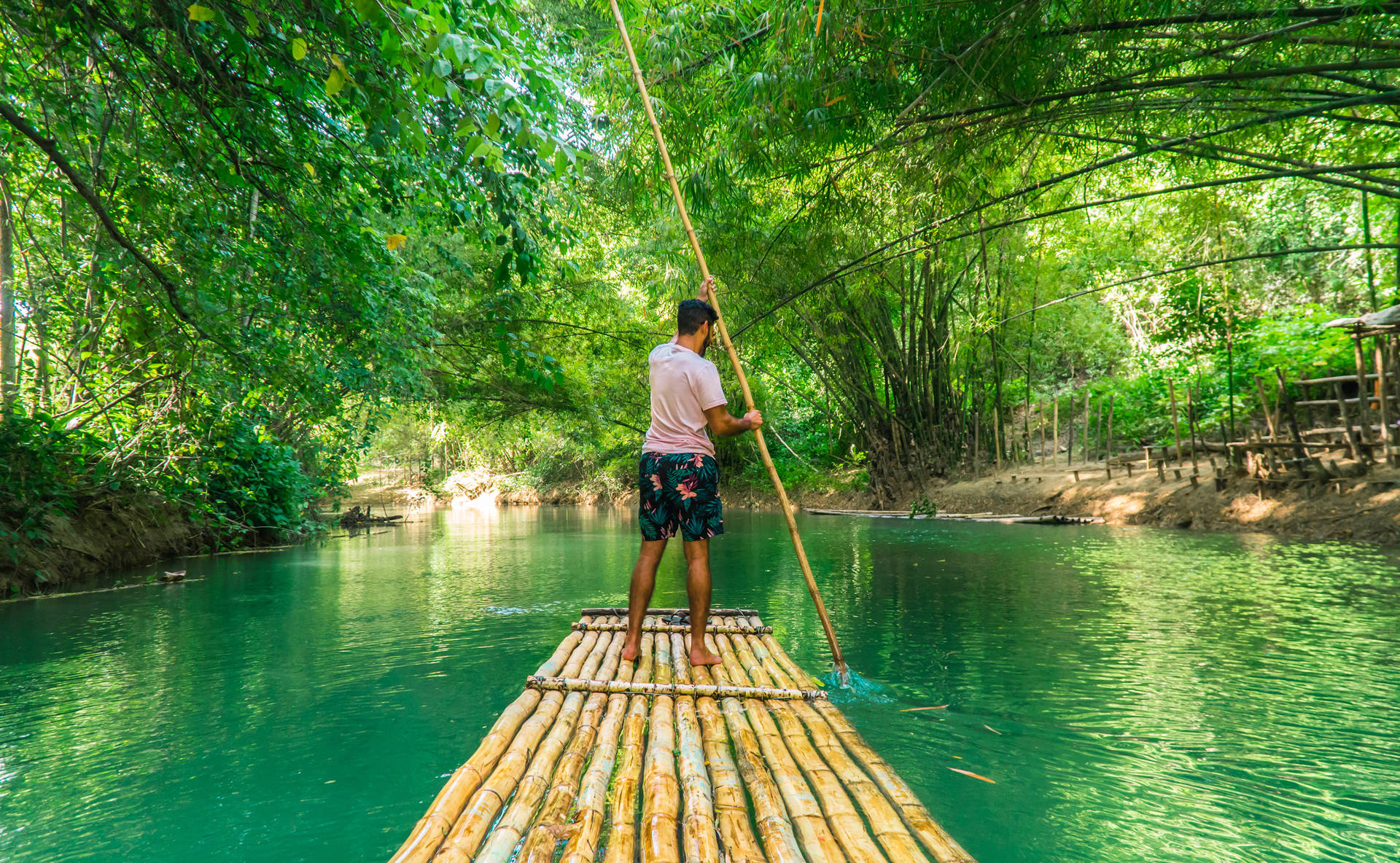
On Jamaica’s north coast, just a few kilometers from the vibrant port of Falmouth and relatively close to Montego Bay, flows one of the country’s most tranquil and picturesque natural settings: the Martha Brae River. Far from the energetic rhythm of crowded beaches and busy urban centers, this river winds through lush tropical vegetation, offering a serene experience that blends landscape, tradition, and direct contact with nature. For travelers arriving in Jamaica through Arajet’s destination network and looking for what to do beyond turquoise waters and white sand, the Martha Brae River represents a strategic, relaxing activity that fits perfectly into a well-planned half-day itinerary.
Important information before your visit
- Location: near Falmouth on Jamaica’s north coast
- Distance from Montego Bay: approximately 30 kilometers
- Estimated travel time: 35 to 45 minutes by car.
- Entrance: rafting experience requires an admission fee
- Duration of the rafting trip: approximately 1 hour
- Best time to visit: in the morning, when temperatures are cooler, and the environment is especially peaceful
The ideal time allocation for the full experience is between 2 and 3 hours, including arrival, the rafting journey, and time to explore the surroundings. This flexibility makes it a perfect option for travelers who want a well-organized activity without dedicating an entire day.
For photography enthusiasts, the Martha Brae River offers exceptional natural compositions. Bamboo rafts stand out beautifully against the intense green of the vegetation. Reflections on the water create near-symmetrical images. Filtered sunlight adds texture and depth, especially in narrower sections where the canopy is thicker.
In terms of preparation, light and comfortable clothing is recommended, along with sun protection—particularly for stretches where the canopy opens, and direct sunlight reaches the raft. Insect repellent can be helpful in areas with denser vegetation. Comfortable footwear makes access to the riverbank easier.
Beyond its obvious natural beauty, the Martha Brae River plays an essential role in a Jamaican itinerary: it reveals a quieter, more contemplative dimension of the island. Jamaica is not only vibrant music and lively beaches; it is also humid forest, peaceful rivers, and traditions passed from one generation to the next.
The experience invites introspection. Sitting on the raft and allowing the landscape to unfold slowly creates a mental pause rarely found in busy travel schedules. The unhurried rhythm encourages attention to detail: the texture of leaves, the clarity of the water, the gentle curves shaped by the current.
When the journey ends and you step back onto solid ground, what lingers is a sense of balance. The Martha Brae River does not offer adrenaline or crowds; it offers serenity.
As you return toward the coast or nearby towns, the contrast becomes clear. The bustle feels louder after experiencing the river’s natural silence.
For those flying with Arajet and searching for what to do in Jamaica in a smart, relaxed, and well-planned way, the Martha Brae River is an essential experience. Accessible, authentic, and deeply sensory, it offers one of the most memorable nature-based activities in Jamaican tourism in just a few strategically used hours. It proves that making the most of your time also means slowing down, letting the water set the pace, and allowing Jamaica’s lush landscape to reveal its most serene and captivating side.
For photography enthusiasts, the Martha Brae River offers exceptional natural compositions. Bamboo rafts stand out beautifully against the intense green of the vegetation. Reflections on the water create near-symmetrical images. Filtered sunlight adds texture and depth, especially in narrower sections where the canopy is thicker.
In terms of preparation, light and comfortable clothing is recommended, along with sun protection—particularly for stretches where the canopy opens, and direct sunlight reaches the raft. Insect repellent can be helpful in areas with denser vegetation. Comfortable footwear makes access to the riverbank easier.
Beyond its obvious natural beauty, the Martha Brae River plays an essential role in a Jamaican itinerary: it reveals a quieter, more contemplative dimension of the island. Jamaica is not only vibrant music and lively beaches; it is also humid forest, peaceful rivers, and traditions passed from one generation to the next.
The experience invites introspection. Sitting on the raft and allowing the landscape to unfold slowly creates a mental pause rarely found in busy travel schedules. The unhurried rhythm encourages attention to detail: the texture of leaves, the clarity of the water, the gentle curves shaped by the current.
When the journey ends and you step back onto solid ground, what lingers is a sense of balance. The Martha Brae River does not offer adrenaline or crowds; it offers serenity.
As you return toward the coast or nearby towns, the contrast becomes clear. The bustle feels louder after experiencing the river’s natural silence.
For those flying with Arajet and searching for what to do in Jamaica in a smart, relaxed, and well-planned way, the Martha Brae River is an essential experience. Accessible, authentic, and deeply sensory, it offers one of the most memorable nature-based activities in Jamaican tourism in just a few strategically used hours. It proves that making the most of your time also means slowing down, letting the water set the pace, and allowing Jamaica’s lush landscape to reveal its most serene and captivating side.