
The building that now houses the Museum of the Royal Houses was constructed in the 16th century to serve as the headquarters of the main administrative institutions of the Spanish Crown in the New World. From here, vast territories were governed, political decisions were made, justice was administered, and colonial life was organized at a time when Santo Domingo was the nerve center of Spanish power in the Americas. Walking through its halls today means moving through the very spaces where regulations, trade routes, and social structures were defined—decisions that shaped the course of the continent for centuries.
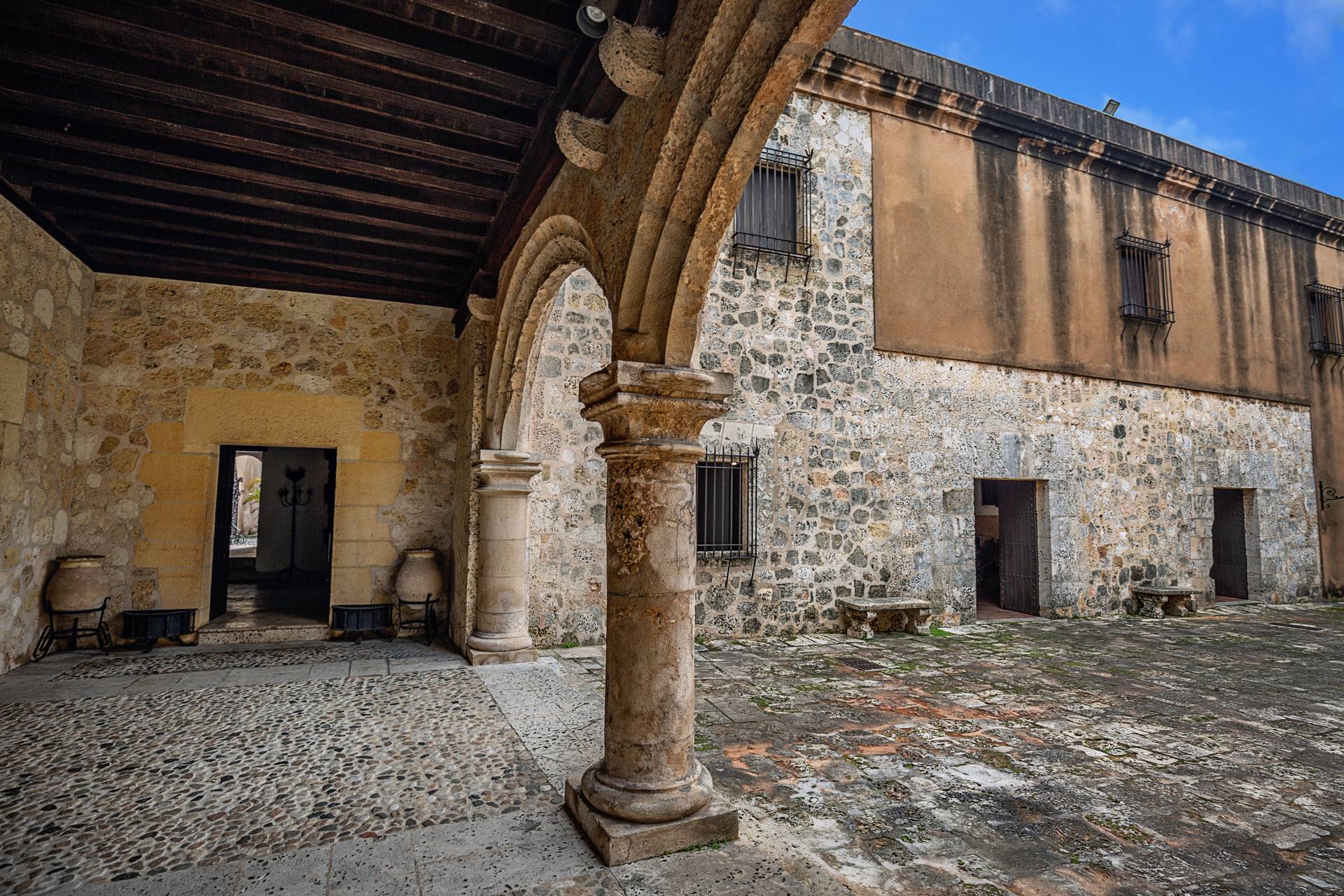
The architecture of the building is sober and elegant, designed to convey authority and stability. Its thick coral-stone walls, spacious interior courtyards, and well-ventilated corridors reflect an early adaptation to the Caribbean climate while preserving the European style of the period. From the very beginning of the visit, it becomes clear that this is not just any museum, but an authentic site where the continent began to organize itself under new rules.
The museum’s layout is clear and logical, allowing visitors to maximize their time without feeling overwhelmed. The exhibition rooms combine original artifacts, reproductions, antique maps, historical documents, and concise explanations that contextualize each stage of the colonial period. There is no need to be a history expert to appreciate the experience; the narrative is structured so that any traveler can understand how society functioned at the time, who made the decisions, and what daily life was like during the early years of the colony.
As visitors move from room to room, they discover the complex political and social structure established on the island. Topics such as colonial administration, justice, economic systems, military life, and the often tense coexistence between Europeans, Indigenous peoples, and populations forcibly brought from Africa are addressed with clarity. The museum does not romanticize the past; instead, it presents it with both its achievements and its contradictions, allowing for a more complete and honest understanding of the origins of the modern Caribbean.
One of the museum’s greatest strengths is that it never feels overwhelming. The information is carefully balanced, helping visitors maintain focus throughout the tour without fatigue. In approximately an hour and a half, it is possible to explore the main rooms, read the most relevant panels, and gain a clear understanding of the fundamental role Santo Domingo played in the history of the Americas. This makes it an ideal visit for travelers with limited time who still seek a meaningful and in-depth cultural experience.
From a sensory perspective, the museum offers a calm and reflective atmosphere. The sound of footsteps across the floors, the natural light entering through the interior courtyards, and the coolness of the stone walls create an environment that invites visitors to slow down and observe carefully. It provides a perfect contrast to the lively streets outside and serves as a necessary pause within an intense urban itinerary.
For efficient travelers, one of the museum’s greatest advantages is its strategic location within the city’s historic district. This allows it to be easily integrated into a walking tour, combined with other nearby points of interest without requiring additional transportation. From a practical standpoint, here are the key details to consider when planning your visit:
Museum of the Royal Houses
Santo Domingo, DO
Santo Domingo is a city where history is not observed from a distance—it is walked. Within just a few streets, travelers can go back more than five centuries and stand at the exact point where European administration in the Americas began. Within this historical framework, the Museum of the Royal Houses holds a central place, not only because of its exhibits, but also because of the symbolic weight of the building that houses it. For those arriving in the Dominican capital through Arajet’s destination network and wondering what to do in Santo Domingo without losing time on long transfers or overly extended visits, this museum is one of the most efficient, comprehensive, and revealing cultural experiences in the city.
Important information before your visit
- Distance from downtown Santo Domingo: approximately 1 kilometer from the city center.
- Estimated travel time: between 5 and 10 minutes by vehicle, or easily accessible on foot from other historic landmarks.
- Admission fee: free, making it an excellent option for budget travel.
- Visiting hours: open during daytime hours, generally from morning until mid-afternoon.
- Best time to visit: mid-morning, when there are fewer groups and the experience feels more relaxed.
Visually, the museum also offers interesting photography opportunities, especially in its interior courtyards and corridors. The combination of ancient stone, arches, wood details, and natural light creates sober and elegant compositions, ideal for capturing the historical essence of the place. It is not a space defined by vibrant colors, but by balance, symmetry, and authenticity.
In terms of attire, no special preparation is required. Light, comfortable clothing is sufficient, and appropriate footwear will make it easier to move through the galleries and courtyards. Since much of the museum is indoors, it provides relief from the outdoor heat—particularly appreciated on warm days. Bringing water is always advisable, although the tour itself is not physically demanding.
From a smart planning perspective, the Museum of the Royal Houses fits perfectly into an itinerary designed to maximize time. It can serve as the first stop of the day, providing historical context before exploring other sites, or as a mid-day cultural break that adds depth without consuming too many hours. Its moderate duration allows it to be combined easily with other experiences on the same day without feeling rushed.
Beyond the artifacts on display, the true value of the museum lies in the understanding it leaves with visitors. Upon exiting, the city feels different. The streets, plazas, and buildings take on new meaning when one realizes that decisions made here influenced millions of people and defined the beginning of a new historical era. It is a visit that enriches everything seen afterward.
For those flying with Arajet and looking for what to do in Santo Domingo in a thoughtful and well-planned way, the Museum of the Royal Houses is a key choice. It requires no long transfers, has no admission fee, and offers one of the most comprehensive perspectives on the origins of the city and the continent. It is an experience that proves making the most of your time does not mean seeing more places—it means understanding more deeply the ones that truly matter.
In terms of attire, no special preparation is required. Light, comfortable clothing is sufficient, and appropriate footwear will make it easier to move through the galleries and courtyards. Since much of the museum is indoors, it provides relief from the outdoor heat—particularly appreciated on warm days. Bringing water is always advisable, although the tour itself is not physically demanding.
From a smart planning perspective, the Museum of the Royal Houses fits perfectly into an itinerary designed to maximize time. It can serve as the first stop of the day, providing historical context before exploring other sites, or as a mid-day cultural break that adds depth without consuming too many hours. Its moderate duration allows it to be combined easily with other experiences on the same day without feeling rushed.
Beyond the artifacts on display, the true value of the museum lies in the understanding it leaves with visitors. Upon exiting, the city feels different. The streets, plazas, and buildings take on new meaning when one realizes that decisions made here influenced millions of people and defined the beginning of a new historical era. It is a visit that enriches everything seen afterward.
For those flying with Arajet and looking for what to do in Santo Domingo in a thoughtful and well-planned way, the Museum of the Royal Houses is a key choice. It requires no long transfers, has no admission fee, and offers one of the most comprehensive perspectives on the origins of the city and the continent. It is an experience that proves making the most of your time does not mean seeing more places—it means understanding more deeply the ones that truly matter.