
From the moment you step onto the pier, the sense of openness is immediate. Unlike the dense urban grid of Downtown Chicago, the horizon here expands in every direction. Lake Michigan stretches outward like an inland sea, its blue tones shifting with the light. The wind moves freely across the water, bringing a refreshing breeze—even during the warmest summer days.
Historically, Navy Pier opened in 1916 as a municipal pier designed for transportation and public recreation. Over time, its role evolved. During the 20th century, it even served as a naval training center during World War II. Later transformed into the cultural and tourism hub it is today, the pier carries layers of history that enrich the visitor experience.
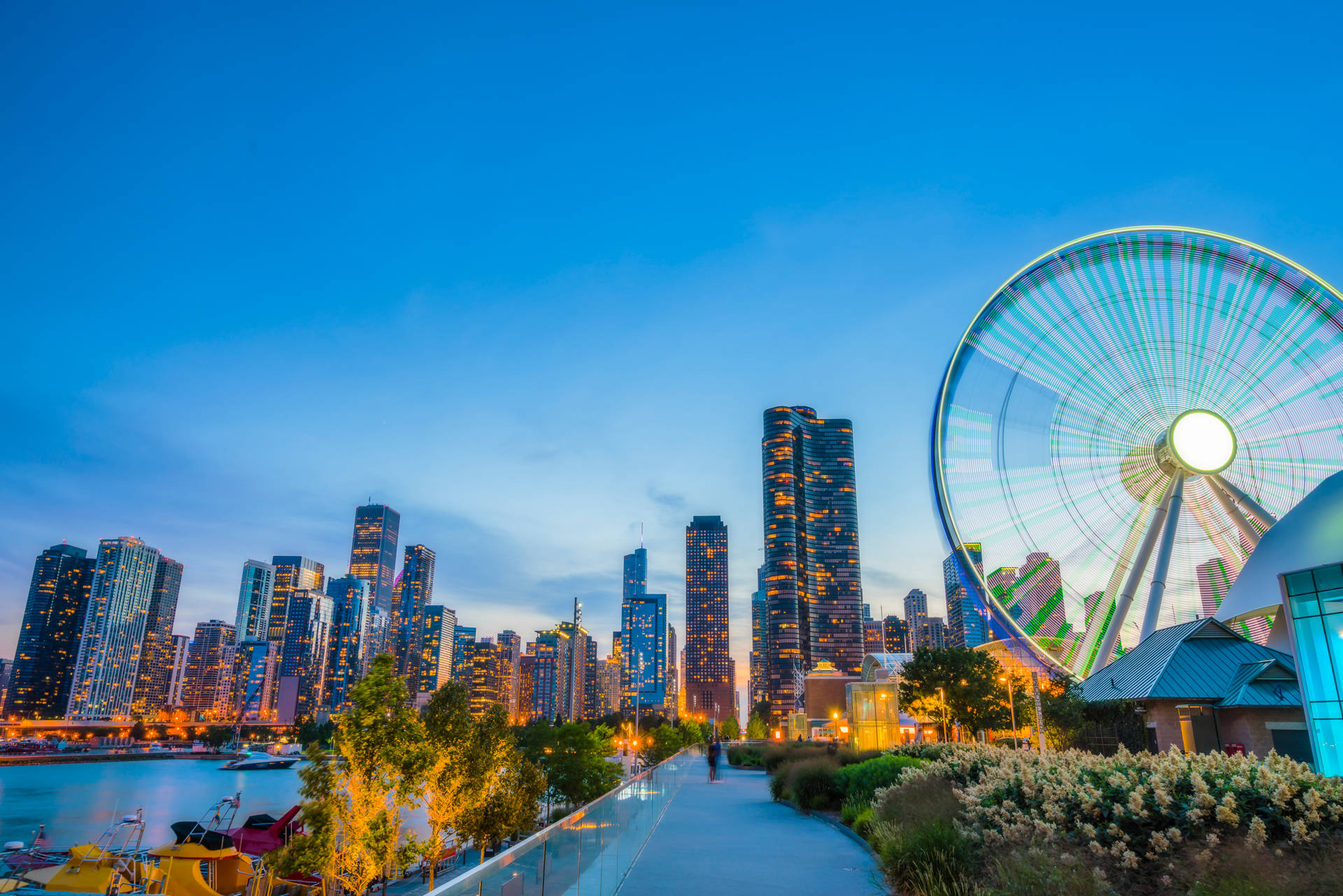
One of its most visible features is the large observation wheel rising above the lake. From its summit, sweeping views unfold: Chicago’s skyline lined up along the water, forming one of the most recognizable urban silhouettes in the United States. The ride is smooth and gradual, offering time to fully absorb the city’s scale and the vastness of the lake.
From a sensory perspective, Navy Pier feels dynamic yet relaxed. The dominant sound is water gently striking the pier’s structure, mingling with conversations and ambient music. The air carries a fresh, slightly mineral scent from the lake. Sunlight reflects off the water, creating bright flashes throughout the day.
The pier’s linear design makes navigation intuitive. Walking from the entrance to the far end allows visitors to experience varied environments: open-air spaces, covered areas with cultural exhibits, and zones dedicated to entertainment. This straightforward layout ensures efficient exploration without retracing steps.
From a time-efficiency standpoint, Navy Pier is highly strategic. It can be explored in two to four hours if your schedule is tight, or extended to half a day if you choose to ride the observation wheel, visit exhibitions, and enjoy the waterfront at a relaxed pace. A smart strategy is to arrive in the afternoon to combine daytime lake views with sunset over the skyline.
For travelers who value clear logistics and organized planning, consider these practical details:
Navy Pier
Chicago, US
Stretching into the deep blue waters of Lake Michigan like a promenade over the horizon, Navy Pier stands as one of Chicago’s most iconic and visited landmarks. More than a traditional pier, this expansive recreational complex blends panoramic views, family-friendly entertainment, historic architecture, and direct contact with the lake into one perfectly organized experience. For travelers arriving in Illinois through Arajet’s expanding destination network and wondering what to do in Chicago while maximizing every minute, Navy Pier offers a strategic stop that concentrates scenery, culture, and leisure within just a few well-spent hours.
Important information before your visit
- Location: Lake Michigan shoreline, east of Downtown Chicago
- Distance from O’Hare International Airport: approximately 30 kilometers (18–19 miles)
- Estimated travel time from the airport: 40–60 minutes, depending on traffic or public transportation
- Access to the pier: Free; individual attractions require tickets
- Recommended visit duration: 3–5 hours
- Best time to visit: At sunset to enjoy the transition of light over the lake and skyline
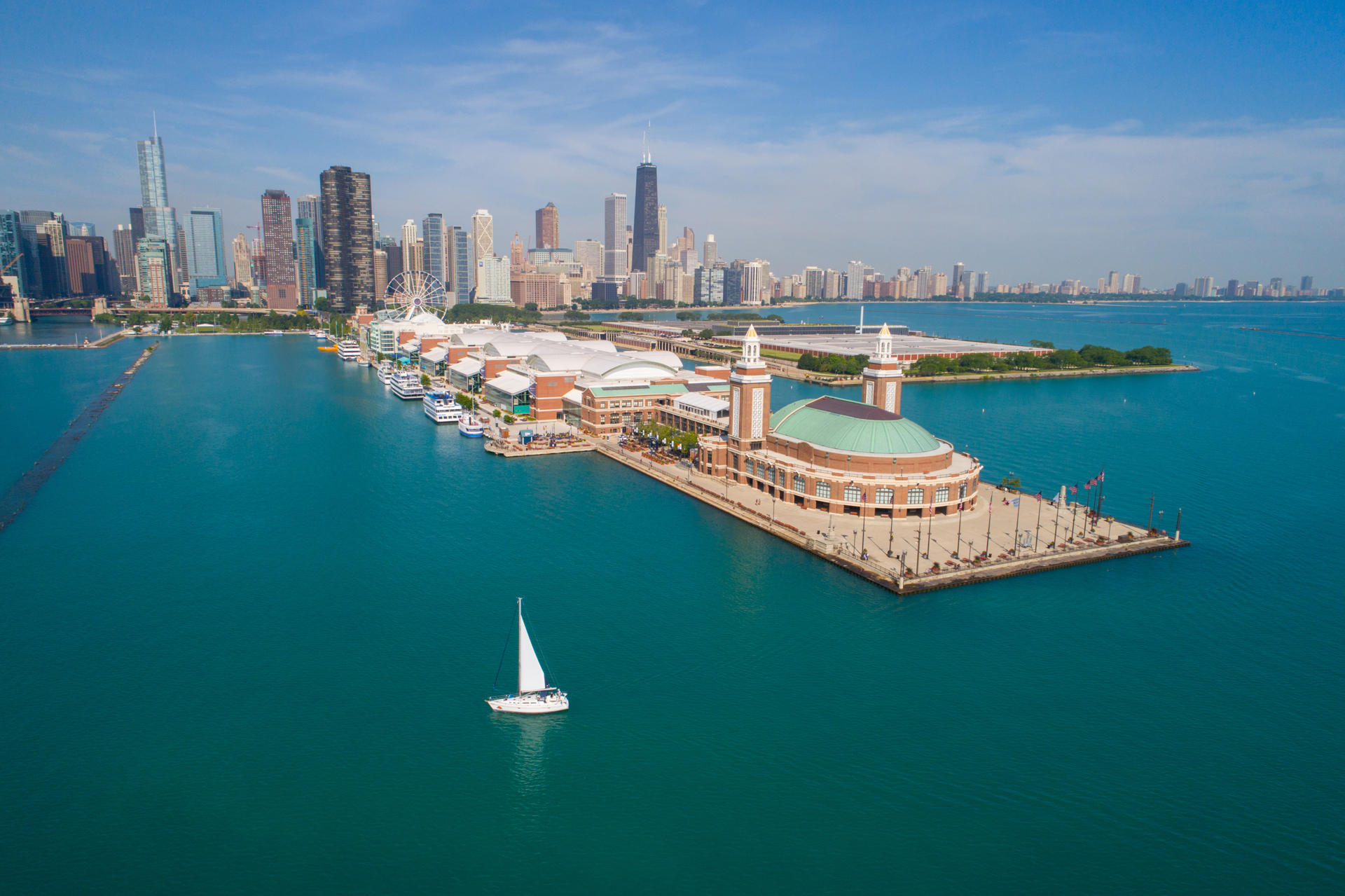
The ideal time to fully enjoy Navy Pier is about half a day, especially if combined with nearby attractions such as Millennium Park or the lakefront trail.
For photography enthusiasts, the pier offers spectacular vantage points. From its far end, panoramic shots capture Chicago’s skyline with Lake Michigan in the foreground. The observation wheel adds dynamic composition, particularly at night when illuminated with changing colors. Sunset reflections across the water create warm, memorable images.
Preparation is important. Even in summer, a light jacket is recommended, as winds off the lake can feel stronger than in the city center. Comfortable shoes make it easy to walk the full length of the pier. In winter, temperatures can be cold and windy, requiring appropriate seasonal clothing.
Beyond recreation, Navy Pier plays a key role in understanding Chicago’s identity. It connects the city directly to Lake Michigan—a relationship fundamental to its history and character. From the pier, you can see how Chicago’s architecture dialogues with its natural landscape.
The experience also invites quiet contemplation. Sitting on a bench facing the lake and watching the horizon creates a sense of spaciousness rarely found in major cities. The water becomes both visual and mental refuge.
As evening falls, the pier transforms. The sky turns shades of pink and orange while the sun descends behind the skyline. City lights gradually illuminate and shimmer across the water. The glowing observation wheel adds vibrancy to the nighttime scene.
When you leave Navy Pier to return to your hotel or continue exploring Chicago, you carry the sense of having experienced the city at its natural edge. It is not merely a pier—it is a meeting point between architecture, water, and leisure.
For those flying with Arajet and planning what to do in Chicago in a smart, visually impactful, and well-organized way, Navy Pier is an essential stop. Accessible, panoramic, and strategically positioned along Lake Michigan, it offers one of the city’s most complete postcard views within just a few well-spent hours. It proves that making the most of your time also means walking above the water, rising above the skyline, and discovering how Chicago opens itself to the vast blue horizon of one of North America’s most impressive lakes.
For photography enthusiasts, the pier offers spectacular vantage points. From its far end, panoramic shots capture Chicago’s skyline with Lake Michigan in the foreground. The observation wheel adds dynamic composition, particularly at night when illuminated with changing colors. Sunset reflections across the water create warm, memorable images.
Preparation is important. Even in summer, a light jacket is recommended, as winds off the lake can feel stronger than in the city center. Comfortable shoes make it easy to walk the full length of the pier. In winter, temperatures can be cold and windy, requiring appropriate seasonal clothing.
Beyond recreation, Navy Pier plays a key role in understanding Chicago’s identity. It connects the city directly to Lake Michigan—a relationship fundamental to its history and character. From the pier, you can see how Chicago’s architecture dialogues with its natural landscape.
The experience also invites quiet contemplation. Sitting on a bench facing the lake and watching the horizon creates a sense of spaciousness rarely found in major cities. The water becomes both visual and mental refuge.
As evening falls, the pier transforms. The sky turns shades of pink and orange while the sun descends behind the skyline. City lights gradually illuminate and shimmer across the water. The glowing observation wheel adds vibrancy to the nighttime scene.
When you leave Navy Pier to return to your hotel or continue exploring Chicago, you carry the sense of having experienced the city at its natural edge. It is not merely a pier—it is a meeting point between architecture, water, and leisure.
For those flying with Arajet and planning what to do in Chicago in a smart, visually impactful, and well-organized way, Navy Pier is an essential stop. Accessible, panoramic, and strategically positioned along Lake Michigan, it offers one of the city’s most complete postcard views within just a few well-spent hours. It proves that making the most of your time also means walking above the water, rising above the skyline, and discovering how Chicago opens itself to the vast blue horizon of one of North America’s most impressive lakes.