
Historically, this harbor served as Montréal’s commercial heart beginning in the 17th century. For more than 300 years, merchant ships arrived loaded with goods that fueled the economy of the colony and later the country. As port operations gradually shifted to more modern facilities elsewhere, the original waterfront was reimagined as public space. Today, that maritime legacy remains visible in restored stone warehouses and in the linear layout that follows the river’s edge.
From the moment you step onto the promenade, a sense of openness defines the experience. The St. Lawrence River stretches outward like a vast inland waterway, its steady currents reflecting Québec’s ever-changing sky. A breeze rises from the water, refreshing the air—especially during the warmer months—making the stroll pleasant even in summer.
One of the Old Port’s greatest strengths is its versatility. It can be explored on foot, by bicycle, or simply enjoyed from strategically placed benches overlooking the river. The main path is wide and paved, allowing for smooth, uninterrupted movement.
From a sensory perspective, the atmosphere is lively yet relaxed. The gentle sound of water against the docks blends with the laughter of families, conversations in French and English, and occasional music from street performers. The river’s fresh, slightly mineral scent adds a distinctive character to the setting.
At one end of the promenade stands the historic Clock Tower, a landmark dating to the early 20th century. Beyond serving as a visual anchor, it functions as a lookout. Climbing its stairs rewards visitors with elevated views of the river and Montréal’s modern skyline—a compelling contrast between industrial heritage and contemporary urban life.
From a time-efficiency standpoint, the Old Port is exceptionally practical. A smart strategy is to begin in Vieux-Montréal, walk toward the river, and then proceed linearly along the waterfront. In approximately two to three hours, most of the main promenade can be covered, including time for scenic photo stops.
For travelers who value clear logistics and thoughtful planning, here are essential details:
Old Port of Montreal
Montreal, CA
Along the majestic St. Lawrence River, where Montréal’s colonial past meets its contemporary energy, stretches one of the city’s most vibrant and scenic public spaces: the Old Port of Montréal. The Old Port is far more than a waterfront district—it is a historic corridor transformed into an urban promenade where water, heritage architecture, and open-air activities converge in a perfectly walkable experience. For travelers arriving in Québec through Arajet’s growing destination network and looking for what to do in Montréal while making the most of every minute, the Old Port offers a strategic, panoramic, and dynamic stop that can be enjoyed in half a day or expanded into a full-day outing.
Important information before your visit
- Location: Along the St. Lawrence River, south of Vieux-Montréal
- Distance from Downtown Montréal: Approximately 1.5 kilometers (0.9 miles)
- Distance from Montréal–Trudeau International Airport: About 22 kilometers (13.5 miles)
- Estimated travel time from the airport: 25–35 minutes.
- Admission: Free; public space
- Recommended visit duration: 2–5 hours.
- Best time to visit: Summer and fall, or at sunset for golden river views.
The ideal visit length depends on your level of activity. For a simple scenic walk, half a day is sufficient. Adding boat tours, seasonal events, or recreational activities can easily extend the experience into a full day.
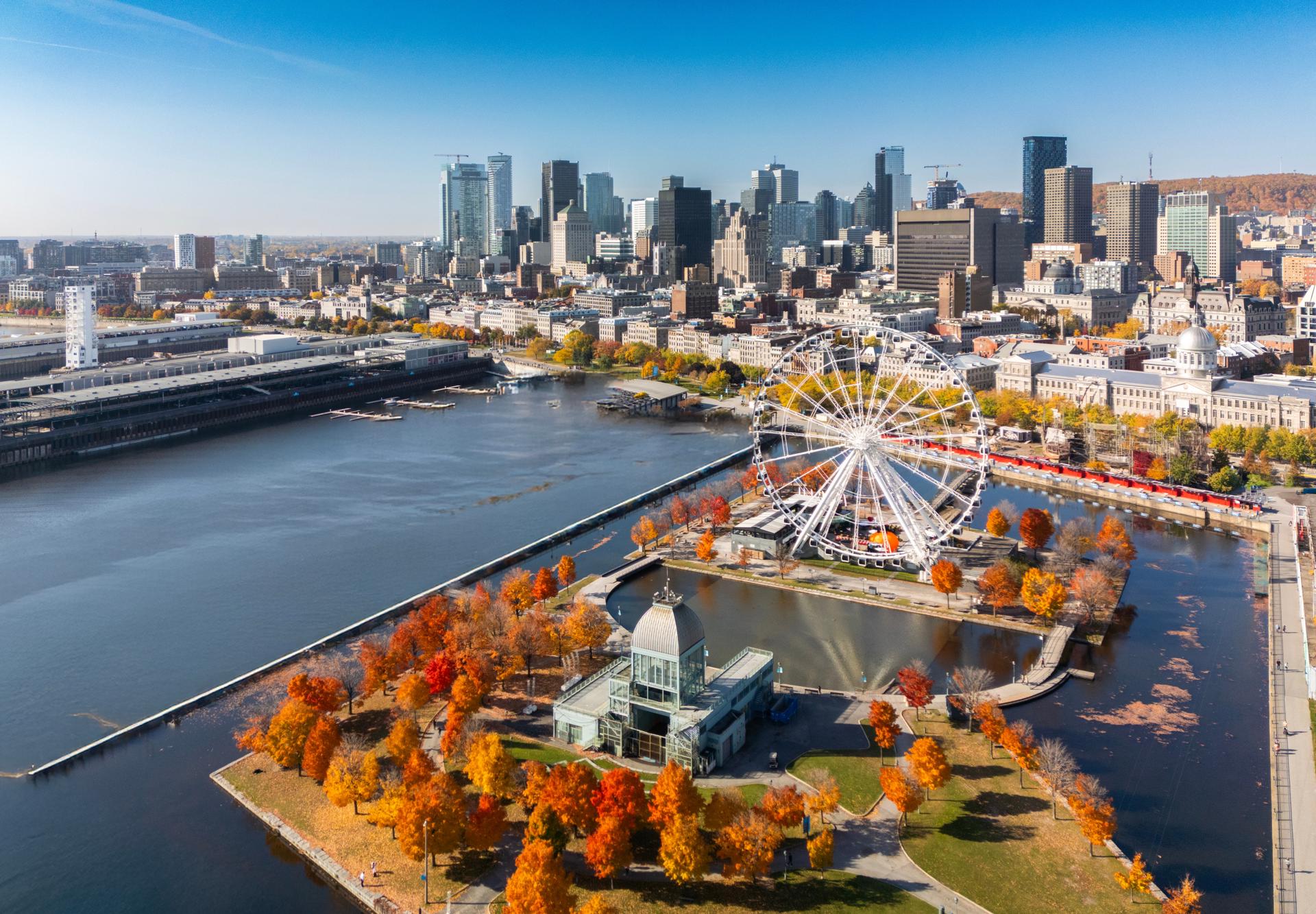
For photography enthusiasts, the Old Port offers striking compositions. From the promenade, you can capture the silhouette of Old Montréal, with historic towers rising behind restored warehouses. Sunlight reflecting off the river creates bright highlights during the day and warm golden tones at sunset.
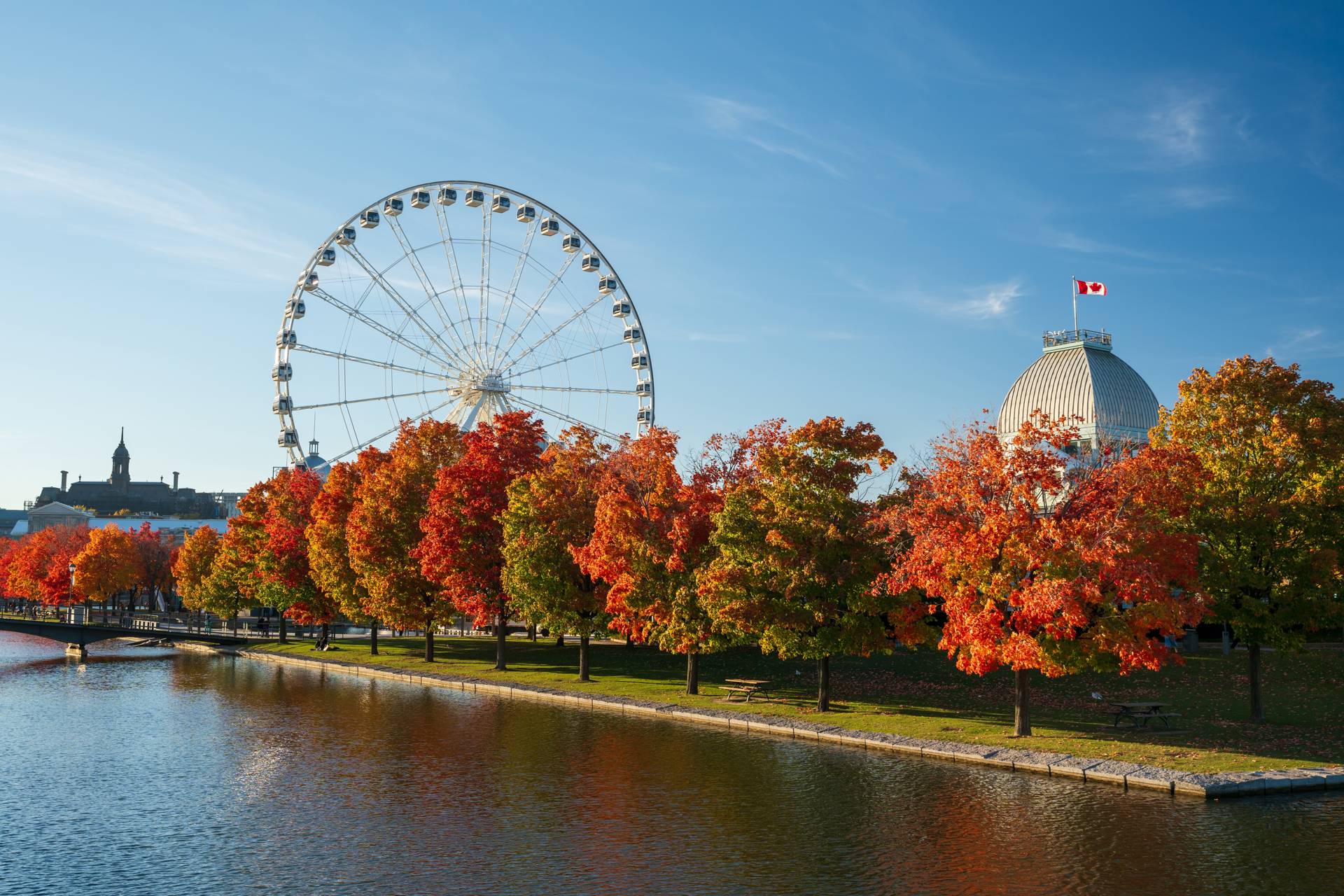
In autumn, the contrast between the blue river and trees painted in red and orange produces vivid imagery. In winter, partially frozen water and snow-covered docks create an almost Nordic atmosphere.
Beyond its scenic appeal, the Old Port plays a crucial role in understanding Montréal. It reconnects the city with its maritime origins and illustrates how the river was central to its economic and cultural growth.
The experience also encourages quiet reflection. Sitting by the water and watching the steady current flow creates a sense of calm. Unlike the ocean, the river’s movement is more contained but equally powerful.
In terms of preparation, comfortable walking shoes are recommended for longer stretches on paved surfaces. Depending on the season, an extra layer is advisable, as the river breeze can intensify. In summer, sun protection is important due to direct exposure.
As evening approaches, the Old Port transforms. The sky shifts into shades of pink and orange reflected across the water. Gradually, city lights begin to glow, creating a seamless transition from day to night.
When you finally leave the Old Port to return to your hotel or continue exploring other neighborhoods, the impression lingers: you have experienced Montréal at its most elemental edge. It is not simply a waterfront—it is a synthesis of history, landscape, and contemporary urban life.
For those flying with Arajet and seeking what to do in Montréal in a smart, scenic, and well-organized way, the Old Port of Montréal is an essential stop. Free, centrally located, and visually compelling, it delivers one of the city’s most complete urban experiences in just a few well-spent hours.
For photography enthusiasts, the Old Port offers striking compositions. From the promenade, you can capture the silhouette of Old Montréal, with historic towers rising behind restored warehouses. Sunlight reflecting off the river creates bright highlights during the day and warm golden tones at sunset.
In autumn, the contrast between the blue river and trees painted in red and orange produces vivid imagery. In winter, partially frozen water and snow-covered docks create an almost Nordic atmosphere.
Beyond its scenic appeal, the Old Port plays a crucial role in understanding Montréal. It reconnects the city with its maritime origins and illustrates how the river was central to its economic and cultural growth.
The experience also encourages quiet reflection. Sitting by the water and watching the steady current flow creates a sense of calm. Unlike the ocean, the river’s movement is more contained but equally powerful.
In terms of preparation, comfortable walking shoes are recommended for longer stretches on paved surfaces. Depending on the season, an extra layer is advisable, as the river breeze can intensify. In summer, sun protection is important due to direct exposure.
As evening approaches, the Old Port transforms. The sky shifts into shades of pink and orange reflected across the water. Gradually, city lights begin to glow, creating a seamless transition from day to night.
When you finally leave the Old Port to return to your hotel or continue exploring other neighborhoods, the impression lingers: you have experienced Montréal at its most elemental edge. It is not simply a waterfront—it is a synthesis of history, landscape, and contemporary urban life.
For those flying with Arajet and seeking what to do in Montréal in a smart, scenic, and well-organized way, the Old Port of Montréal is an essential stop. Free, centrally located, and visually compelling, it delivers one of the city’s most complete urban experiences in just a few well-spent hours.