
The story begins in the 18th century, when Faneuil Hall was constructed as both a public market and a meeting hall. From its earliest days, the building served not only as a center of commerce but also as a platform for political debate. Speeches delivered here fueled revolutionary sentiment in the years leading up to American independence. As Boston grew, the area expanded with the addition of Quincy Market in the 19th century, designed to accommodate the city’s rising commercial activity.
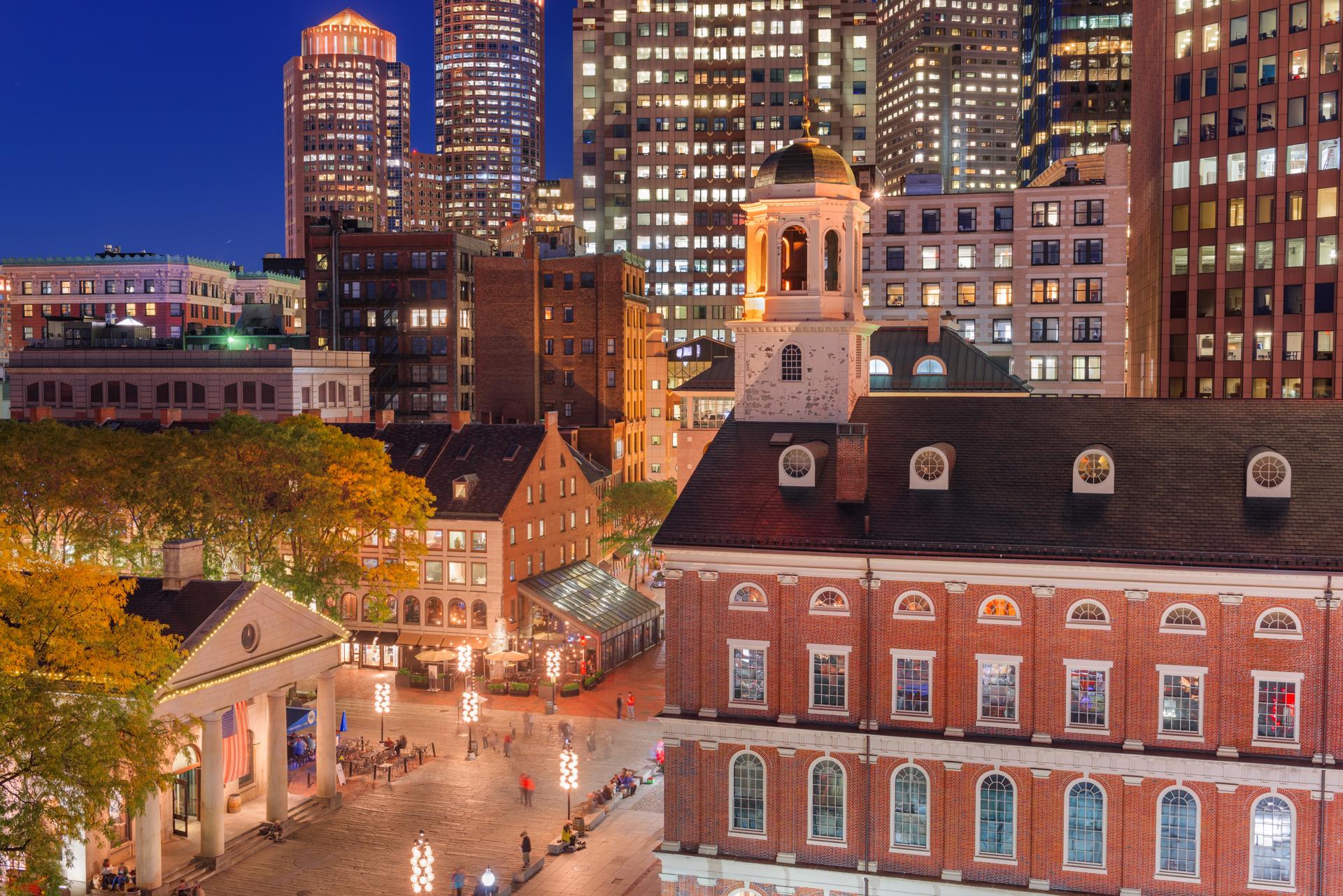
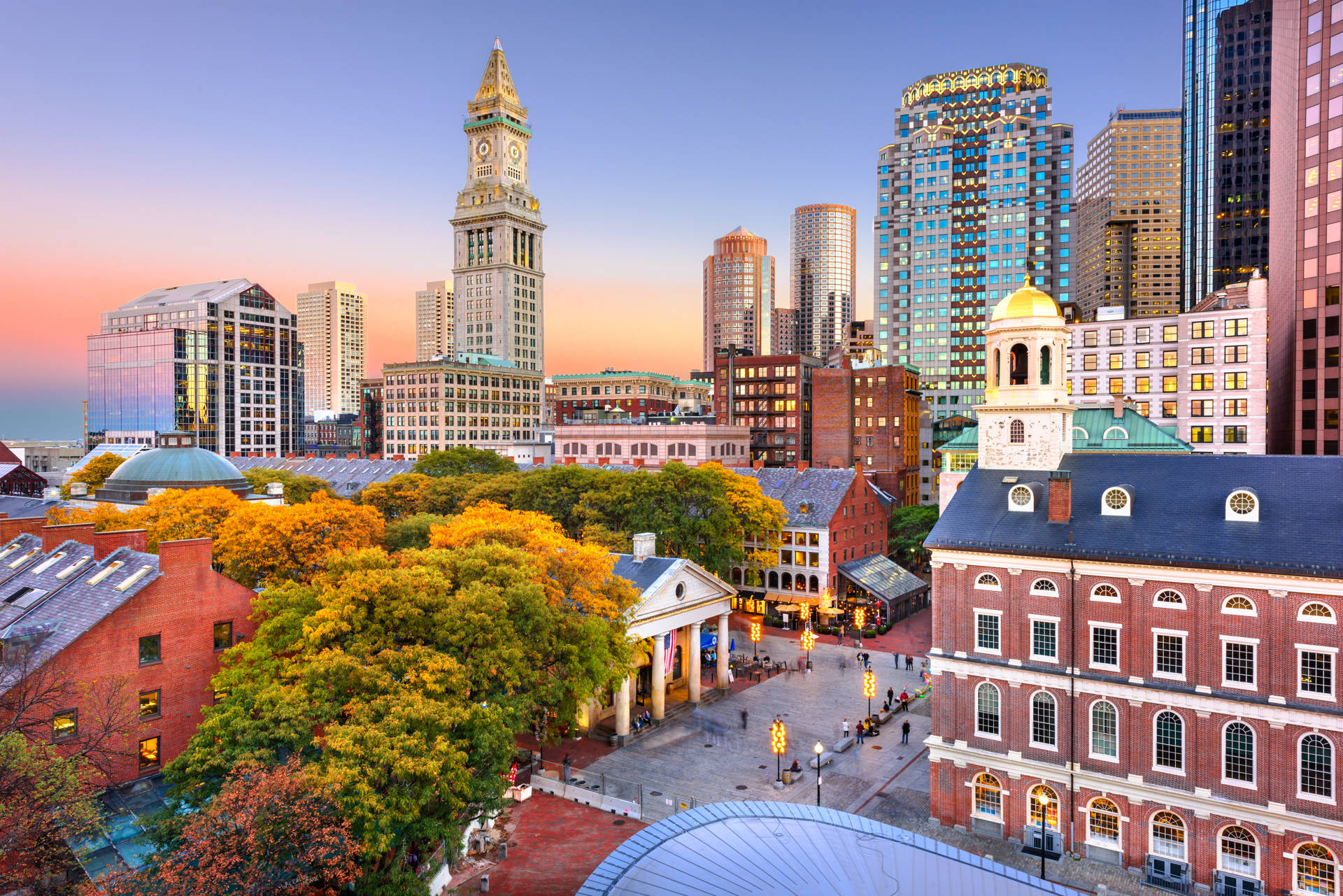
Walking through the area today feels like moving across layers of living history. Red-brick façades, white columns, and symmetrical windows reflect the classical style that defines Boston’s architectural identity. Yet the atmosphere is unmistakably contemporary: street performers, musicians, and visitors from around the world fill the plaza with constant movement and energy.
From a sensory perspective, the experience is lively and immersive. The aroma of freshly prepared dishes lingers in the air, inviting exploration. Conversations unfold in multiple languages. Live music from buskers creates an ever-changing soundtrack that adds spontaneity to the visit.
One of Quincy Market’s defining features is its interior layout. The main building houses a wide central corridor lined with food vendors offering everything from traditional New England specialties to international cuisine. The linear design makes navigation effortless and allows visitors to explore the entire space efficiently.
Meanwhile, Faneuil Hall retains its historic character as a public assembly space. Climbing to the upper level reveals preserved architectural details and offers insight into the hall’s role as a political forum during the colonial era. The coexistence of commerce and historical memory is what makes this complex uniquely compelling.
From a time-efficiency standpoint, the marketplace is exceptionally practical. Within a small radius, visitors can experience architecture, history, dining, and entertainment. A smart approach is to begin by exploring the exterior to appreciate the historic façades, then enter Quincy Market for lunch or a snack, and finally visit Faneuil Hall to complete the cultural perspective.
For travelers who value clear logistics and budget-conscious planning, here are key details:
Quincy Market and Faneuil Hall
Boston, US
In the historic heart of Boston, just steps from the harbor and along the route of the Freedom Trail, stands one of the city’s most dynamic and iconic destinations: Quincy Market and Faneuil Hall Marketplace. This historic complex blends 19th-century architecture, commercial tradition, diverse cuisine, and vibrant urban energy in a compact, fully walkable setting. For travelers arriving in Massachusetts through Arajet’s expanding destination network and looking for what to do in Boston while maximizing every minute, this landmark marketplace offers a strategic stop that brings together culture, history, and local flavor in a single experience.
Important information before your visit
- Location: Historic downtown Boston, near the harbor and along the Freedom Trail
- Distance from Logan International Airport: Approximately 5 kilometers (3 miles)
- Estimated travel time from the airport: 15–20 minutes, depending on traffic.
- Access to the exterior plaza: Free; public space
- Admission to Faneuil Hall: Free during designated hours
- Recommended duration: 2–4 hours.
- Best time to visit: Midday for a lively atmosphere or late afternoon for fewer crowds.
The ideal timeframe to fully experience Quincy Market and Faneuil Hall Marketplace is half a day, especially when combined with nearby attractions such as the harbor or the North End. On a tighter itinerary, even two hours are enough to capture the essence of the area.
For photography enthusiasts, the complex offers numerous compelling angles. Quincy Market’s classical façade with its triangular pediment creates an iconic image—particularly striking against a clear blue sky. Street performances add motion and spontaneity to visual compositions. In the evening, warm lighting highlights architectural details and enhances the historic ambiance.
Beyond its culinary and commercial appeal, the marketplace plays a key role in understanding Boston’s identity. It is a point of convergence between past and present—a place where revolutionary ideals once echoed and where daily life continues to unfold.
The experience also invites interaction. Sitting at one of the outdoor tables and observing the steady flow of visitors reveals the city’s cultural diversity. The space remains open and democratic, much as it was at its founding.
As evening approaches, the atmosphere shifts subtly. Golden light washes over the historic façades, casting soft shadows that accentuate architectural textures. While the crowds thin slightly, the energy never fully disappears.
In terms of preparation, comfortable shoes are recommended, as much of the area features brick and cobblestone surfaces. Depending on the season, a light jacket may be useful—especially if lingering outdoors at sunset.
When you eventually leave Quincy Market and Faneuil Hall Marketplace to continue exploring Boston, the impression remains clear: this is not simply a market. It is a living crossroads where history, commerce, and daily life intersect.
For those flying with Arajet and seeking what to do in Boston in a smart, cultural, and well-organized way, Quincy Market and Faneuil Hall Marketplace are essential stops. Accessible, historic, and centrally located, they deliver one of the city’s most complete urban experiences in just a few well-spent hours. They prove that making the most of your time also means walking among colonial-era buildings, listening to live music in an open plaza, and savoring local flavors while surrounded by the history that helped shape a nation.
For photography enthusiasts, the complex offers numerous compelling angles. Quincy Market’s classical façade with its triangular pediment creates an iconic image—particularly striking against a clear blue sky. Street performances add motion and spontaneity to visual compositions. In the evening, warm lighting highlights architectural details and enhances the historic ambiance.
Beyond its culinary and commercial appeal, the marketplace plays a key role in understanding Boston’s identity. It is a point of convergence between past and present—a place where revolutionary ideals once echoed and where daily life continues to unfold.
The experience also invites interaction. Sitting at one of the outdoor tables and observing the steady flow of visitors reveals the city’s cultural diversity. The space remains open and democratic, much as it was at its founding.
As evening approaches, the atmosphere shifts subtly. Golden light washes over the historic façades, casting soft shadows that accentuate architectural textures. While the crowds thin slightly, the energy never fully disappears.
In terms of preparation, comfortable shoes are recommended, as much of the area features brick and cobblestone surfaces. Depending on the season, a light jacket may be useful—especially if lingering outdoors at sunset.
When you eventually leave Quincy Market and Faneuil Hall Marketplace to continue exploring Boston, the impression remains clear: this is not simply a market. It is a living crossroads where history, commerce, and daily life intersect.
For those flying with Arajet and seeking what to do in Boston in a smart, cultural, and well-organized way, Quincy Market and Faneuil Hall Marketplace are essential stops. Accessible, historic, and centrally located, they deliver one of the city’s most complete urban experiences in just a few well-spent hours. They prove that making the most of your time also means walking among colonial-era buildings, listening to live music in an open plaza, and savoring local flavors while surrounded by the history that helped shape a nation.