
Los Tres Ojos is a natural park formed by limestone caves and underground freshwater lakes, created after the collapse of the roof of an ancient cave system. This geological phenomenon gave rise to large open caverns that now hold several lagoons with intense hues ranging from deep blue to emerald green, depending on their depth and the amount of natural light they receive. The vegetation growing along the rocky walls completes the scene, creating a cool and humid microclimate that contrasts immediately with the heat outside.
Long before the site was adapted for tourism, these caverns held deep significance for the Taíno people. For them, water was a sacred element—a source of life and a spiritual connection to the surrounding world. Walking along the park’s paths today is, in a way, following in the footsteps of those early communities who understood nature as something living and powerful. This historical dimension adds depth to the experience, transforming it into more than just a scenic walk.
The experience begins with a gradual descent down a series of staircases that lead into the heart of the park. As you go down, the temperature drops, the sounds soften, and the sunlight becomes more diffused. The first lagoon appears almost suddenly, with calm, transparent waters reflecting the stone walls around it. It is an ideal place to pause for a few minutes, observe your surroundings, and adjust to the slower rhythm that defines the site.
The path continues intuitively toward a second lagoon, usually deeper and surrounded by more enclosed rock formations. Here, the atmosphere feels more intimate, almost immersive. Water droplets falling from above intermittently break the silence, creating an environment that encourages visitors to lower their voices and move more slowly. This contrast between open spaces and more enclosed areas is one of the greatest attractions of Los Tres Ojos, keeping the walk dynamic without becoming physically demanding.
The third lagoon is often the most enigmatic. With less light entering the cavern, the water takes on a darker tone, reinforcing the sensation of being in a hidden world beneath the city. It is at this point that many visitors fully realize how exceptional this place is: a collection of perfectly preserved underground lakes located within an urban environment. Despite its popularity, the park maintains an atmosphere of respect and tranquility, especially when visited at strategic times of day.
Although the name suggests three lakes, the route includes a fourth lagoon reached after a short additional walk. This area is often a favorite due to its greater openness and the way natural light illuminates the water and surrounding vegetation. It provides a perfect conclusion to the visit, offering a renewed sense of spaciousness before returning to the surface.
From a practical standpoint, Los Tres Ojos stands out for its accessibility—essential for travelers prioritizing budget travel and well-planned itineraries. Its proximity to the city center makes it easy to integrate into any urban schedule. For efficient travelers, here are the key details to consider when organizing your visit:
The Three Eyes
Santo Domingo, DO
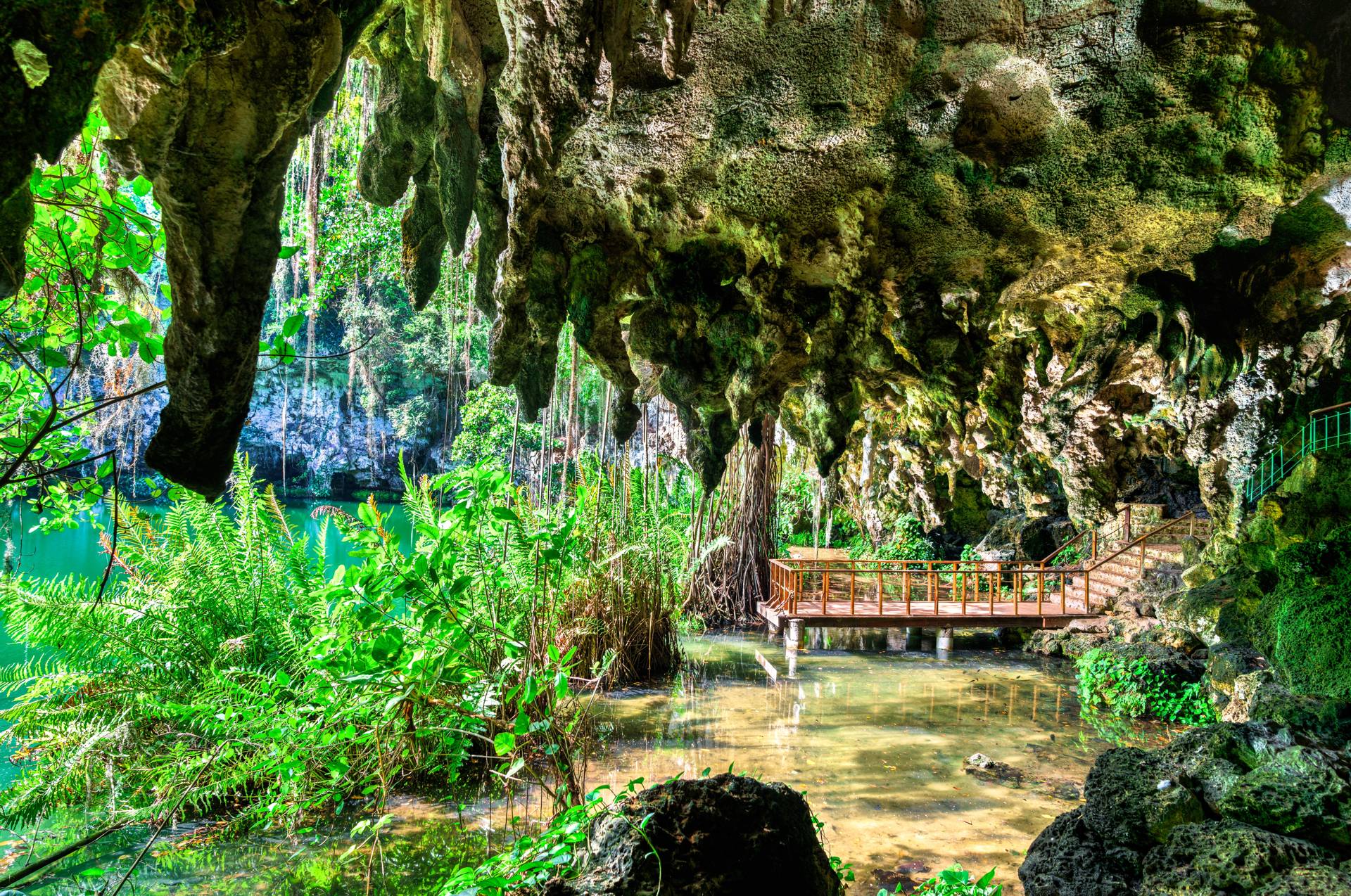
Santo Domingo is a city that surprises travelers precisely when they think they have seen it all. Beyond its historic center, its streets layered with centuries of history, and its constant Caribbean energy, the Dominican capital hides spaces where nature takes over in unexpected ways. Los Tres Ojos is one of those places that completely reshapes the idea of a purely urban city. In just minutes, visitors move from the sound of traffic to a subterranean setting where the air feels cooler, the light filters in softly, and time seems to move at a different pace. For those arriving through Arajet’s destination network and looking for what to do in Santo Domingo without traveling far or dedicating an entire day, this visit becomes one of the most efficient and memorable experiences available.
Important information before your visit
- Distance from downtown Santo Domingo: approximately 8 kilometers from the city center.
- Estimated travel time: between 20 and 30 minutes, depending on traffic.
- Admission fee: low-cost and accessible, making it an excellent option for affordable tourism in the Dominican Republic.
- Visiting hours: open during daytime hours, generally from morning until mid-afternoon.
- Best time to visit: early in the day, when there are fewer visitors and natural light enhances the color of the water.
In terms of timing, exploring Los Tres Ojos does not require a full day. With proper planning, one to two hours are enough to enjoy the park without rushing—reading the available information, taking photographs, and simply sitting for a few minutes to observe the surroundings. This efficiency makes it a perfect activity to combine with other plans on the same day, maximizing every movement within the city.
The sensory experience is one of the park’s greatest strengths. The scent of damp earth, the constant sound of dripping water, the coolness on your skin, and the filtered light entering from above create an almost cinematic atmosphere. It is a space that encourages visitors to disconnect from their phones, slow their pace, and pay close attention to details: roots clinging to rock walls, shadows stretching across the water, reflections shifting with every step.
For photography enthusiasts, Los Tres Ojos offers countless opportunities. The best results come from embracing natural contrasts: the clarity of the water against the darkness of the stone, vibrant green vegetation set against the gray tones of the cave. Natural viewpoints and staircases allow for elevated shots that showcase the depth of the lagoons, while close-up details provide a more artistic perspective. Morning light is especially favorable, entering at an angle that enhances colors without creating harsh shadows.
Preparation for the visit does not require complex logistics, but a few smart choices make a difference. Comfortable, slip-resistant footwear is essential, as the stairs may be damp. Light, breathable clothing is ideal, although the interior of the park feels cooler than outside. Bringing water is recommended, particularly on hot days, and a small backpack allows you to move freely throughout the tour.
From a strategic planning perspective, Los Tres Ojos fits perfectly into an itinerary designed to maximize time. It is a concentrated, intense, and distinct experience that complements longer visits rather than competing with them. For travelers staying only a few days or simply passing through, attractions like this make the difference between a rushed trip and a well-balanced one.
As you exit the park and return to the surface, the contrast is immediate. The city’s noise reappears, the heat intensifies, and the urban rhythm takes over once again. Yet what lingers is the feeling of having discovered a well-kept secret—a natural space that proves Santo Domingo is far more than its colonial history and busy avenues.
For those flying with Arajet and searching for what to do in Santo Domingo in a smart and efficient way, Los Tres Ojos is a perfect choice. It does not require long transfers, it does not take up your entire day, and it offers a unique experience that blends nature, history, and calm in a single visit. It is an attraction perfectly suited to the modern traveler: efficient, memorable, and deeply connected to the essence of the destination.
The sensory experience is one of the park’s greatest strengths. The scent of damp earth, the constant sound of dripping water, the coolness on your skin, and the filtered light entering from above create an almost cinematic atmosphere. It is a space that encourages visitors to disconnect from their phones, slow their pace, and pay close attention to details: roots clinging to rock walls, shadows stretching across the water, reflections shifting with every step.
For photography enthusiasts, Los Tres Ojos offers countless opportunities. The best results come from embracing natural contrasts: the clarity of the water against the darkness of the stone, vibrant green vegetation set against the gray tones of the cave. Natural viewpoints and staircases allow for elevated shots that showcase the depth of the lagoons, while close-up details provide a more artistic perspective. Morning light is especially favorable, entering at an angle that enhances colors without creating harsh shadows.
Preparation for the visit does not require complex logistics, but a few smart choices make a difference. Comfortable, slip-resistant footwear is essential, as the stairs may be damp. Light, breathable clothing is ideal, although the interior of the park feels cooler than outside. Bringing water is recommended, particularly on hot days, and a small backpack allows you to move freely throughout the tour.
From a strategic planning perspective, Los Tres Ojos fits perfectly into an itinerary designed to maximize time. It is a concentrated, intense, and distinct experience that complements longer visits rather than competing with them. For travelers staying only a few days or simply passing through, attractions like this make the difference between a rushed trip and a well-balanced one.
As you exit the park and return to the surface, the contrast is immediate. The city’s noise reappears, the heat intensifies, and the urban rhythm takes over once again. Yet what lingers is the feeling of having discovered a well-kept secret—a natural space that proves Santo Domingo is far more than its colonial history and busy avenues.
For those flying with Arajet and searching for what to do in Santo Domingo in a smart and efficient way, Los Tres Ojos is a perfect choice. It does not require long transfers, it does not take up your entire day, and it offers a unique experience that blends nature, history, and calm in a single visit. It is an attraction perfectly suited to the modern traveler: efficient, memorable, and deeply connected to the essence of the destination.