
The heart of Willemstad is divided by St. Anna Bay, creating two main districts connected by an iconic floating pedestrian bridge. This detail is essential to the urban experience. From the first step onto the floating structure, visitors feel the gentle movement of the water beneath their feet while watching small boats pass through the harbor entrance. The contrast between the deep blue sea and the multicolored façades creates one of the Caribbean’s most recognizable images.
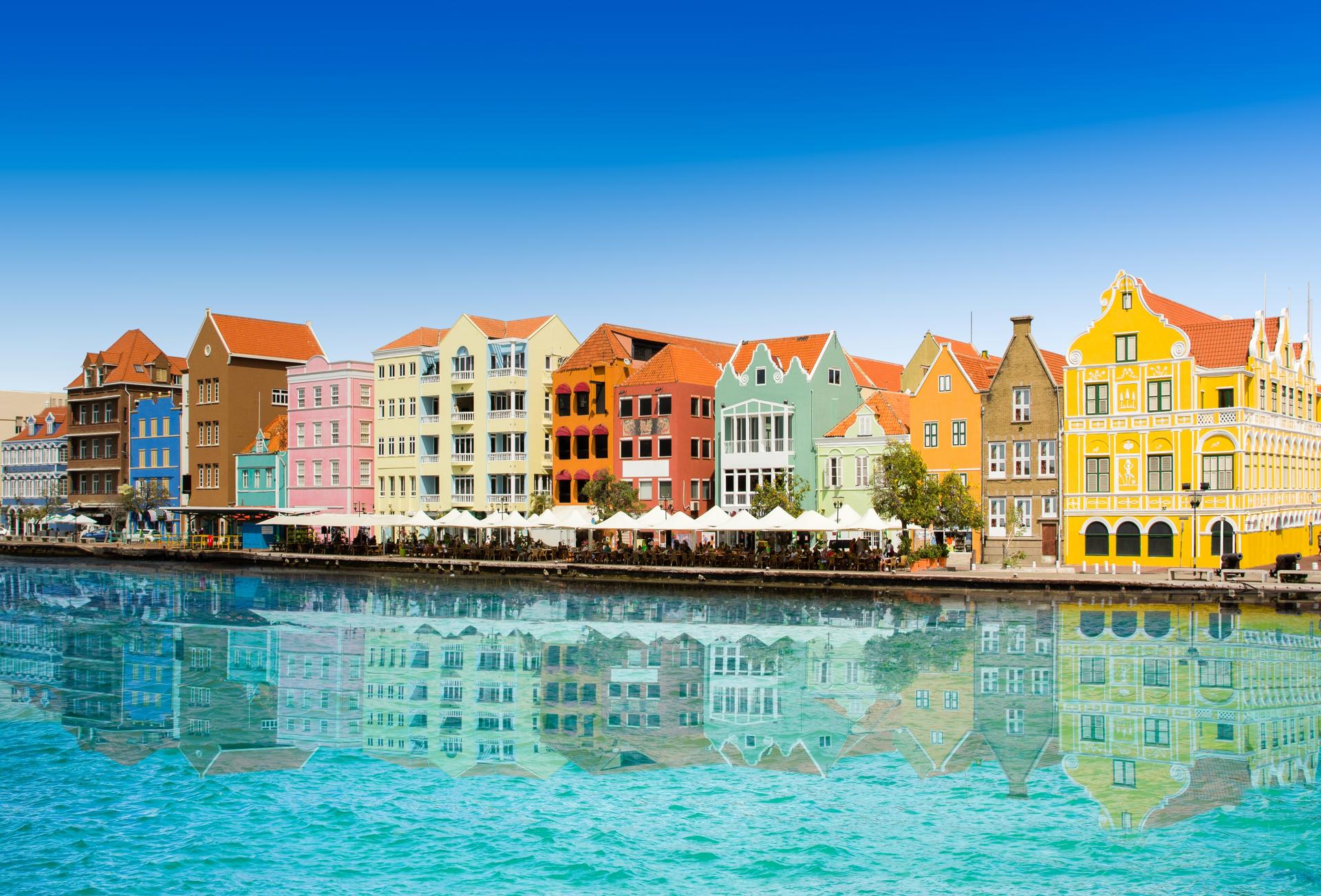
The most photographed area of Willemstad is the row of historic buildings lining the waterfront. Narrow façades with decorative gables and white trim are painted in mustard yellow, sky blue, coral pink, and mint green. This vibrant palette is no coincidence—it reflects an architectural tradition that blends European heritage with Caribbean adaptation. Under the intense tropical sun, the colors take on a natural saturation that almost feels surreal.
Walking through the historic center is a complete sensory experience. Cobblestone streets reflect the warmth of the day, while the sea breeze balances the temperature. Conversations in multiple languages highlight the island’s cultural diversity. The salty scent of the harbor blends with the energy of a city that is active yet manageable in size.
Historically, Willemstad was a strategic commercial hub in the Caribbean. Its deep natural harbor supported key trade routes for centuries. That maritime heritage remains visible today in the urban layout: former warehouses converted into cultural spaces, active docks, and a waterfront promenade that invites leisurely strolling by the water.
From a time-efficiency perspective, Willemstad is exceptionally practical. Its compact historic center allows visitors to explore the essentials in half a day without needing internal transportation. Organizing the visit strategically—first the waterfront district, then crossing the floating bridge, and finally exploring the adjacent neighborhood—ensures a smooth and uninterrupted experience.
One of the most memorable moments is watching the floating bridge in action. When a large vessel needs to pass, the bridge slowly opens, separating into two sections that glide toward the sides of the bay. This movement adds a dynamic element to the visit and reinforces the city’s constant connection to the sea.
Beyond the iconic façades, Willemstad offers open plazas, charming alleyways, and historic buildings that deepen the understanding of local history. Every corner reveals architectural details: wrought-iron balconies, brightly painted wooden doors, and shuttered windows designed for the warm climate.
For travelers who value clear logistics and budget-friendly planning, consider these practical details:
Willemstad
Curazao, CW
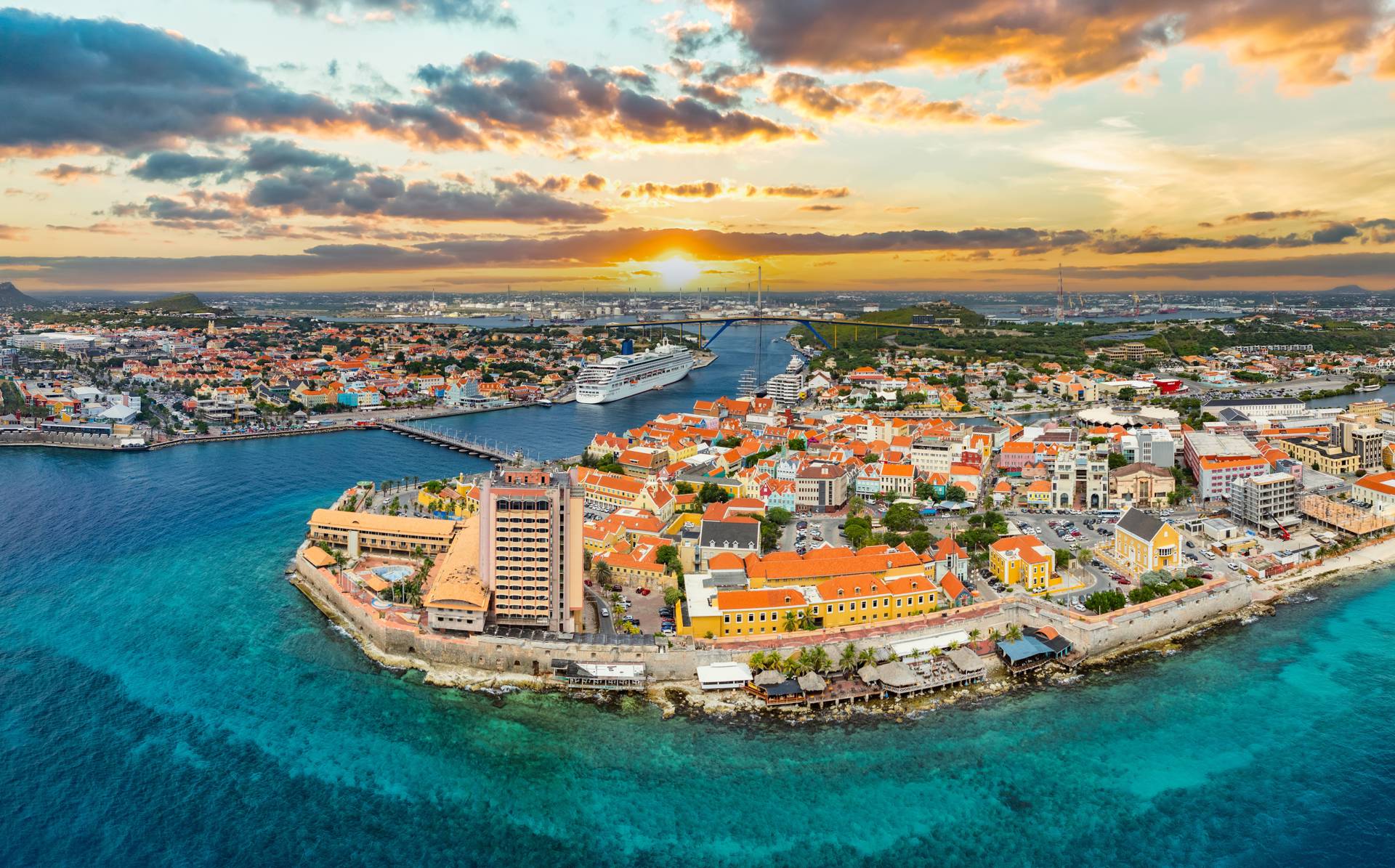
On Curaçao’s southern coast, where the Caribbean Sea flows into a naturally protected bay, lies Willemstad—one of the most picturesque and photogenic capitals in the Caribbean. With its vibrant façades lined up along the waterfront and Dutch-inspired architecture adapted to a tropical climate, this city is more than just an urban center: it is a living historical setting where culture, commerce, and maritime scenery converge in a perfectly walkable space. For travelers arriving in Curaçao through Arajet’s destination network and looking for what to do in Willemstad while optimizing every minute of their trip, the historic center offers a strategic, visually striking, and deeply cultural experience in just a few well-organized hours.
Important information before your visit
- Location: Southern coast of Curaçao, surrounding St. Anna Bay
- Distance from the international airport: Approximately 12 kilometers
- Estimated travel time from the airport: 20 to 25 minutes by car.
- Entrance: Free to explore the historic center
- Best time to visit: Early morning or late afternoon to avoid peak heat.
The ideal time to explore Willemstad ranges from 3 to 5 hours if you want to stroll at a relaxed pace, cross the floating bridge multiple times, and stop at key photography points. With a full day, you can further explore adjacent neighborhoods and cultural spaces.
For photography enthusiasts, Willemstad is a privileged setting. One of the best panoramic views can be found from elevated points near the center, where the entire row of colorful buildings can be seen reflected in the water. During golden hour, the light softens the bold tones and creates warm reflections across the bay. Even under midday sun, the vibrant colors produce striking compositions.
In terms of preparation, lightweight and comfortable clothing is recommended. Sun protection is essential, as much of the exploration takes place outdoors. Bringing water helps maintain energy during the walk, and comfortable shoes make navigating cobblestones and uneven surfaces easier.
Beyond its visual appeal, Willemstad plays a fundamental role in any trip to Curaçao: it provides cultural and architectural context. It reveals how Dutch influence merged with Caribbean atmosphere to create a uniquely identifiable urban identity within the region.
The experience also encourages alternating between movement and contemplation. Sitting by the waterfront and watching boats come and go offers a pleasant pause. The city’s rhythm is not frantic—it is active yet relaxed, allowing visitors to enjoy it without haste.
As evening approaches, the atmosphere shifts subtly. Golden light transforms the façades, the heat diminishes, and the walk becomes cooler and more comfortable. This is an ideal moment to capture memorable photographs and conclude the visit with a sense of completion.
When leaving the historic center to head toward beaches or natural areas of the island, Willemstad leaves a clear impression: it is a compact, vibrant, and visually unforgettable capital. It does not overwhelm with scale or dispersion—it concentrates history, architecture, and scenery within a perfectly walkable space.
For those flying with Arajet and looking for what to do in Curaçao in a smart, cultural, and well-planned way, Willemstad is an essential stop. Colorful, historic, and strategically organized, it offers one of the Caribbean’s most photogenic urban experiences in just a few hours. It proves that making the most of your time also means walking by the sea, crossing an iconic floating bridge, and discovering how Europe and the Caribbean merge in a city that looks hand-painted against turquoise waters.
For photography enthusiasts, Willemstad is a privileged setting. One of the best panoramic views can be found from elevated points near the center, where the entire row of colorful buildings can be seen reflected in the water. During golden hour, the light softens the bold tones and creates warm reflections across the bay. Even under midday sun, the vibrant colors produce striking compositions.
In terms of preparation, lightweight and comfortable clothing is recommended. Sun protection is essential, as much of the exploration takes place outdoors. Bringing water helps maintain energy during the walk, and comfortable shoes make navigating cobblestones and uneven surfaces easier.
Beyond its visual appeal, Willemstad plays a fundamental role in any trip to Curaçao: it provides cultural and architectural context. It reveals how Dutch influence merged with Caribbean atmosphere to create a uniquely identifiable urban identity within the region.
The experience also encourages alternating between movement and contemplation. Sitting by the waterfront and watching boats come and go offers a pleasant pause. The city’s rhythm is not frantic—it is active yet relaxed, allowing visitors to enjoy it without haste.
As evening approaches, the atmosphere shifts subtly. Golden light transforms the façades, the heat diminishes, and the walk becomes cooler and more comfortable. This is an ideal moment to capture memorable photographs and conclude the visit with a sense of completion.
When leaving the historic center to head toward beaches or natural areas of the island, Willemstad leaves a clear impression: it is a compact, vibrant, and visually unforgettable capital. It does not overwhelm with scale or dispersion—it concentrates history, architecture, and scenery within a perfectly walkable space.
For those flying with Arajet and looking for what to do in Curaçao in a smart, cultural, and well-planned way, Willemstad is an essential stop. Colorful, historic, and strategically organized, it offers one of the Caribbean’s most photogenic urban experiences in just a few hours. It proves that making the most of your time also means walking by the sea, crossing an iconic floating bridge, and discovering how Europe and the Caribbean merge in a city that looks hand-painted against turquoise waters.