
The journey to Antigua already signals a shift in atmosphere. As you leave the modern capital behind, the landscape opens to mountains and volcanoes that dominate the horizon. The air feels slightly cooler and cleaner. Soon, cobblestone streets and colonial façades appear, announcing arrival in a completely different environment.
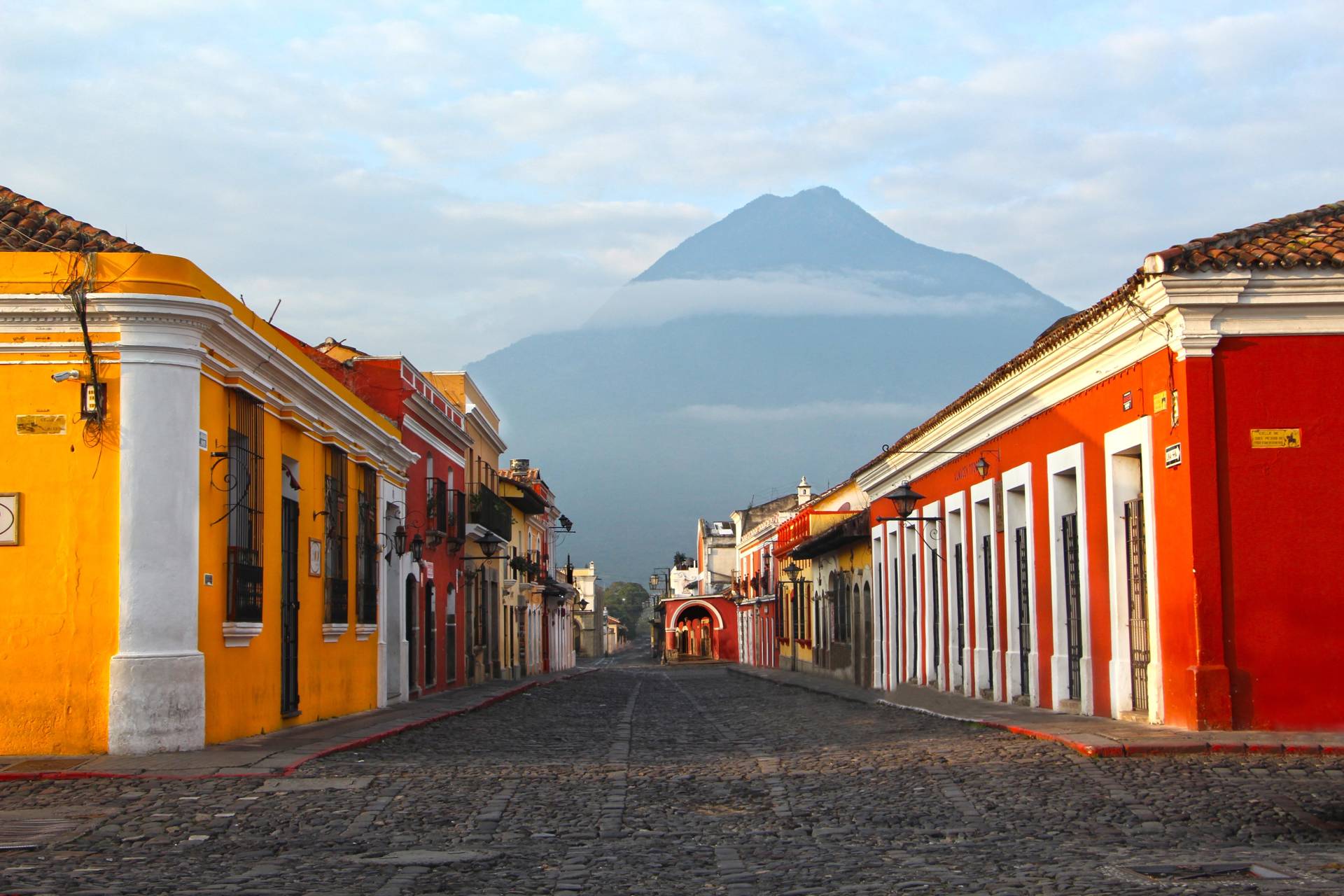
Walking through Antigua Guatemala is a full sensory experience. The sound of footsteps on stone, the occasional creak of old wooden doors, and the soft echo of conversations in interior courtyards create an intimate and welcoming atmosphere. The view fills with soft tones—warm yellows, pale blues, terracotta, and white—contrasting with the deep green of the volcanoes surrounding the city.
One of Antigua’s greatest strengths is its human scale. Everything can be explored on foot. There is no need for complex transportation or extensive logistical planning. Within just a few blocks, visitors encounter historic churches, tree-lined plazas, colonial ruins, and natural viewpoints. This concentration makes Antigua one of the most time-efficient destinations in Guatemala tourism.
Historically, Antigua served as the capital of the Kingdom of Guatemala during the colonial period. Its political and religious importance was reflected in the monumental scale of its churches and convents. However, devastating earthquakes in the 18th century led to the relocation of the capital, leaving the city behind. Rather than disappearing, Antigua was preserved in time. That story of destruction and preservation is central to its unique character.
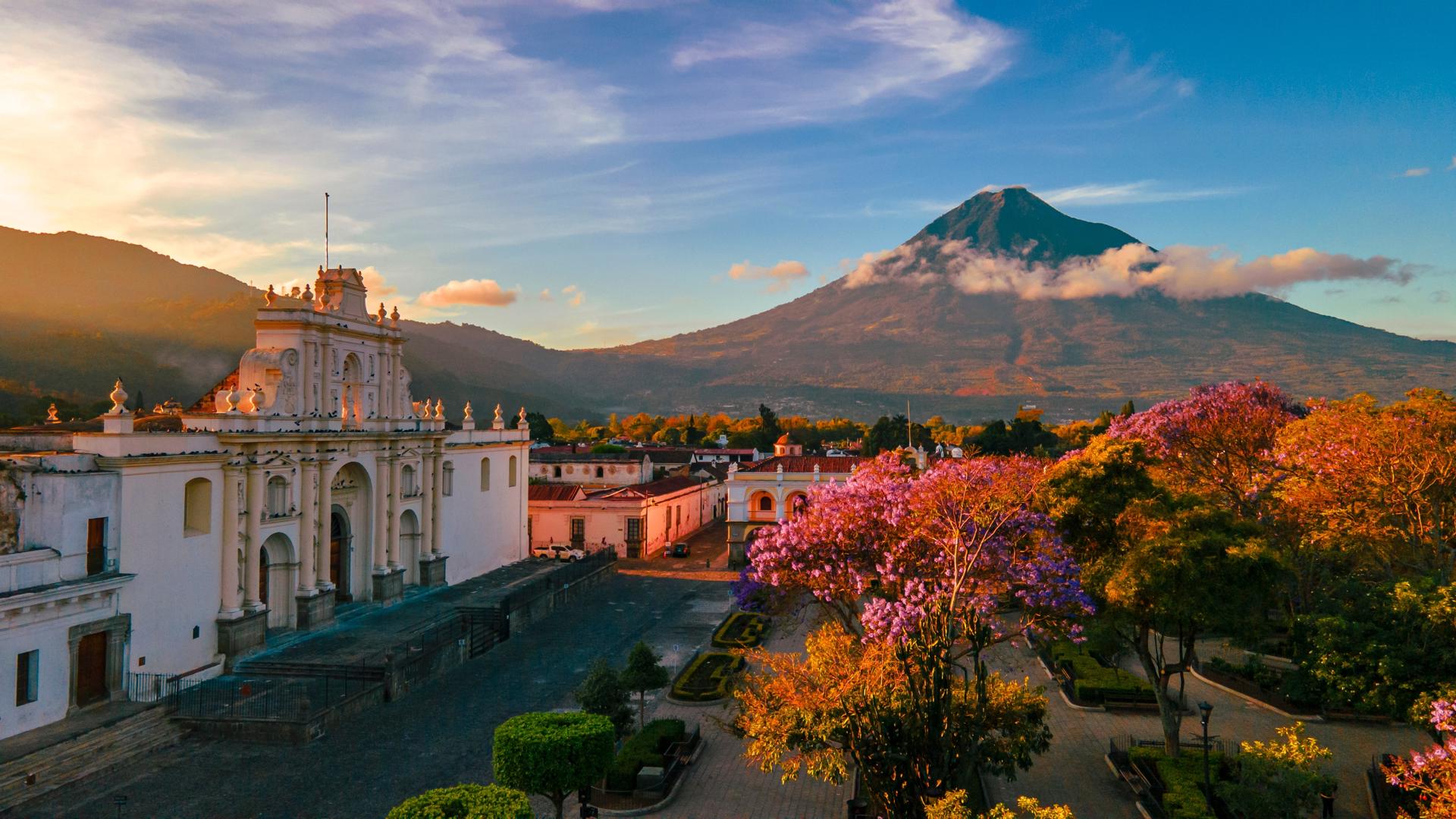
The ruins of former convents and churches do not feel abandoned; they feel alive with memory. Open arches framing the sky, partially crumbled walls, and courtyards filled with vegetation create a distinctive aesthetic where architecture and nature constantly interact. This contrast is one of the city’s most photogenic qualities.
Visually, Antigua is framed by three volcanoes that define its skyline. On clear days, their silhouettes add dramatic depth to the urban landscape. This combination of architectural heritage and volcanic geography distinguishes Antigua from other colonial destinations in Latin America.
The central park functions as the social heart of the city. Surrounded by historic buildings, it offers shade beneath mature trees and provides the perfect pause to observe daily life. Families, students, and visitors share the space naturally, reinforcing the sense that Antigua is not a static museum, but a living city.
From a time-efficiency perspective, Antigua is exceptionally strategic. It can be visited as a day trip from Guatemala City, though spending one night allows you to experience its atmosphere at sunset and early in the morning, when the light enhances the colors of the façades, and the streets are quieter.
For travelers who value clear logistics and budget-conscious planning, here are a few practical details to keep in mind:
Antigua Guatemala
Ciudad de Guatemala, GT
Less than an hour from Guatemala City lies a destination where time seems suspended among volcanoes, cobblestone streets, and pastel-colored façades: Antigua Guatemala. Declared a UNESCO World Heritage Site, this colonial city is not simply a tourist attraction; it is an immersive experience where architecture, history, and volcanic landscapes blend in near-perfect balance. For travelers arriving in Guatemala through Arajet’s destination network and looking for what to do in the country while making the most of every travel day, Antigua represents a strategic choice: accessible, compact, and deeply enriching both culturally and visually.
Important information before your visit
- Distance from Guatemala City: Approximately 45 kilometers
- Estimated travel time: Between 1 and 1.5 hours, depending on traffic.
- City access: Free; some specific historic sites require admission fees.
- Recommended visiting hours: Throughout the day; early morning and sunset are ideal.
- Best time to visit: November to April, when the weather is generally drier and clearer.
The ideal time to explore Antigua Guatemala is between 4 and 6 hours for a day visit. This allows for walking through the historic center, visiting key ruins, and enjoying the central park without feeling rushed. Adding an overnight stay significantly deepens the experience.
For photography enthusiasts, Antigua is an inexhaustible setting. Cobblestone streets aligned with volcanoes in the background create naturally balanced compositions. Colonial arches framing mountain views and intricate details on wooden doors offer constant opportunities. Morning and late-afternoon light are especially favorable, adding warm tones that intensify the city’s colonial character.
In terms of preparation, comfortable footwear is essential for walking on uneven stone streets. Light clothing works well during the day, but bringing an extra layer for the evening is advisable, as temperatures can drop. Sun protection is important, especially on clear days at higher altitude.
Beyond its obvious visual appeal, Antigua plays an essential role in any trip to Guatemala: it provides tangible insight into the colonial era and urban resilience in the face of natural disasters. Walking its streets reveals how a city can reinvent itself without losing its identity.
The experience also invites contemplation. Sitting in a plaza, observing the slow rhythm of daily life, and allowing the surroundings to speak for themselves creates a sense of disconnection from the fast pace of contemporary life. That conscious pause is part of the destination’s value.
When returning to the capital or continuing on to other parts of the country, Antigua often remains one of the strongest memories of the journey—not only for its architecture or volcanoes, but for the complete atmosphere it conveys.
For those flying with Arajet and searching for what to do in Guatemala in a smart, culturally enriching, and well-planned way, Antigua Guatemala is an essential stop. Close, compact, and profoundly historic, it offers one of the most complete travel experiences in Central America in just a few hours. It proves that making the most of your time also means walking streets where history remains alive framed by volcanoes that quietly remind you of the earth’s enduring power.
For photography enthusiasts, Antigua is an inexhaustible setting. Cobblestone streets aligned with volcanoes in the background create naturally balanced compositions. Colonial arches framing mountain views and intricate details on wooden doors offer constant opportunities. Morning and late-afternoon light are especially favorable, adding warm tones that intensify the city’s colonial character.
In terms of preparation, comfortable footwear is essential for walking on uneven stone streets. Light clothing works well during the day, but bringing an extra layer for the evening is advisable, as temperatures can drop. Sun protection is important, especially on clear days at higher altitude.
Beyond its obvious visual appeal, Antigua plays an essential role in any trip to Guatemala: it provides tangible insight into the colonial era and urban resilience in the face of natural disasters. Walking its streets reveals how a city can reinvent itself without losing its identity.
The experience also invites contemplation. Sitting in a plaza, observing the slow rhythm of daily life, and allowing the surroundings to speak for themselves creates a sense of disconnection from the fast pace of contemporary life. That conscious pause is part of the destination’s value.
When returning to the capital or continuing on to other parts of the country, Antigua often remains one of the strongest memories of the journey—not only for its architecture or volcanoes, but for the complete atmosphere it conveys.
For those flying with Arajet and searching for what to do in Guatemala in a smart, culturally enriching, and well-planned way, Antigua Guatemala is an essential stop. Close, compact, and profoundly historic, it offers one of the most complete travel experiences in Central America in just a few hours. It proves that making the most of your time also means walking streets where history remains alive framed by volcanoes that quietly remind you of the earth’s enduring power.