
The Columbus Lighthouse was conceived as a monumental tribute to Christopher Columbus and the encounter between two worlds. Its construction was the result of an idea that took shape over more than five centuries, as the desire to build a grand monument in honor of the navigator dates back to the 19th century. It was not until the late 20th century that the project finally materialized, giving rise to a colossal structure that combines modern architecture with powerful symbolism. Seen from above, the monument is shaped like a cross—an intentional design choice that reinforces its commemorative character. At night, this shape becomes even more striking thanks to a powerful lighting system that projects a luminous cross into the sky, visible from several kilometers away.
Reaching the Columbus Lighthouse is simple and quick from downtown Santo Domingo, making it a strategic stop even for travelers with limited time in the city. From a practical perspective tailored to the efficient traveler, here are the key details to consider before planning your visit:
Columbus Lighthouse
Santo Domingo, DO
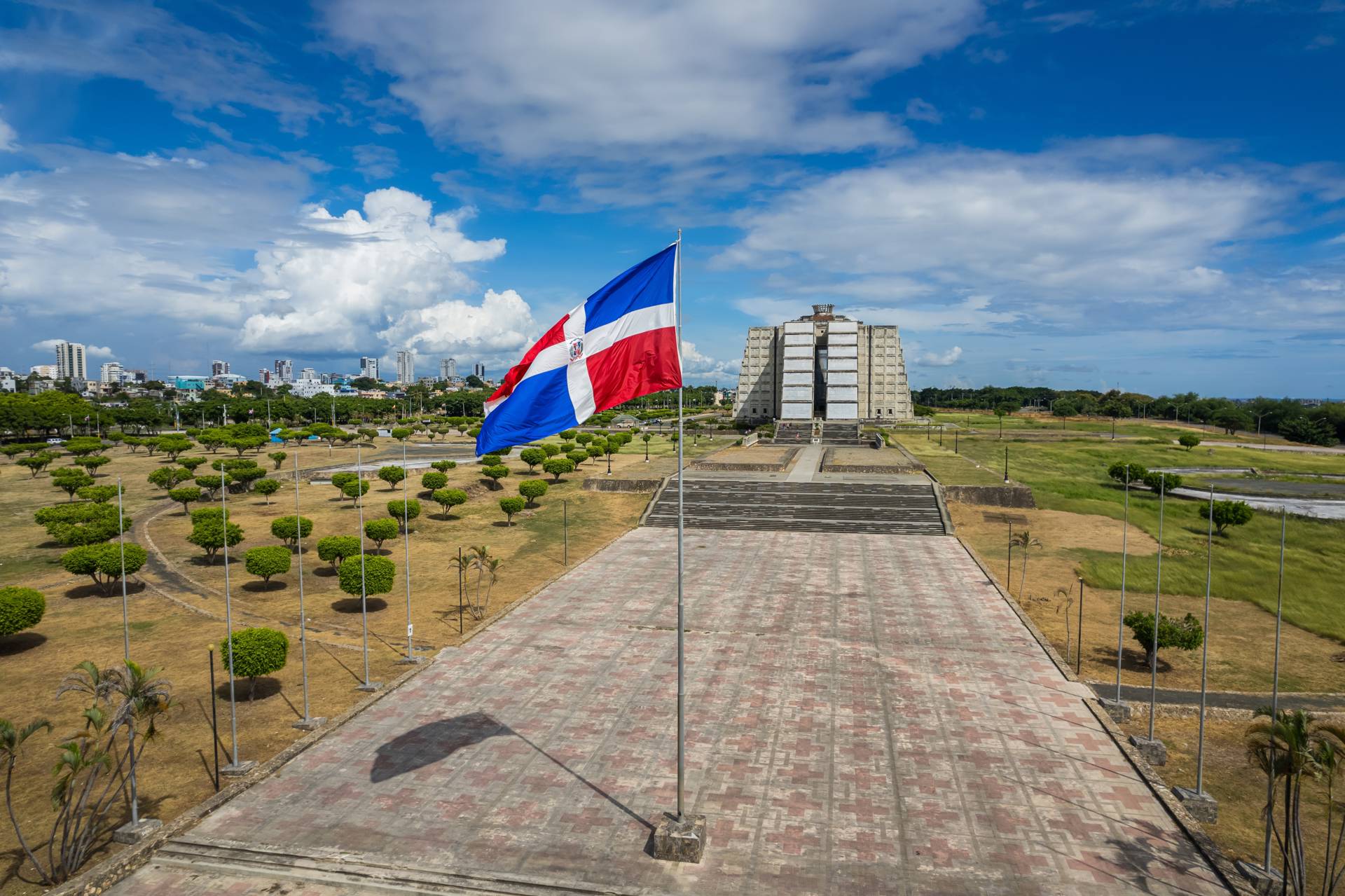
Santo Domingo is a city where history is not preserved in silent museums, but expressed on a grand scale, out in the open, with an imposing presence. One of the clearest examples of this living historical identity is the Columbus Lighthouse, a monument that not only dominates the eastern skyline of the city but also concentrates centuries of symbolism, debate, memory, and cultural pride. For the modern traveler arriving in the Dominican capital through Arajet’s destination network, this site represents a unique opportunity to understand the historical depth of the Caribbean without covering long distances or dedicating full days to a single attraction. It is a perfect choice for those wondering what to do in Santo Domingo in an efficient, cultural, and meaningful way.
Important information before your visit
- Distance from downtown Santo Domingo: approximately 7 kilometers from the city center.
- Estimated travel time: between 20 and 25 minutes, depending on traffic.
- Admission fee: generally free or subject to a symbolic fee, ideal for those prioritizing budget travel.
- Visiting hours: open during daytime hours, usually from morning until mid-afternoon.
- Best time to visit: early in the morning, when there are fewer visitors and the experience feels calmer.
Upon arrival, the first thing that strikes you is the scale. The Lighthouse does not gradually reveal itself—it imposes itself. Its massive structure, defined by straight, sober lines, contrasts sharply with the colonial architecture that characterizes other areas of the city. Here, there are no balconies or cobblestone streets; instead, you find openness, concrete, vast spaces, and an almost ceremonial atmosphere. Walking around the exterior helps you understand that this is not merely a monument, but a cultural complex designed to invite reflection on the shared history of the Americas and Europe.
Inside, the Lighthouse houses expansive halls that function as exhibition spaces dedicated to various countries across the continent, each contributing its own perspective on the historical legacy of cultural encounters. The layout is intuitive and can be explored in an organized manner without dedicating long hours. In approximately an hour and a half, visitors can tour the main areas, read the essential informational panels, and gain a clear understanding of the monument’s significance—particularly valuable for those who want to maximize their time without feeling that the experience is incomplete.
One of the most compelling sections is the area where, according to Dominican tradition, the remains of Christopher Columbus rest. Beyond the historical debates surrounding this claim, the space is designed to convey solemnity. Dim lighting, expansive interiors, and the quiet that typically accompanies visitors create an atmosphere that encourages pause—even if only for a few minutes—to reflect on the impact of the events that marked the beginning of the modern era.
From a sensory perspective, the Columbus Lighthouse offers a different experience compared to other tourist attractions in Santo Domingo. Bright colors and constant bustle are not the focus here. Instead, you notice footsteps echoing through the corridors, subtle air currents cooling the interior, and carefully filtered light creating contrasts between shadow and brightness. Everything contributes to a feeling of pause, almost of contemplation, standing in contrast to the city’s energetic rhythm.
For photography enthusiasts, the monument provides an exceptional setting. The best images can be captured by embracing the building’s geometry—playing with straight lines, sharp angles, and symmetry. From the outside, wide shots allow you to capture the magnitude of the structure against the Caribbean sky, especially early in the morning or late in the afternoon, when the light is softer and shadows add depth. Inside, the interplay of light and shadow offers opportunities for more artistic and minimalist compositions.
In terms of preparation, the visit requires no complex logistics. Light, breathable clothing is sufficient, although the interior of the monument may feel cooler than the outside. Comfortable footwear is essential, as the tour involves walking long distances across expansive surfaces. Bringing water is recommended, particularly if you plan to explore the surrounding open areas, which are ideal for a relaxed stroll.
From a smart planning perspective, the Columbus Lighthouse easily integrates into a broader urban itinerary. Dedicating two to three hours to the visit allows you to explore at a comfortable pace while still leaving room to discover other points of interest in Santo Domingo on the same day—especially valuable for those traveling for only a few days or stopping over briefly.
By the end of the visit, it becomes clear that the Columbus Lighthouse is not a conventional tourist attraction. It is a place that generates opinions, sparks curiosity, and compels visitors to view history on a grander scale. For some, it is a symbol of pride; for others, a space that invites critical reflection. It is precisely in this duality that its value lies. In a city where every street tells part of the past, the Lighthouse offers a bold and expansive vision of the events that changed the course of the world.
For those flying with Arajet and looking for what to do in Santo Domingo while making the most of every minute, the Columbus Lighthouse is a smart choice. It does not require long transfers, it does not consume an entire day, and it leaves a lasting impression. It is a visit that, without demanding great effort, adds depth to your journey and allows you to return home with more than photographs: a clearer understanding of the place and the history that defines it.
Inside, the Lighthouse houses expansive halls that function as exhibition spaces dedicated to various countries across the continent, each contributing its own perspective on the historical legacy of cultural encounters. The layout is intuitive and can be explored in an organized manner without dedicating long hours. In approximately an hour and a half, visitors can tour the main areas, read the essential informational panels, and gain a clear understanding of the monument’s significance—particularly valuable for those who want to maximize their time without feeling that the experience is incomplete.
One of the most compelling sections is the area where, according to Dominican tradition, the remains of Christopher Columbus rest. Beyond the historical debates surrounding this claim, the space is designed to convey solemnity. Dim lighting, expansive interiors, and the quiet that typically accompanies visitors create an atmosphere that encourages pause—even if only for a few minutes—to reflect on the impact of the events that marked the beginning of the modern era.
From a sensory perspective, the Columbus Lighthouse offers a different experience compared to other tourist attractions in Santo Domingo. Bright colors and constant bustle are not the focus here. Instead, you notice footsteps echoing through the corridors, subtle air currents cooling the interior, and carefully filtered light creating contrasts between shadow and brightness. Everything contributes to a feeling of pause, almost of contemplation, standing in contrast to the city’s energetic rhythm.
For photography enthusiasts, the monument provides an exceptional setting. The best images can be captured by embracing the building’s geometry—playing with straight lines, sharp angles, and symmetry. From the outside, wide shots allow you to capture the magnitude of the structure against the Caribbean sky, especially early in the morning or late in the afternoon, when the light is softer and shadows add depth. Inside, the interplay of light and shadow offers opportunities for more artistic and minimalist compositions.
In terms of preparation, the visit requires no complex logistics. Light, breathable clothing is sufficient, although the interior of the monument may feel cooler than the outside. Comfortable footwear is essential, as the tour involves walking long distances across expansive surfaces. Bringing water is recommended, particularly if you plan to explore the surrounding open areas, which are ideal for a relaxed stroll.
From a smart planning perspective, the Columbus Lighthouse easily integrates into a broader urban itinerary. Dedicating two to three hours to the visit allows you to explore at a comfortable pace while still leaving room to discover other points of interest in Santo Domingo on the same day—especially valuable for those traveling for only a few days or stopping over briefly.
By the end of the visit, it becomes clear that the Columbus Lighthouse is not a conventional tourist attraction. It is a place that generates opinions, sparks curiosity, and compels visitors to view history on a grander scale. For some, it is a symbol of pride; for others, a space that invites critical reflection. It is precisely in this duality that its value lies. In a city where every street tells part of the past, the Lighthouse offers a bold and expansive vision of the events that changed the course of the world.
For those flying with Arajet and looking for what to do in Santo Domingo while making the most of every minute, the Columbus Lighthouse is a smart choice. It does not require long transfers, it does not consume an entire day, and it leaves a lasting impression. It is a visit that, without demanding great effort, adds depth to your journey and allows you to return home with more than photographs: a clearer understanding of the place and the history that defines it.