
From the moment you step onto its tree-lined paths, the contrast with the financial district becomes clear. The sound of traffic gradually fades, replaced by birdsong, wind moving through the trees, and the steady rhythm of runners and cyclists along paved trails. The park runs parallel to Lake Michigan, creating a constant sense of openness toward the vast blue horizon.
Historically, Lincoln Park was established in the 19th century on land that originally served as a cemetery. As Chicago expanded, the city transformed the area into a public park, solidifying it as an essential urban green space. Over time, the park extended northward, incorporating beaches, gardens, and cultural facilities.
One of Lincoln Park’s greatest assets is its direct relationship with Lake Michigan. Unlike many urban parks enclosed by buildings, this one opens fully to the water, offering unobstructed views where the horizon blends seamlessly with the sky. Walking along the lakeside trail provides a unique combination of metropolitan energy and natural tranquility.
From a sensory perspective, Lincoln Park feels dynamic yet serene. The breeze from the lake can be refreshing even in summer, offering relief during long walks. In spring and summer, the scent of freshly cut grass mixes with the moisture in the air. In autumn, changing leaves create a palette of reds and golds that transform the landscape.
The park is also home to beautifully designed formal gardens, featuring geometric pathways and seasonal floral displays. These structured areas add a refined dimension to the broader natural setting. Walking among flowers and sculptures creates a sense of harmony between design and nature.
One of Lincoln Park’s most notable highlights is its zoo, which offers free admission. Seamlessly integrated into the park’s landscape, it allows visitors to observe a wide variety of animals without leaving the green surroundings. This feature makes it an ideal option for families and cost-conscious travelers.
From a time-efficiency standpoint, Lincoln Park is highly flexible. A smart strategy is to divide your visit into segments—for example, starting with the lakeside trail and beaches in the morning, continuing through the formal gardens, and finishing at the zoo or one of the scenic points with skyline views.
For travelers who value clear logistics and organized planning, consider the following practical details:
Lincoln Park
Chicago, US
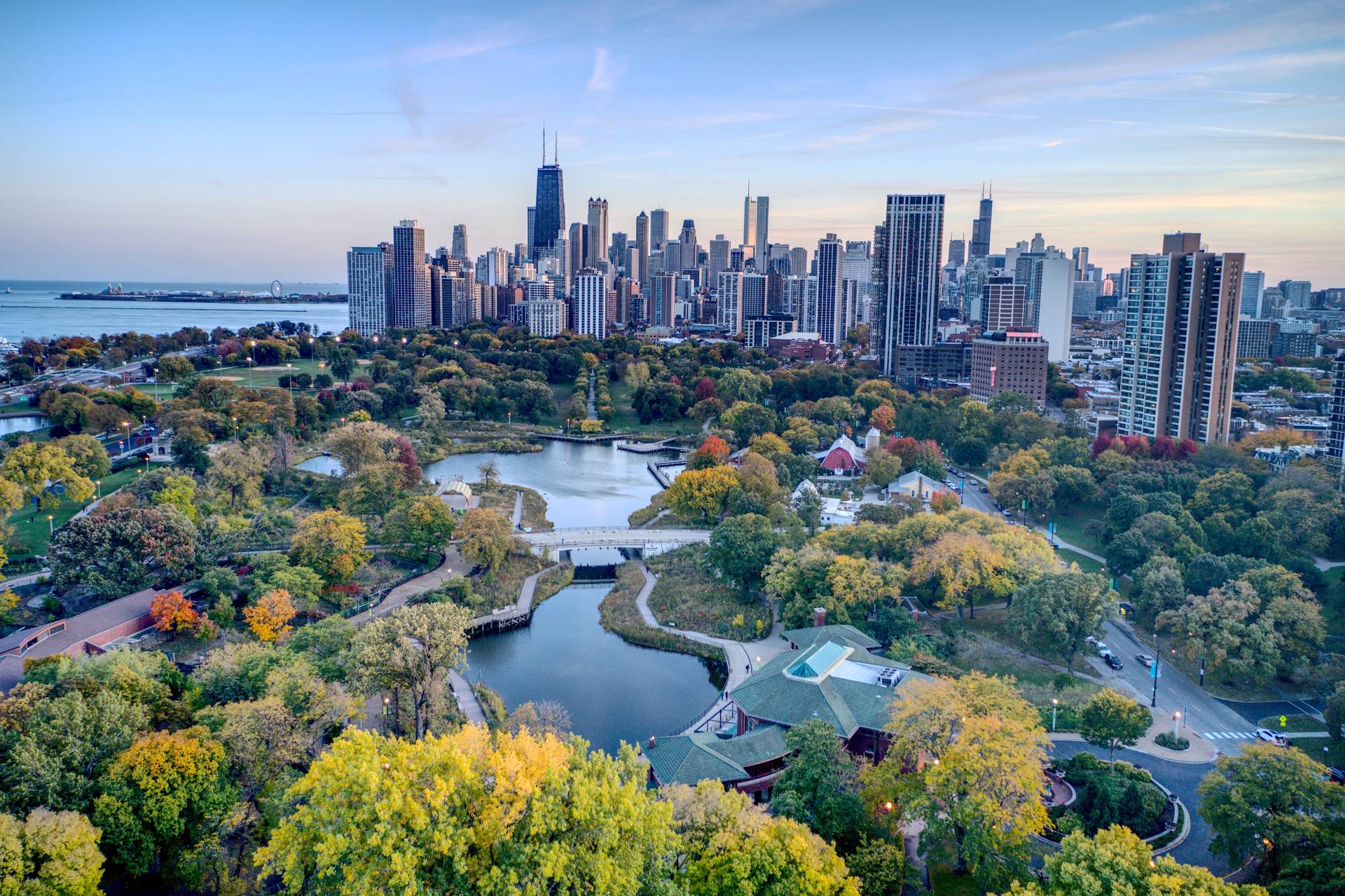
On Chicago’s North Side, where the skyline gradually blends into expansive green spaces that seem to stretch endlessly, lies Lincoln Park—the city’s largest urban park and one of the most complete public spaces in the American Midwest. Spanning more than 1,000 acres along the shores of Lake Michigan, this park is far more than a place for a casual stroll. It is a natural corridor connecting residential neighborhoods, urban beaches, formal gardens, and one of the oldest zoos in the country. For travelers arriving in Illinois through Arajet’s expanding destination network and wondering what to do in Chicago while maximizing every minute, Lincoln Park offers a strategic experience that combines nature, panoramic views, and culture in a single itinerary adaptable to either half a day or a full exploration.
Important information before your visit
- Location: North Side of Chicago, parallel to Lake Michigan
- Distance from Downtown (The Loop): approximately 5 kilometers (3 miles)
- Distance from O’Hare International Airport: around 27 kilometers (17 miles)
- Estimated travel time from the airport: 35–50 minutes, depending on traffic.
- Park admission: Free; public space
- Recommended visit duration: 3–6 hours.
- Best time to visit: Spring and summer for gardens and trails, or sunset for skyline views.

The ideal amount of time to fully experience Lincoln Park depends on how deeply you wish to explore. A focused walk along the lakeside trail may take two to three hours. A more comprehensive visit—including gardens and the zoo—can easily extend to half a day.
For photography enthusiasts, Lincoln Park offers exceptional vantage points. Certain spots along the lakeside path provide one of the most iconic views of Chicago’s skyline, with skyscrapers rising dramatically behind the park’s greenery. At sunrise, soft eastern light illuminates the buildings, creating a balanced composition of nature and architecture.
Preparation is important. Comfortable walking shoes are essential, as distances can be substantial. Depending on the season, a light additional layer is recommended, since lake winds can intensify. Sun protection is advisable during warmer months.
Beyond its scenic appeal, Lincoln Park plays a crucial role in understanding Chicago’s urban identity. The city is renowned for its vertical architecture, yet here you see how expansive green spaces are woven seamlessly into its urban fabric.
The experience also invites slower contemplation. Sitting on the grass by the lake and watching light shift across the water brings a sense of calm rarely found in major metropolitan centers. Residents practice yoga, read, or simply relax in this open environment.
As evening approaches, Lincoln Park takes on a distinctive atmosphere. The sun descends behind the urban horizon, casting long shadows across the lawns. Gradually, the skyline lights up, and the contrast between illuminated buildings and darkening greenery creates a powerful visual scene.
When you leave Lincoln Park to return Downtown or explore other neighborhoods, you carry the sense of having discovered the perfect balance between city and nature. It is not just a park—it is a vital corridor connecting culture, recreation, reflection, and landscape.
For those flying with Arajet and planning what to do in Chicago in a smart, natural, and well-organized way, Lincoln Park is an essential stop. Expansive, free, and strategically located along Lake Michigan, it offers one of the city’s most complete urban experiences within just a few well-spent hours. It proves that making the most of your time also means walking along the water, capturing the skyline from privileged angles, and discovering how Chicago harmonizes iconic architecture with expansive nature in one vibrant space.
For photography enthusiasts, Lincoln Park offers exceptional vantage points. Certain spots along the lakeside path provide one of the most iconic views of Chicago’s skyline, with skyscrapers rising dramatically behind the park’s greenery. At sunrise, soft eastern light illuminates the buildings, creating a balanced composition of nature and architecture.
Preparation is important. Comfortable walking shoes are essential, as distances can be substantial. Depending on the season, a light additional layer is recommended, since lake winds can intensify. Sun protection is advisable during warmer months.
Beyond its scenic appeal, Lincoln Park plays a crucial role in understanding Chicago’s urban identity. The city is renowned for its vertical architecture, yet here you see how expansive green spaces are woven seamlessly into its urban fabric.
The experience also invites slower contemplation. Sitting on the grass by the lake and watching light shift across the water brings a sense of calm rarely found in major metropolitan centers. Residents practice yoga, read, or simply relax in this open environment.
As evening approaches, Lincoln Park takes on a distinctive atmosphere. The sun descends behind the urban horizon, casting long shadows across the lawns. Gradually, the skyline lights up, and the contrast between illuminated buildings and darkening greenery creates a powerful visual scene.
When you leave Lincoln Park to return Downtown or explore other neighborhoods, you carry the sense of having discovered the perfect balance between city and nature. It is not just a park—it is a vital corridor connecting culture, recreation, reflection, and landscape.
For those flying with Arajet and planning what to do in Chicago in a smart, natural, and well-organized way, Lincoln Park is an essential stop. Expansive, free, and strategically located along Lake Michigan, it offers one of the city’s most complete urban experiences within just a few well-spent hours. It proves that making the most of your time also means walking along the water, capturing the skyline from privileged angles, and discovering how Chicago harmonizes iconic architecture with expansive nature in one vibrant space.