
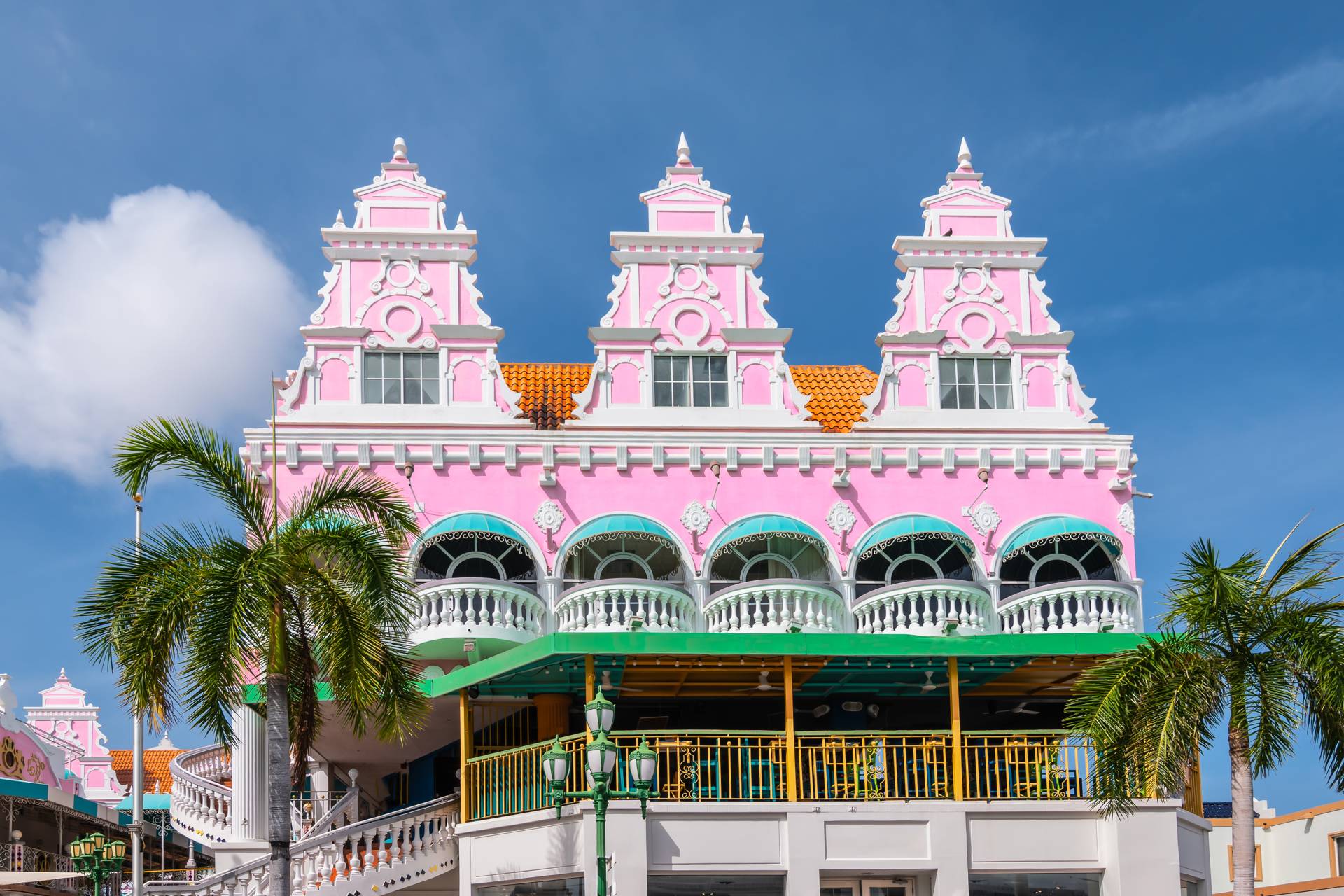
The first visual impact of Oranjestad is its architecture. Dutch Caribbean-style façades, with decorative gables and elegant moldings, are painted in coral pink, soft yellow, sky blue, and mint green. The contrast against the intensely blue sky and bright sunlight creates an almost cinematic scene. Walking through its streets feels like moving through a carefully curated color palette.
From a historical perspective, Oranjestad reflects Aruba’s Dutch heritage blended with Caribbean influences. Its development as a commercial port left a clear imprint on its urban layout. The city center is organized around the harbor and main streets where economic activity once thrived. Today, that same energy remains—adapted to contemporary tourism.
Exploring the center on foot is an accessible and pleasant sensory experience. Wide sidewalks allow for unhurried strolling. The sound of the sea lingers in the distance, a reminder that the port is only steps away. A steady breeze softens the tropical heat, making the walk comfortable even under strong sun.
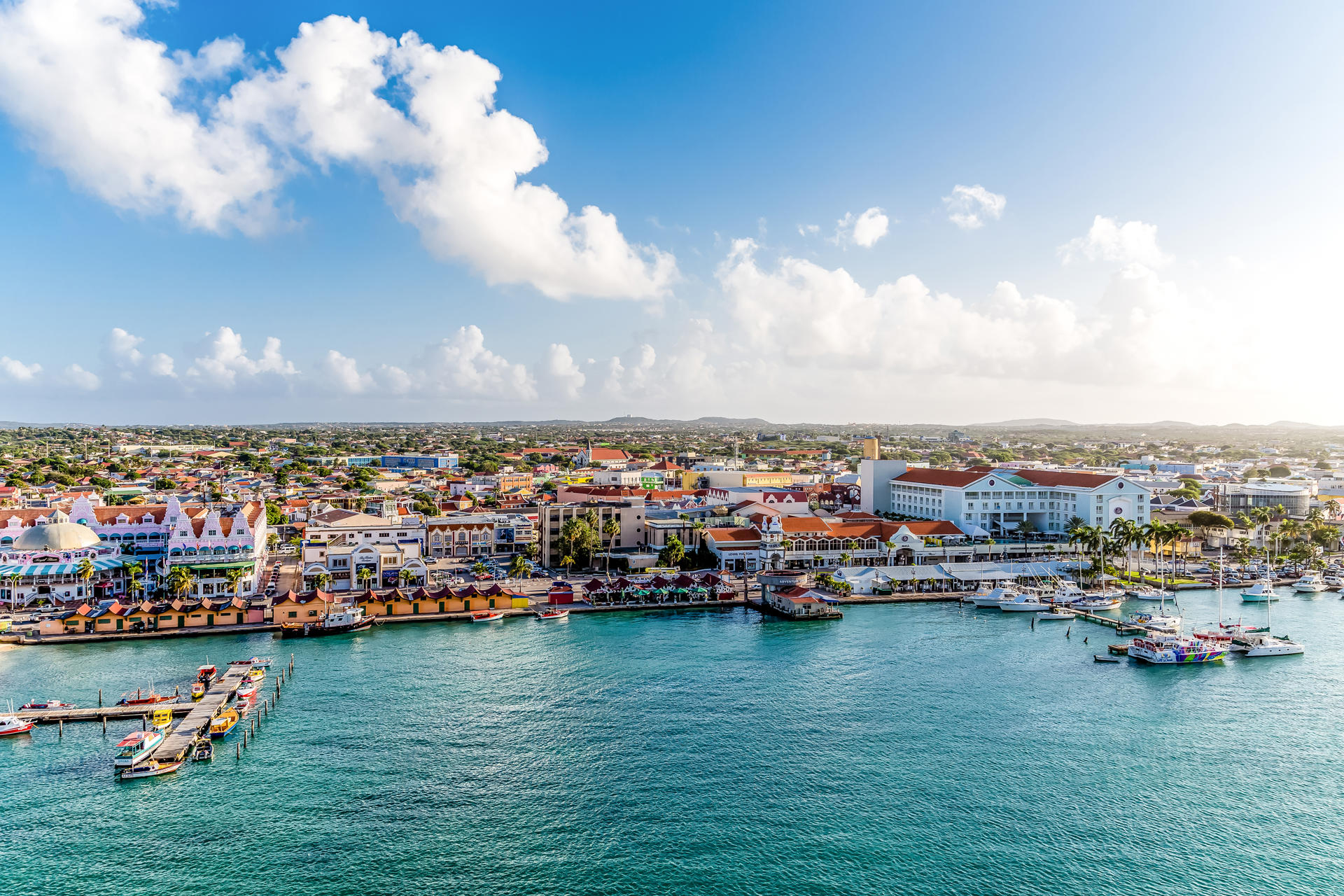
One of Oranjestad’s greatest strengths is its scale. Unlike larger capitals, visitors can explore its essentials in half a day. The main streets concentrate historic architecture, commercial areas, and scenic viewpoints overlooking the harbor. This compact layout makes the city ideal for travelers with tight itineraries.
The harbor plays a central role in the experience. From the waterfront promenade, you can watch boats entering and leaving the bay. The contrast between the deep blue water and colorful façades creates a visually striking landscape. Walking along the sea adds a relaxing dimension to the urban exploration.
From a time-efficiency standpoint, Oranjestad is highly practical. It can be explored entirely on foot without the need for internal transportation. Visiting in the morning helps avoid peak heat and busier hours. Alternatively, late afternoon provides warmer light that enhances the pastel tones of the buildings.
For travelers who value clear logistics and budget-friendly planning, consider these practical details:
Oranjestad
Aruba, AW
On Aruba’s southern coast, where the Caribbean Sea shifts into deep shades of blue and colonial façades look as if they were hand-painted in pastel tones, lies Oranjestad—the island’s vibrant capital and main gateway. More than just a point of arrival, this compact city blends history, colorful architecture, commercial energy, and coastal views within a perfectly walkable setting. For travelers arriving through Arajet’s destination network and wondering what to do in Aruba while optimizing every hour of their trip, Oranjestad offers a strategic experience: culture, urban strolling, and seaside scenery concentrated within just a few blocks.
Important information before your visit
- Location: Southern coast of Aruba
- Distance from the international airport: Approximately 3 kilometers
- Estimated travel time from the airport: 5 to 10 minutes by car.
- Entrance: Free; it is an open urban center
- Best time to visit: Early morning or late afternoon.
The ideal time to explore Oranjestad ranges from 3 to 4 hours. This allows you to walk the main streets, enjoy the waterfront, and admire the architecture without rushing. If combined with a cultural stop or museum visit, the experience can easily extend into a full half-day.
For photography enthusiasts, the city offers clean and colorful compositions. Symmetrical façades with white trim stand out beautifully under the Caribbean sun. The fusion of European-inspired architecture adapted to a tropical climate creates a distinctive regional style. During golden hour, colors soften and gain depth, enhancing visual contrast.
In terms of preparation, lightweight and comfortable clothing is recommended, along with sun protection. Although the city is compact, midday sun can be intense. Bringing water is advisable, especially if you plan to walk for several hours.
Beyond its visual charm, Oranjestad plays an essential role in any trip to Aruba: it provides historical and cultural context. It helps visitors understand how the island evolved from a strategic port into an international tourism destination. Walking its streets reveals that transition through architecture and urban rhythm.
The experience also encourages blending city exploration with seaside pauses. Sitting along the waterfront and gazing at the horizon offers a pleasant break between strolls. This combination of urban life and coastal scenery is one of Oranjestad’s defining characteristics.
As evening approaches, the city takes on a different atmosphere. Light shifts, shadows lengthen, and temperatures drop. The pastel façades soften in tone, making the walk even more enjoyable. This time of day is often ideal for concluding a visit.
When leaving Oranjestad to head toward beaches or natural parks, the capital leaves a clear impression: small yet vibrant, organized, and easy to explore. It doesn’t overwhelm or scatter attractions—it concentrates what matters.
For those flying with Arajet and looking for what to do in Aruba in a smart, cultural, and well-planned way, Oranjestad is an essential stop. Compact, colorful, and entirely walkable, it offers the perfect introduction to the island in just a few strategically used hours. It proves that making the most of your time also means strolling through streets full of color, walking by the sea, and discovering how European history and Caribbean energy blend seamlessly in one place.
For photography enthusiasts, the city offers clean and colorful compositions. Symmetrical façades with white trim stand out beautifully under the Caribbean sun. The fusion of European-inspired architecture adapted to a tropical climate creates a distinctive regional style. During golden hour, colors soften and gain depth, enhancing visual contrast.
In terms of preparation, lightweight and comfortable clothing is recommended, along with sun protection. Although the city is compact, midday sun can be intense. Bringing water is advisable, especially if you plan to walk for several hours.
Beyond its visual charm, Oranjestad plays an essential role in any trip to Aruba: it provides historical and cultural context. It helps visitors understand how the island evolved from a strategic port into an international tourism destination. Walking its streets reveals that transition through architecture and urban rhythm.
The experience also encourages blending city exploration with seaside pauses. Sitting along the waterfront and gazing at the horizon offers a pleasant break between strolls. This combination of urban life and coastal scenery is one of Oranjestad’s defining characteristics.
As evening approaches, the city takes on a different atmosphere. Light shifts, shadows lengthen, and temperatures drop. The pastel façades soften in tone, making the walk even more enjoyable. This time of day is often ideal for concluding a visit.
When leaving Oranjestad to head toward beaches or natural parks, the capital leaves a clear impression: small yet vibrant, organized, and easy to explore. It doesn’t overwhelm or scatter attractions—it concentrates what matters.
For those flying with Arajet and looking for what to do in Aruba in a smart, cultural, and well-planned way, Oranjestad is an essential stop. Compact, colorful, and entirely walkable, it offers the perfect introduction to the island in just a few strategically used hours. It proves that making the most of your time also means strolling through streets full of color, walking by the sea, and discovering how European history and Caribbean energy blend seamlessly in one place.