
The journey to the volcano is already an essential part of the experience. As you ascend from the Central Valley, the urban landscape gradually gives way to agricultural fields, cloud forests, and roads framed by lush vegetation. The temperature slowly drops, and the air becomes noticeably fresher. This transition prepares visitors for an environment completely different from that of the capital.
The National Park that protects the volcano is carefully managed to ensure both safety and conservation. The walk from the entrance area to the main crater viewpoint is short and clearly marked, making the visit accessible even for those without hiking experience. Within minutes, the scenery shifts from dense green forest to an open, almost lunar landscape.
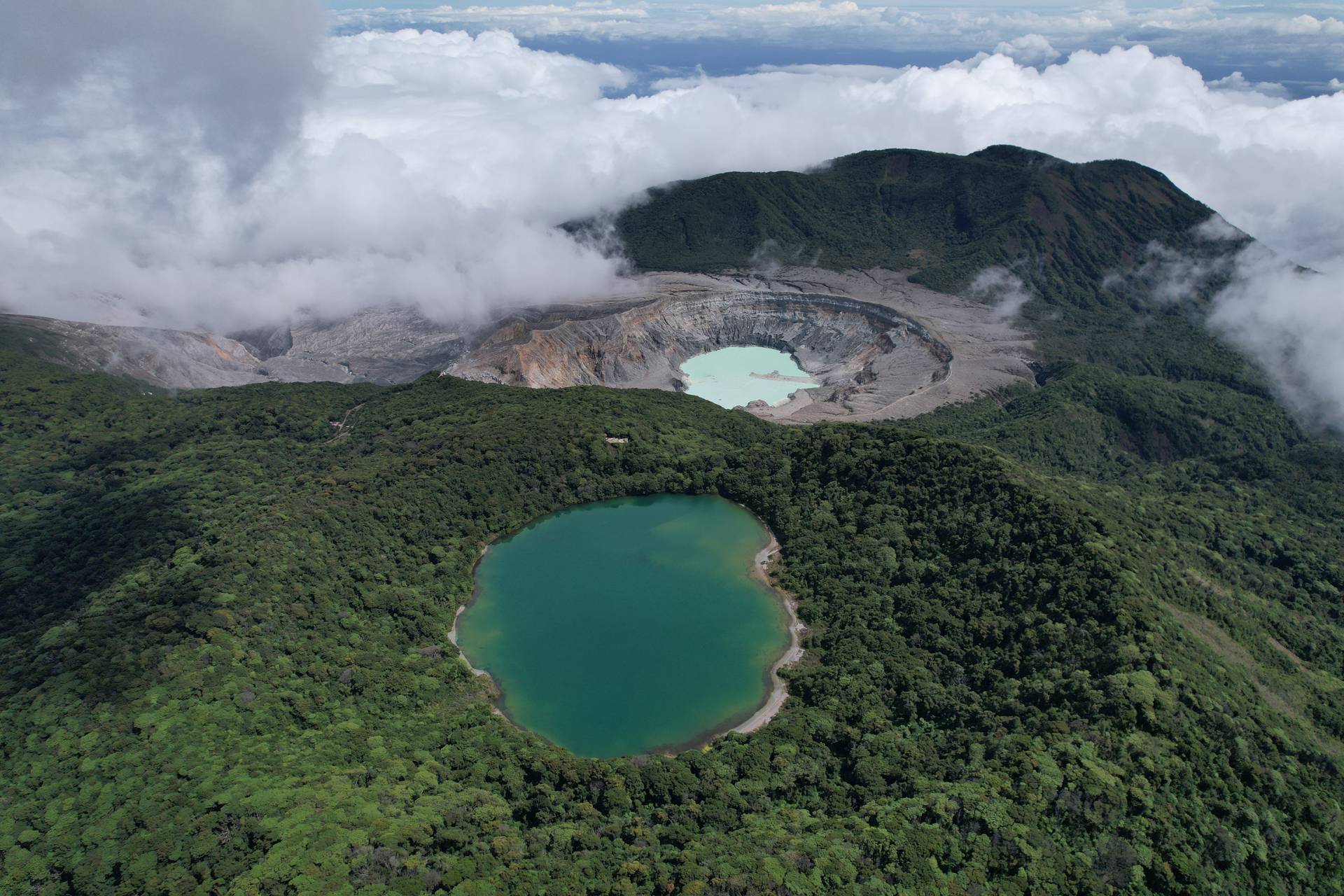
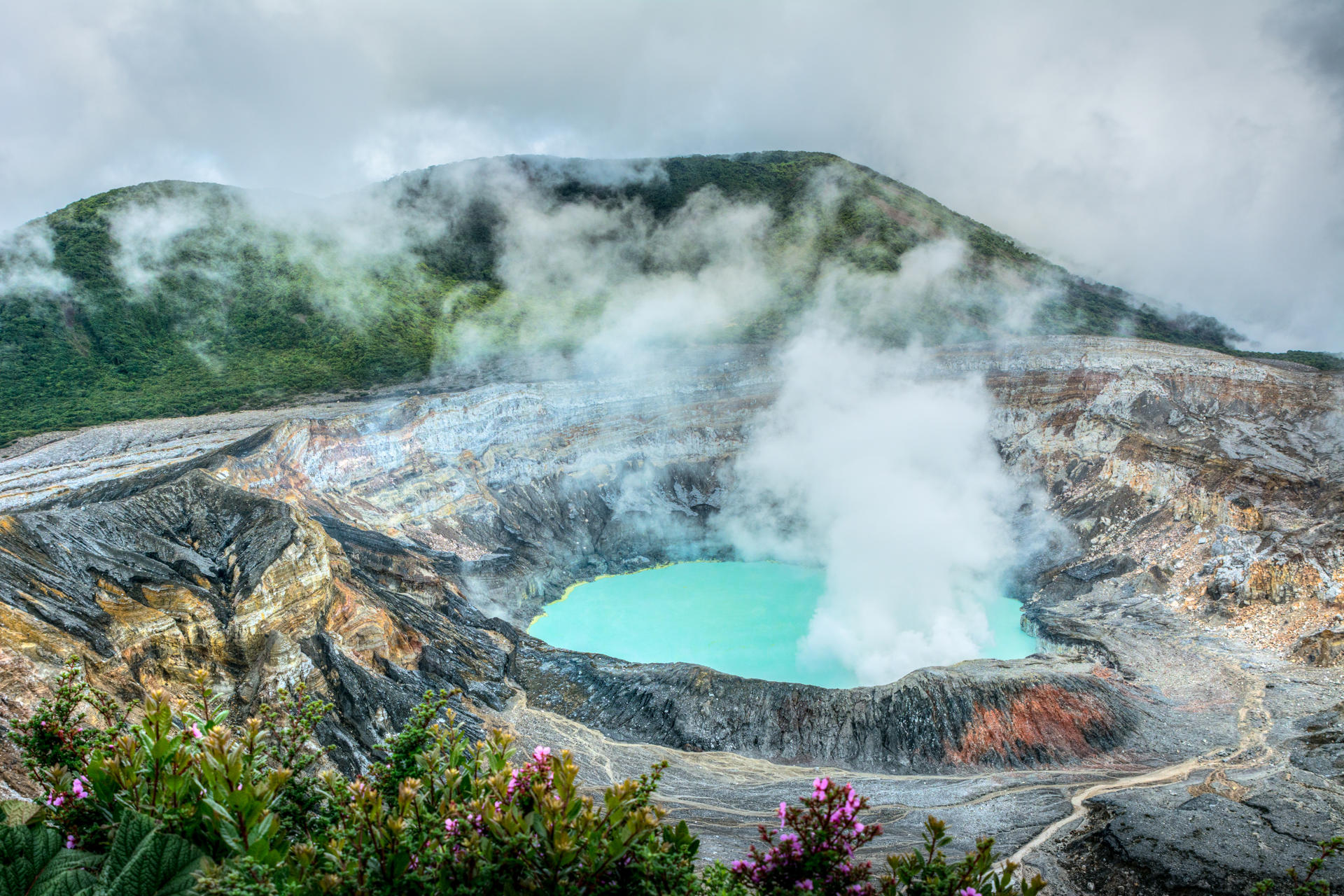
Poás Volcano’s main crater is one of the largest in the world accessible to the public. Its vast diameter and its acidic lagoon—whose colors shift depending on mineral activity and light—create a scene that feels otherworldly. On clear days, steam rising from the crater forms white plumes that contrast dramatically with the blue sky. On cloudier days, mist rolls in and out, adding a layer of drama and mystery.
From a sensory perspective, the experience is intense and unforgettable. A faint sulfur scent in the air serves as a reminder of the constant activity beneath the surface. Winds at the summit can be strong and cold, especially compared to the warmer climate of San José. The relative silence is occasionally broken by the sound of steam escaping from the crater. All of it reinforces the sensation of standing before a living natural force.
One of Poás Volcano’s most impressive features is its accessibility. Unlike other volcanoes that require long hikes or strenuous climbs, here visitors can enjoy a direct view of the crater within minutes. This ease of access makes it one of the best options for travelers who want to maximize their time without sacrificing an authentic connection to nature.
The park also offers additional trails leading to a secondary crater lake surrounded by forest. This complementary walk highlights the contrast between the stark volcanic landscape and the humid high-altitude vegetation. Walking among moss-covered trees, accompanied by the sounds of local birds and crisp mountain air, adds a different dimension to the visit.
From a time-efficiency standpoint, Poás Volcano is an exceptionally practical excursion. It can easily be done in half a day from San José, leaving room in the schedule for other activities. This combination of proximity and high visual impact makes it one of the most recommended nature experiences in Costa Rica.
For travelers who value clear logistics and budget planning, here are a few practical details to consider:
Poas Volcano
San José, CR
Costa Rica is synonymous with nature in its purest form, and few places embody that identity as clearly as Poás Volcano. Just over an hour from San José, this active giant offers the rare opportunity to observe a steaming volcanic crater from a surprisingly close—and safe—distance. For travelers arriving through Arajet’s destination network and looking for what to do in Costa Rica beyond the urban circuit, Poás Volcano represents a strategic experience: geological adventure, high-altitude scenery, and efficient access in a single half-day excursion.
Important information before your visit
- Distance from San José: approximately 50 kilometers
- Estimated travel time: between 1 and 1.5 hours each way.
- Admission: advance ticket purchase required with a reserved time slot
- Recommended visiting hours: morning through early afternoon.
- Best time to go: early morning, when skies are typically clearer and visibility is better
The ideal visit usually lasts between 2 and 3 hours inside the park, plus travel time. This allows enough time to walk to the crater viewpoint, explore additional trails, and enjoy the surroundings without feeling rushed.
For photography enthusiasts, Poás Volcano offers spectacular opportunities. The contrast between the crater’s turquoise lagoon, rocky walls, and rising steam creates striking compositions. Morning light generally provides better clarity and fewer clouds, increasing the chances of capturing a fully visible crater.
In terms of preparation, it’s essential to bring warm or layered clothing, as temperatures at the summit can be significantly lower than in the city. A light rain jacket is also recommended, since mist or rain can appear unexpectedly. Comfortable shoes with good grip are important for walking on paved but often damp trails. Following park staff instructions is key to ensuring a safe visit.
Beyond its visual appeal, Poás Volcano plays a crucial role in any trip to Costa Rica: it connects visitors to the geological forces that have shaped the country. Costa Rica is not only rainforest and beaches; it is also active volcanic land that has defined its geography and biodiversity.
The experience invites reflection on the energy contained beneath the surface. Standing before an active crater is a reminder that landscapes are not static but shaped by ongoing processes. That awareness adds depth to the visit and transforms the excursion into something more meaningful than just an impressive photo opportunity.
As you descend back toward the Central Valley, temperatures rise, and the scenery becomes more familiar. Yet your perspective has shifted. Having stood before an active volcano brings a sense of respect and awe that lingers throughout the rest of the journey.
For those flying with Arajet and looking for what to do in Costa Rica in a smart, nature-focused, and well-planned way, Poás Volcano is an essential experience. Close, powerful, and perfectly suited to a short stay, it offers one of the country’s most striking views in just a few hours. It proves that making the most of your time also means climbing to the heights where the earth breathes and reveals its power with unmistakable clarity.
For photography enthusiasts, Poás Volcano offers spectacular opportunities. The contrast between the crater’s turquoise lagoon, rocky walls, and rising steam creates striking compositions. Morning light generally provides better clarity and fewer clouds, increasing the chances of capturing a fully visible crater.
In terms of preparation, it’s essential to bring warm or layered clothing, as temperatures at the summit can be significantly lower than in the city. A light rain jacket is also recommended, since mist or rain can appear unexpectedly. Comfortable shoes with good grip are important for walking on paved but often damp trails. Following park staff instructions is key to ensuring a safe visit.
Beyond its visual appeal, Poás Volcano plays a crucial role in any trip to Costa Rica: it connects visitors to the geological forces that have shaped the country. Costa Rica is not only rainforest and beaches; it is also active volcanic land that has defined its geography and biodiversity.
The experience invites reflection on the energy contained beneath the surface. Standing before an active crater is a reminder that landscapes are not static but shaped by ongoing processes. That awareness adds depth to the visit and transforms the excursion into something more meaningful than just an impressive photo opportunity.
As you descend back toward the Central Valley, temperatures rise, and the scenery becomes more familiar. Yet your perspective has shifted. Having stood before an active volcano brings a sense of respect and awe that lingers throughout the rest of the journey.
For those flying with Arajet and looking for what to do in Costa Rica in a smart, nature-focused, and well-planned way, Poás Volcano is an essential experience. Close, powerful, and perfectly suited to a short stay, it offers one of the country’s most striking views in just a few hours. It proves that making the most of your time also means climbing to the heights where the earth breathes and reveals its power with unmistakable clarity.