
The walk begins near one of the old gates of the walled city, a point that for centuries-controlled access to San Juan. Today, that same location opens into a wide, tree-lined avenue where the pace immediately shifts. The narrow, cobblestone streets of the historic center give way to open space facing the sea. On the left, colonial walls rise solid and imposing, reminders of the defensive role they once played. On the right, the bay mirrors the sky and the slow movement of boats gliding peacefully across the water.
Walking along Paseo de la Princesa is a fully immersive sensory experience. The steady yet gentle sound of water touching the seawall accompanies each step. The fresh, persistent sea breeze offsets the tropical heat, even on the sunniest days. The air carries that unmistakable salty scent that defines the Caribbean. Light transforms the space throughout the day—bright and crisp at midday, softer and golden toward sunset.
As you continue forward, the landscape gradually opens up. The sense of expansiveness grows with every step. This effect is especially striking after exploring the compact interior of Old San Juan, where narrow streets and colorful façades create an intimate atmosphere. Paseo de la Princesa offers the opposite: open horizon, constant wind, and sweeping views.
One of the highlights of the walk is the monumental fountain located at the end of the promenade. Elegant and theatrical, it serves as a visual centerpiece and gathering point. Framed by the bay and the Caribbean sky, the fountain becomes particularly captivating at sunset. As the sun lowers, the sky fills with shades of orange, pink, and violet reflected on the water, transforming the setting into a memorable scene.
Historically, this area was tied to the defense and administration of the colonial city. Over time, its military function gave way to public enjoyment. That transformation is symbolic: what was once a boundary of control is now a space of encounter and contemplation.
From a time-efficiency perspective, Paseo de la Princesa is one of the most practical experiences in Old San Juan. No tickets, no lines, no reservations. It fits seamlessly into any walking itinerary. It works perfectly as a pause between fortress visits or as a relaxing conclusion to a day of historical exploration.
For travelers who value clear logistics and budget-friendly options, consider these practical details:
Princess Promenade
San Juan, PR
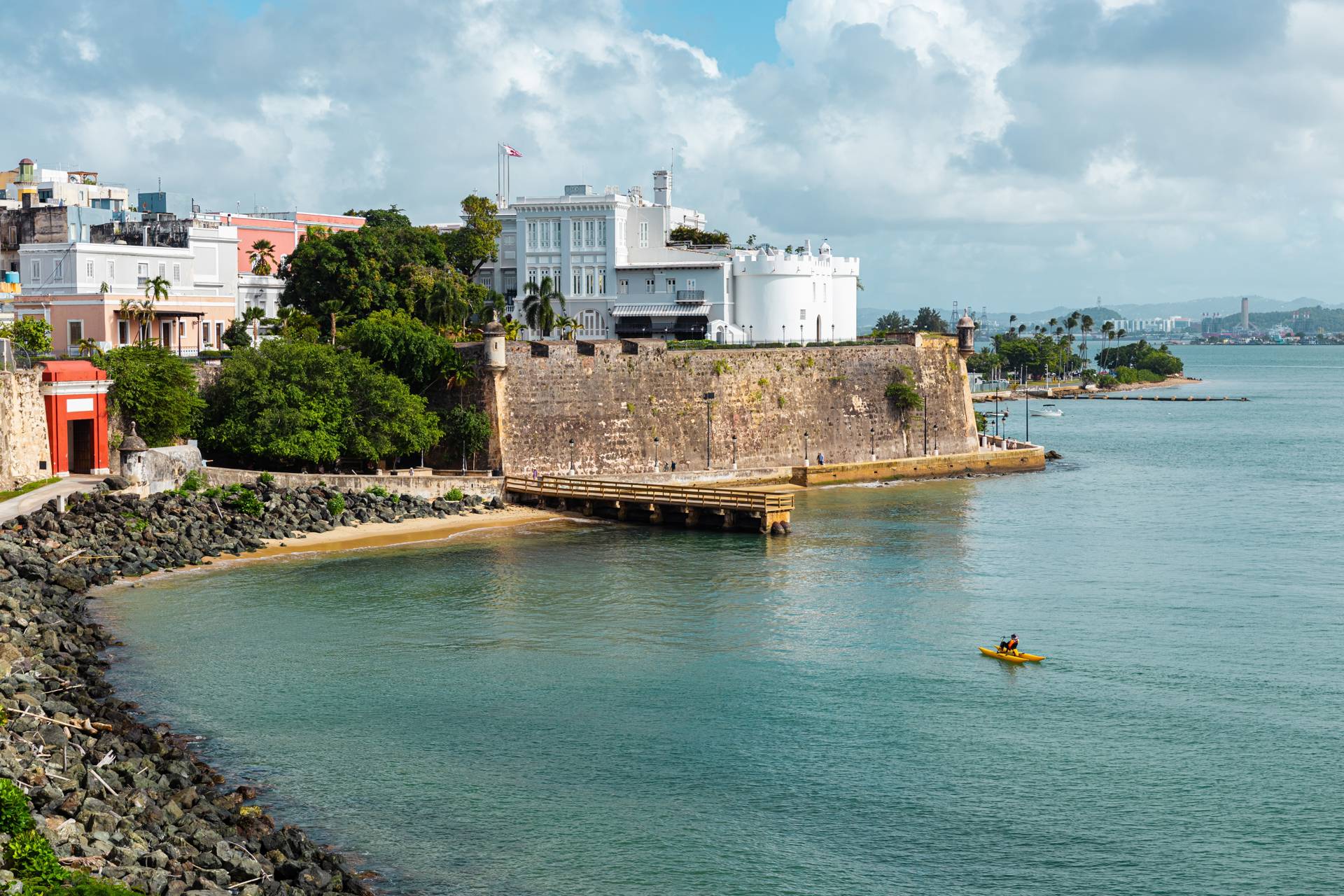
At the southern edge of Old San Juan, where the walled city opens toward the bay and the marine horizon seems to stretch endlessly, lies one of Puerto Rico’s most elegant and inviting spaces: Paseo de la Princesa. This pedestrian boulevard, running alongside historic colonial walls and embraced by the constant Caribbean breeze, is more than a waterfront promenade—it is an experience that connects history, scenery, and daily life in a setting that is accessible and unmistakably Caribbean. For travelers arriving on the island through Arajet’s destination network and looking for what to do in San Juan in a strategic, visually striking, and time-efficient way, Paseo de la Princesa is an essential stop that requires no complicated planning.
Important information before your visit
- Location: Southern edge of Old San Juan, along the bay
- Distance from the main plaza: Approximately 800 meters
- Estimated visit time: 1 to 2 hours, depending on pace.
- Admission: Free; open to the public daily
- Best time to visit: Sunset, when temperatures drop, and the light dramatically enhances the scenery
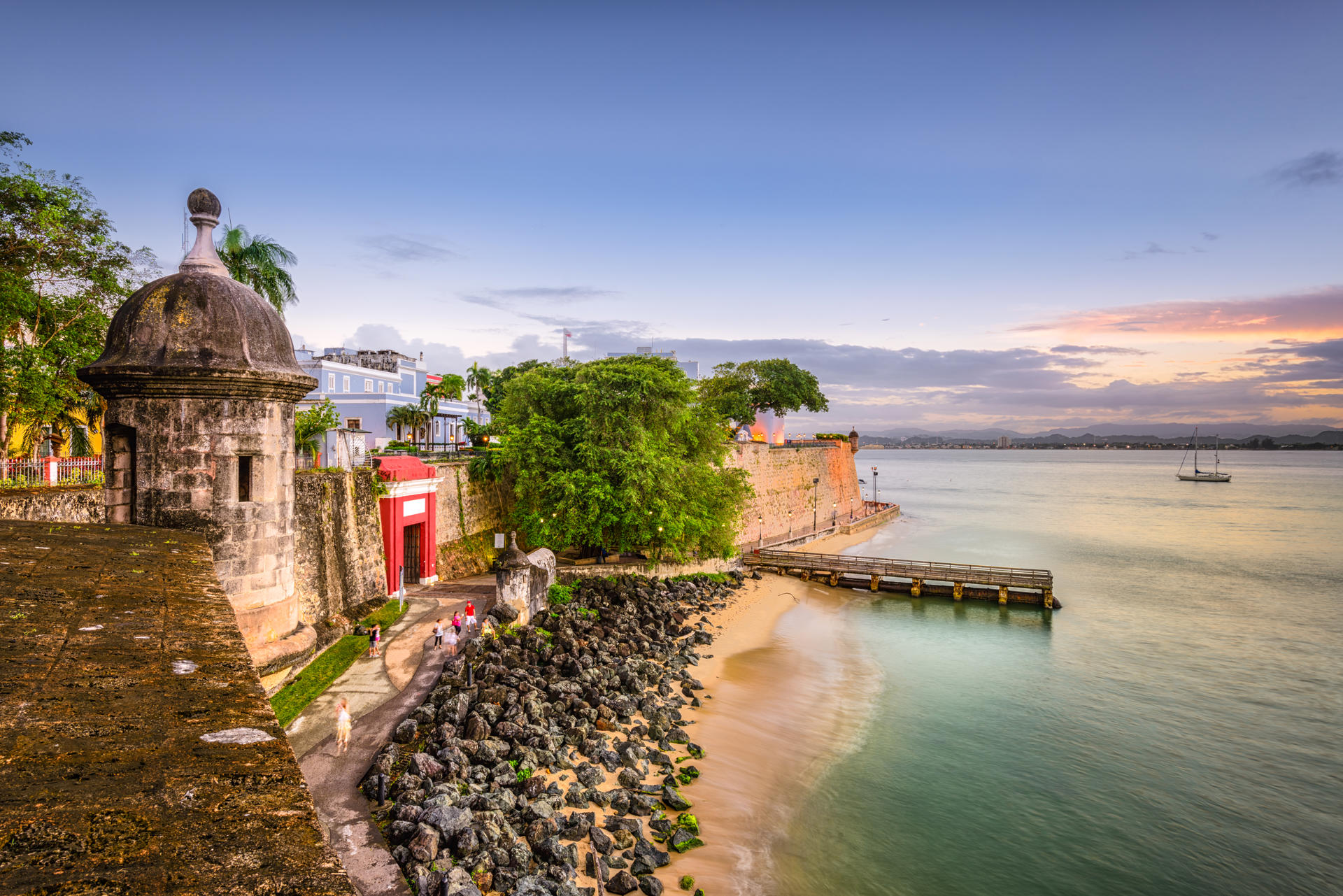
Spending 1 to 2 hours allows for a relaxed walk, photo stops, and quiet moments by the water. If combined with nearby wall exploration or extended time watching the horizon, the experience can easily stretch longer without losing appeal.
For photography enthusiasts, the promenade offers exceptional compositions. The colonial walls create strong diagonal lines leading toward the sea. The monumental fountain provides symmetrical framing opportunities. Reflections on the bay add depth and texture. During golden hour, the stone glows in warm tones against the deep blue water.
Lightweight clothing and sun protection are recommended, especially during midday. While there are shaded areas, the Caribbean sun can be intense. Comfortable footwear ensures an easy and enjoyable stroll.
Beyond its obvious beauty, Paseo de la Princesa plays an important role in understanding Puerto Rico’s identity. It connects colonial history with the maritime landscape that defines the island. Here, San Juan reveals itself as both fortress and port—both defense and cultural exchange.
The experience encourages pause. Sitting on a bench facing the bay, watching the sky change colors, and feeling the steady breeze creates a conscious moment of stillness within the journey. That balance between history and nature makes the promenade uniquely memorable.
Returning to the interior streets of Old San Juan afterward feels different. The colorful alleys seem more intimate after experiencing the openness of the sea. That alternation between fortified walls and open horizon enriches the overall visit.
For those flying with Arajet and seeking what to do in Puerto Rico in a smart, relaxed, and well-planned way, Paseo de la Princesa is essential. Accessible, visually impactful, and perfectly integrated into the historic circuit, it offers one of the most pleasant walks in the Caribbean in just a short time. It proves that making the most of your trip also means walking by the sea, feeling the breeze that connects past and present, and letting the horizon set the rhythm of your journey.
4. El Yunque National Forest
In northeastern Puerto Rico, where mountains rise under drifting mist and rainfall is part of the natural rhythm, lies one of the Caribbean’s most extraordinary ecosystems: El Yunque National Forest. This tropical sanctuary is not simply a park—it is an immersive experience where humidity, flowing water, and endless shades of green completely reshape the visitor’s perception. For travelers arriving through Arajet’s destination network and looking for what to do in Puerto Rico beyond beaches and colonial fortresses, El Yunque offers a strategic and impactful adventure that fits seamlessly into a well-organized itinerary.
The drive from San Juan already signals a shift in scenery. The modern city fades as the road heads east and begins to climb. Urban buildings give way to residential areas, then rural stretches, and finally mountain terrain. As elevation increases, the air becomes cooler and denser. Clouds descend to treetop level, wrapping the hillsides in a slow-moving veil of mist.
Entering the forest feels immediate and enveloping. The green landscape is not uniform but layered—bright emerald, deep moss, and almost bluish tones blend together. Giant ferns unfold like natural fans. Tall trees draped in moss and vines form a dense canopy that filters sunlight into soft, scattered beams. The moist, fertile ground absorbs the sound of footsteps.
From a sensory perspective, El Yunque is a natural symphony. Water is ever-present. Small streams weave through rocks with a continuous murmur. Waterfalls cascade with controlled energy, creating deep echoes that resonate through the vegetation. Tropical birds call from above, and the unmistakable song of the coquí—the tiny endemic frog that has become a sonic symbol of Puerto Rico—fills the air. The scent is fresh and earthy: wet leaves, bark, and recent rain.
One of the forest’s greatest strengths is its well-marked trail network. Advanced hiking experience is not required for the main routes, making the visit accessible to a wide range of travelers. Some trails lead to elevated viewpoints where the vast canopy stretches toward the Atlantic on clear days. Others guide visitors to waterfalls tucked within thick vegetation, where clear water gathers in natural pools.
The waterfalls are often the most memorable moments. The contrast between crystal-clear water and intense greenery creates nearly cinematic scenery. The mist from the falling water cools the skin and heightens the sensory impact. Spending a few quiet minutes near a waterfall often feels like a complete reset from urban life.
El Yunque is also a living laboratory of biodiversity. Hundreds of plants, bird, and amphibian species thrive in its humid climate. Microclimates shift subtly with elevation, and vegetation adapts to windier, cloud-covered conditions higher up the mountain.
From a time-management standpoint, El Yunque is a highly strategic excursion. Its relative proximity to San Juan makes a half-day visit feasible with proper planning. Departing early increases the chance of lighter crowds and cooler conditions. In roughly five to six hours, visitors can complete a main trail, see a waterfall, and enjoy a panoramic overlook without feeling rushed.
For travelers who value practical planning:
A full experience typically requires 4 to 6 hours. With a full day available, exploring multiple elevations and additional trails adds depth to the visit. The key is prioritizing routes based on available time and energy.
For photographers, El Yunque offers exceptional opportunities. Filtered light creates natural patterns across the forest floor. Waterfalls allow for dynamic long-exposure captures. Mist adds depth and atmosphere to mountain views. Protecting equipment from humidity is essential.
Preparation is important. Shoes with good traction are necessary, as trails can be slippery. Lightweight, quick-drying clothing works best in humid conditions. A light rain jacket is useful since sudden showers are common. Bringing sufficient water and a small snack is recommended.
Beyond its visual beauty, El Yunque reveals Puerto Rico’s ecological dimension. The island is not only beaches and colonial architecture—it is also rainforest, mountain rainfall, and concentrated biodiversity within a protected space.
The forest invites introspection. Walking beneath towering trees, listening to cascading water, and watching mist drift between branches creates a rare sense of connection. In a world dominated by digital noise, El Yunque offers an authentic pause.
Descending back toward the coast and returning to San Juan makes the contrast unmistakable. Urban heat and movement feel different after hours spent in a landscape defined by falling water and rustling leaves.
For those flying with Arajet and seeking what to do in Puerto Rico in a smart, nature-focused, and well-organized way, El Yunque National Forest is essential. Accessible, impactful, and deeply sensory, it offers one of the Caribbean’s most memorable ecological adventures in a single well-planned day. It proves that making the most of your time also means stepping into the rainforest, breathing humid mountain air, and letting nature set the pace of the journey.
For photography enthusiasts, the promenade offers exceptional compositions. The colonial walls create strong diagonal lines leading toward the sea. The monumental fountain provides symmetrical framing opportunities. Reflections on the bay add depth and texture. During golden hour, the stone glows in warm tones against the deep blue water.
Lightweight clothing and sun protection are recommended, especially during midday. While there are shaded areas, the Caribbean sun can be intense. Comfortable footwear ensures an easy and enjoyable stroll.
Beyond its obvious beauty, Paseo de la Princesa plays an important role in understanding Puerto Rico’s identity. It connects colonial history with the maritime landscape that defines the island. Here, San Juan reveals itself as both fortress and port—both defense and cultural exchange.
The experience encourages pause. Sitting on a bench facing the bay, watching the sky change colors, and feeling the steady breeze creates a conscious moment of stillness within the journey. That balance between history and nature makes the promenade uniquely memorable.
Returning to the interior streets of Old San Juan afterward feels different. The colorful alleys seem more intimate after experiencing the openness of the sea. That alternation between fortified walls and open horizon enriches the overall visit.
For those flying with Arajet and seeking what to do in Puerto Rico in a smart, relaxed, and well-planned way, Paseo de la Princesa is essential. Accessible, visually impactful, and perfectly integrated into the historic circuit, it offers one of the most pleasant walks in the Caribbean in just a short time. It proves that making the most of your trip also means walking by the sea, feeling the breeze that connects past and present, and letting the horizon set the rhythm of your journey.
4. El Yunque National Forest
In northeastern Puerto Rico, where mountains rise under drifting mist and rainfall is part of the natural rhythm, lies one of the Caribbean’s most extraordinary ecosystems: El Yunque National Forest. This tropical sanctuary is not simply a park—it is an immersive experience where humidity, flowing water, and endless shades of green completely reshape the visitor’s perception. For travelers arriving through Arajet’s destination network and looking for what to do in Puerto Rico beyond beaches and colonial fortresses, El Yunque offers a strategic and impactful adventure that fits seamlessly into a well-organized itinerary.
The drive from San Juan already signals a shift in scenery. The modern city fades as the road heads east and begins to climb. Urban buildings give way to residential areas, then rural stretches, and finally mountain terrain. As elevation increases, the air becomes cooler and denser. Clouds descend to treetop level, wrapping the hillsides in a slow-moving veil of mist.
Entering the forest feels immediate and enveloping. The green landscape is not uniform but layered—bright emerald, deep moss, and almost bluish tones blend together. Giant ferns unfold like natural fans. Tall trees draped in moss and vines form a dense canopy that filters sunlight into soft, scattered beams. The moist, fertile ground absorbs the sound of footsteps.
From a sensory perspective, El Yunque is a natural symphony. Water is ever-present. Small streams weave through rocks with a continuous murmur. Waterfalls cascade with controlled energy, creating deep echoes that resonate through the vegetation. Tropical birds call from above, and the unmistakable song of the coquí—the tiny endemic frog that has become a sonic symbol of Puerto Rico—fills the air. The scent is fresh and earthy: wet leaves, bark, and recent rain.
One of the forest’s greatest strengths is its well-marked trail network. Advanced hiking experience is not required for the main routes, making the visit accessible to a wide range of travelers. Some trails lead to elevated viewpoints where the vast canopy stretches toward the Atlantic on clear days. Others guide visitors to waterfalls tucked within thick vegetation, where clear water gathers in natural pools.
The waterfalls are often the most memorable moments. The contrast between crystal-clear water and intense greenery creates nearly cinematic scenery. The mist from the falling water cools the skin and heightens the sensory impact. Spending a few quiet minutes near a waterfall often feels like a complete reset from urban life.
El Yunque is also a living laboratory of biodiversity. Hundreds of plants, bird, and amphibian species thrive in its humid climate. Microclimates shift subtly with elevation, and vegetation adapts to windier, cloud-covered conditions higher up the mountain.
From a time-management standpoint, El Yunque is a highly strategic excursion. Its relative proximity to San Juan makes a half-day visit feasible with proper planning. Departing early increases the chance of lighter crowds and cooler conditions. In roughly five to six hours, visitors can complete a main trail, see a waterfall, and enjoy a panoramic overlook without feeling rushed.
For travelers who value practical planning:
- Location: Northeastern Puerto Rico
- Distance from San Juan: Approximately 50 kilometers
- Estimated travel time: 45 minutes to 1 hour and 15 minutes.
- Admission: General access is free; some areas may require advance reservations depending on the season
- Best time to visit: Early morning, especially on weekdays.
A full experience typically requires 4 to 6 hours. With a full day available, exploring multiple elevations and additional trails adds depth to the visit. The key is prioritizing routes based on available time and energy.
For photographers, El Yunque offers exceptional opportunities. Filtered light creates natural patterns across the forest floor. Waterfalls allow for dynamic long-exposure captures. Mist adds depth and atmosphere to mountain views. Protecting equipment from humidity is essential.
Preparation is important. Shoes with good traction are necessary, as trails can be slippery. Lightweight, quick-drying clothing works best in humid conditions. A light rain jacket is useful since sudden showers are common. Bringing sufficient water and a small snack is recommended.
Beyond its visual beauty, El Yunque reveals Puerto Rico’s ecological dimension. The island is not only beaches and colonial architecture—it is also rainforest, mountain rainfall, and concentrated biodiversity within a protected space.
The forest invites introspection. Walking beneath towering trees, listening to cascading water, and watching mist drift between branches creates a rare sense of connection. In a world dominated by digital noise, El Yunque offers an authentic pause.
Descending back toward the coast and returning to San Juan makes the contrast unmistakable. Urban heat and movement feel different after hours spent in a landscape defined by falling water and rustling leaves.
For those flying with Arajet and seeking what to do in Puerto Rico in a smart, nature-focused, and well-organized way, El Yunque National Forest is essential. Accessible, impactful, and deeply sensory, it offers one of the Caribbean’s most memorable ecological adventures in a single well-planned day. It proves that making the most of your time also means stepping into the rainforest, breathing humid mountain air, and letting nature set the pace of the journey.