
The journey to Zipaquirá already signals a change of atmosphere. As you leave behind the density of the capital, the landscape opens into the Andean savanna, with wide fields, gentle mountains, and a noticeably slower rhythm. The transition is gradual yet clear. The air feels fresher, the horizon broader, and Bogotá fades into the background. This departure from the urban environment prepares you for an entirely different kind of experience.
Upon arrival, the entrance to the mine marks the beginning of a sensory transformation. The temperature drops slightly, outside noise disappears, and visitors begin descending into the interior of the mountain. Soft lighting guides the way, creating an introspective atmosphere that contrasts sharply with the brightness above ground. Simply walking beneath the earth already generates a sense of wonder.
The Salt Cathedral is not only a religious space; it is also a symbolic journey. The initial corridor presents a series of stations carved directly into the salt rock, strategically illuminated to highlight shapes and textures. The walls are not polished or concealed—they reveal the raw mineral surface, constantly reminding visitors that this space was excavated directly from the mountain. That geological authenticity is central to the experience.
As you continue, the galleries expand, and the scale becomes increasingly impressive. The main nave emerges as a monumental cavern, where height and breadth create an almost surreal sensation. The cross carved into the far wall, illuminated indirectly, appears to float against the dark salt backdrop. The underground silence amplifies every step and whisper, fostering a natural atmosphere of reflection.
From a sensory perspective, the experience is deeply immersive. The air carries a faint mineral scent—cool and dry. Lighting in shades of blue, violet, and white enhances the carved forms within the salt. A soft echo reminds you of the immense scale of the space. Everything is designed not only to be seen, but to be felt.
One of the most fascinating aspects of the Salt Cathedral is the seamless blend of engineering and spirituality. The original mine was carefully adapted to ensure structural stability and safety while preserving its industrial essence. Walking through these tunnels reveals how a site of labor was transformed into a cultural and religious icon recognized far beyond Colombia.
From a time-efficiency standpoint, this visit is highly practical. In half a day, you can travel from Bogotá, explore the cathedral at a comfortable pace, and return without significantly altering your overall itinerary. That accessibility makes it one of the best day trips from the capital, especially for travelers seeking memorable experiences without complex logistics.
For those who value clear planning and budget-friendly travel, here are some key practical details:
Zipaquira Salt Cathedral
Bogotá, CO
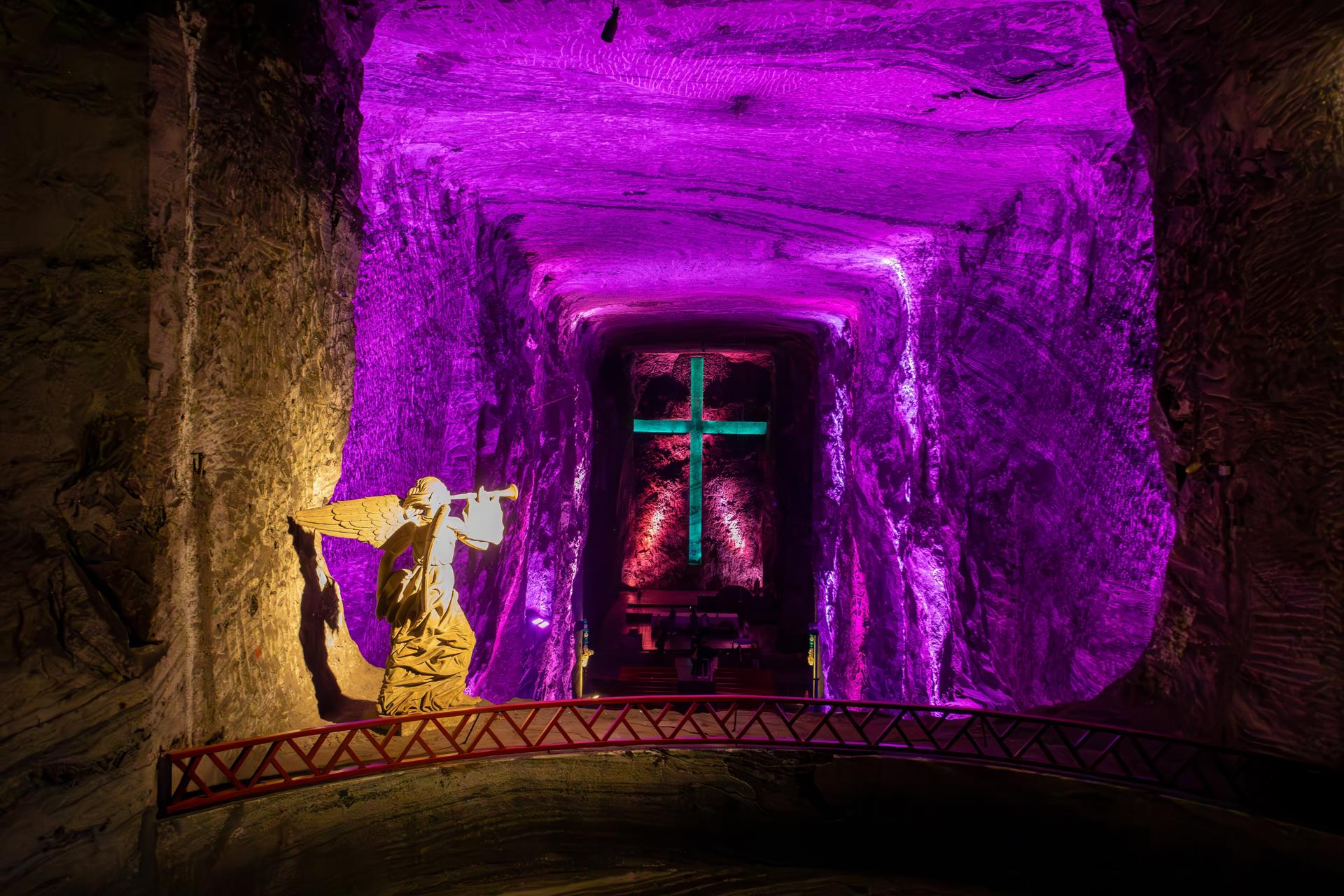
Just over an hour from Bogotá, beneath the surface of the earth and carved into the heart of a former salt mine, lies one of the most surprising attractions in Colombian tourism: the Salt Cathedral of Zipaquirá. This is not a conventional cathedral, nor a monument built in plain sight. It is an underground masterpiece where architecture, spirituality, and engineering converge in a truly unique sensory experience. For travelers arriving in Colombia through Arajet’s destination network and wondering what to do in Bogotá beyond the traditional urban circuit, this visit offers a strategic escape that blends history, landscape, and awe into a single, well-balanced day.
Important information before your visit
- Distance from central Bogotá: approximately 50 kilometers
- Estimated travel time: 1 to 1.5 hours each way, depending on traffic.
- Admission: paid entry, which includes access to the main route
- Recommended visiting hours: morning through mid-afternoon.
- Best time to go: early in the day, to avoid larger crowds and explore more peacefully
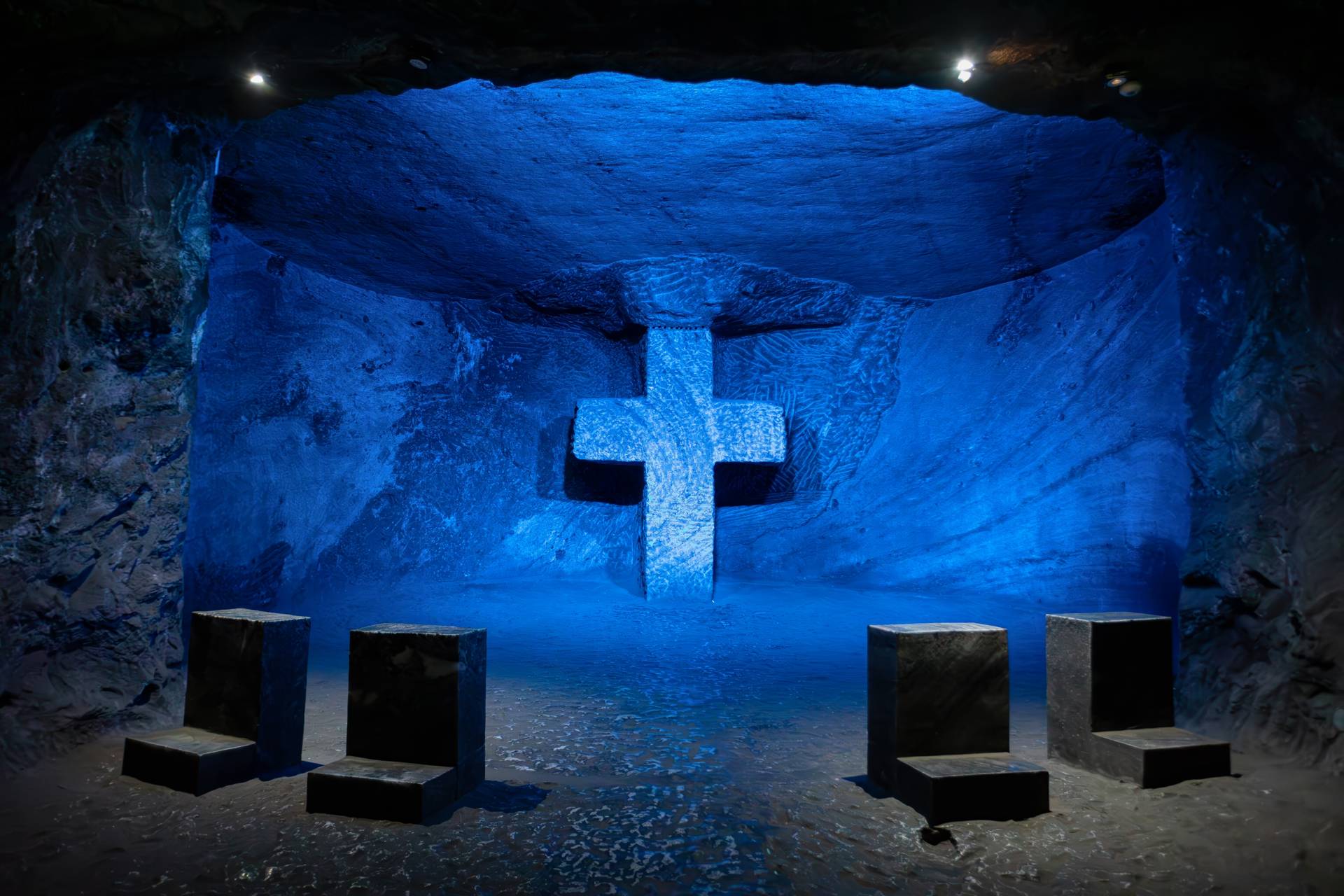
The ideal time inside the complex is typically between 2 and 3 hours, plus travel time. This allows enough space to walk through the stations, explore the main nave, and appreciate architectural details without rushing.
Photography enthusiasts will find unique opportunities here. The combination of dark rock and directed lighting creates dramatic contrasts and almost cinematic atmospheres. Because lighting is low, steady hands and patience are helpful. Even beyond photographs, the visual memory of the cathedral tends to leave a lasting impression.
In terms of preparation, bringing a light jacket is advisable, as underground temperatures are cooler than outside. Comfortable footwear is essential, since the visit involves walking through wide but sometimes uneven tunnels. No special equipment is required—just readiness to descend underground and explore for several hours.
On a deeper level, the Salt Cathedral plays an important role in any trip to Bogotá: it expands the country’s historical and cultural narrative. This is not simply religious architecture—it is a testament to the relationship between natural resources, human labor, and cultural transformation. It stands as a powerful example of how an industrial site can evolve into a spiritual and tourism landmark.
The experience also invites reflection on humanity’s relationship with the mountain itself. Excavating, adapting, and preserving a subterranean space of this magnitude requires respect for the environment and awareness of its limits. That consciousness is evident in the design of the route and in the way the space is presented.
When the visit concludes and you return to the surface, natural light feels different. The open sky and fresh air create an immediate contrast. That transition reinforces the uniqueness of what was experienced below ground and leaves a lasting impression.
Back in Bogotá, the city feels slightly transformed. The underground journey adds another dimension to the trip, demonstrating that tourism in Colombia extends beyond visible landscapes—it also ventures into the physical and symbolic depths of the territory.
For those flying with Arajet and searching for what to do in Bogotá in a smart, memorable, and well-planned way, the Salt Cathedral of Zipaquirá is an essential excursion. Close, impactful, and perfectly manageable within a short stay, it delivers one of the most astonishing experiences near the capital in a single day. It proves that making the most of your time sometimes means daring to descend, explore, and discover what lies beneath the surface.
Photography enthusiasts will find unique opportunities here. The combination of dark rock and directed lighting creates dramatic contrasts and almost cinematic atmospheres. Because lighting is low, steady hands and patience are helpful. Even beyond photographs, the visual memory of the cathedral tends to leave a lasting impression.
In terms of preparation, bringing a light jacket is advisable, as underground temperatures are cooler than outside. Comfortable footwear is essential, since the visit involves walking through wide but sometimes uneven tunnels. No special equipment is required—just readiness to descend underground and explore for several hours.
On a deeper level, the Salt Cathedral plays an important role in any trip to Bogotá: it expands the country’s historical and cultural narrative. This is not simply religious architecture—it is a testament to the relationship between natural resources, human labor, and cultural transformation. It stands as a powerful example of how an industrial site can evolve into a spiritual and tourism landmark.
The experience also invites reflection on humanity’s relationship with the mountain itself. Excavating, adapting, and preserving a subterranean space of this magnitude requires respect for the environment and awareness of its limits. That consciousness is evident in the design of the route and in the way the space is presented.
When the visit concludes and you return to the surface, natural light feels different. The open sky and fresh air create an immediate contrast. That transition reinforces the uniqueness of what was experienced below ground and leaves a lasting impression.
Back in Bogotá, the city feels slightly transformed. The underground journey adds another dimension to the trip, demonstrating that tourism in Colombia extends beyond visible landscapes—it also ventures into the physical and symbolic depths of the territory.
For those flying with Arajet and searching for what to do in Bogotá in a smart, memorable, and well-planned way, the Salt Cathedral of Zipaquirá is an essential excursion. Close, impactful, and perfectly manageable within a short stay, it delivers one of the most astonishing experiences near the capital in a single day. It proves that making the most of your time sometimes means daring to descend, explore, and discover what lies beneath the surface.