
Passing through the monumental gateway that leads into the plaza is a moment filled with symbolism. For centuries, this was the official entrance to the fortified city—the point where goods, visitors, and news from abroad first arrived. Today, although modern traffic and tourism are part of the scene, the space retains its role as an antechamber. It is here that Cartagena begins to unfold its narrative.
The plaza takes its name from the carriages that once waited here to transport travelers to different parts of the historic center. That function of connection and movement remains, though in a transformed way. Visitors entering the Walled City, travelers pausing to admire the architecture, and locals crossing the square each day make the plaza a dynamic and ever-active setting.
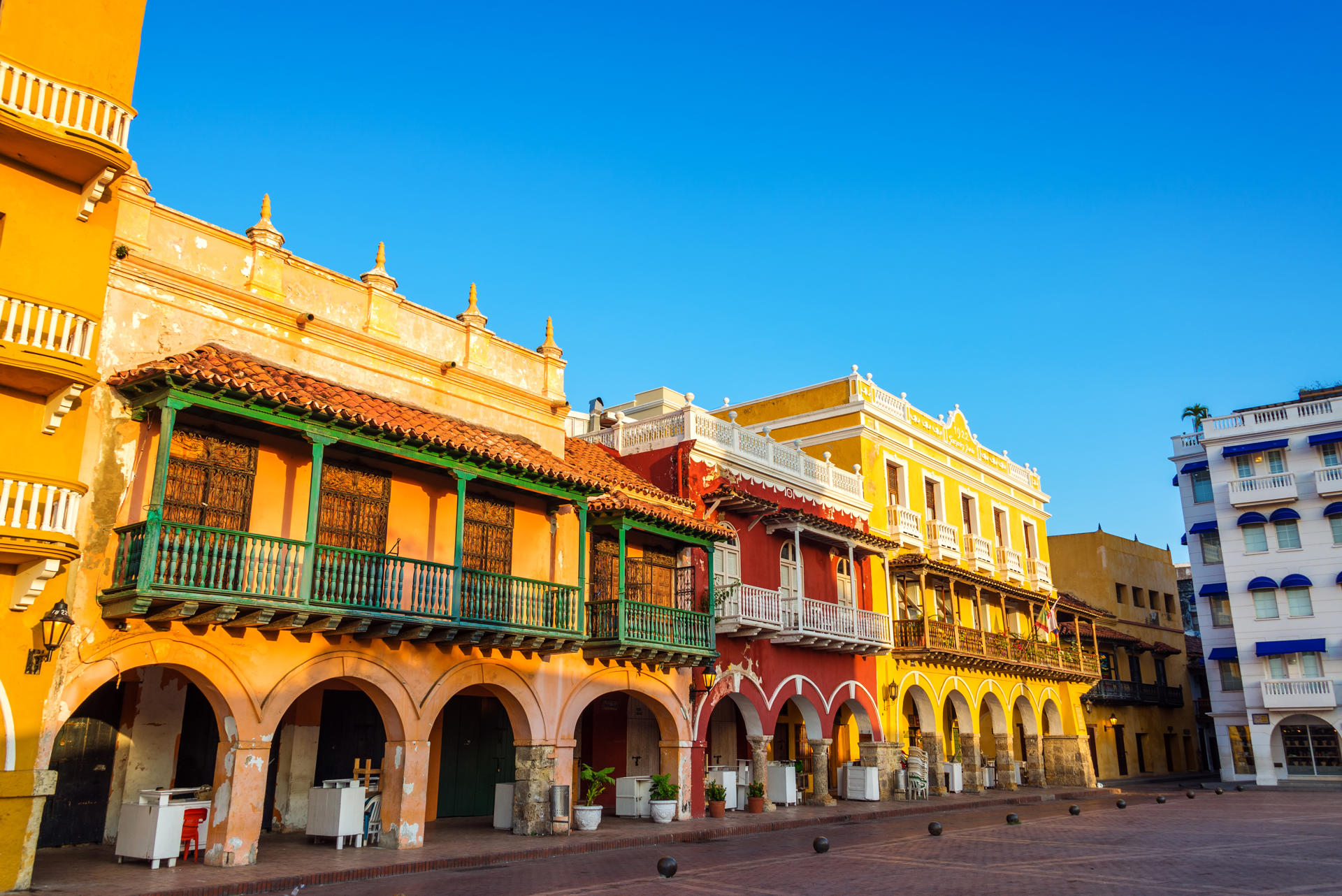
Visually, Plaza de los Coches stands out for the contrast between its open layout and the architectural frame that surrounds it. Warm-toned colonial buildings, with wooden balconies and ground-level arcades, create a sense of harmonious enclosure. The Caribbean sunlight highlights the façades during the day, while at sunset the shadows cast across the cobblestones add depth and drama.
At one end of the plaza stands an iconic arch that marks the transition into the inner streets of the Walled City. Crossing it means changing pace. The plaza, more open and exposed, acts as a preparatory space before entering narrower, winding streets. This duality—between open square and urban maze—is one of the most compelling features of the site.
From a sensory perspective, the plaza is vibrant and unmistakably Caribbean. The sounds of conversation, distant music, and footsteps on stone blend with the constant murmur of urban movement. The warm air, often accompanied by a hint of sea breeze, envelops the space with a distinct identity. This is not a silent or contemplative environment—it is active, social, and alive.
Historically, the square witnessed complex episodes. Beyond its commercial function, it was also connected to social dynamics that reflected the tensions of the colonial period. That layered history adds depth to the site, reminding visitors that architectural beauty coexists with memories that are essential to Cartagena’s identity.
Walking through Plaza de los Coches is simple and straightforward. No specific route or structured plan is required. Pausing for a few minutes, observing the movement, and allowing the atmosphere to speak for itself is enough. This ease of exploration makes it a strategic stop for travelers with limited time.
From a time-efficiency standpoint, the plaza is highly practical. It integrates naturally into any visit to the Walled City and requires no additional detours. It can be explored in 20 to 30 minutes as an introduction to the historic center or incorporated into a broader walking itinerary.
For those who value clear logistics and budget-conscious planning, here are some useful details:
Coches Square
Cartagena, CO
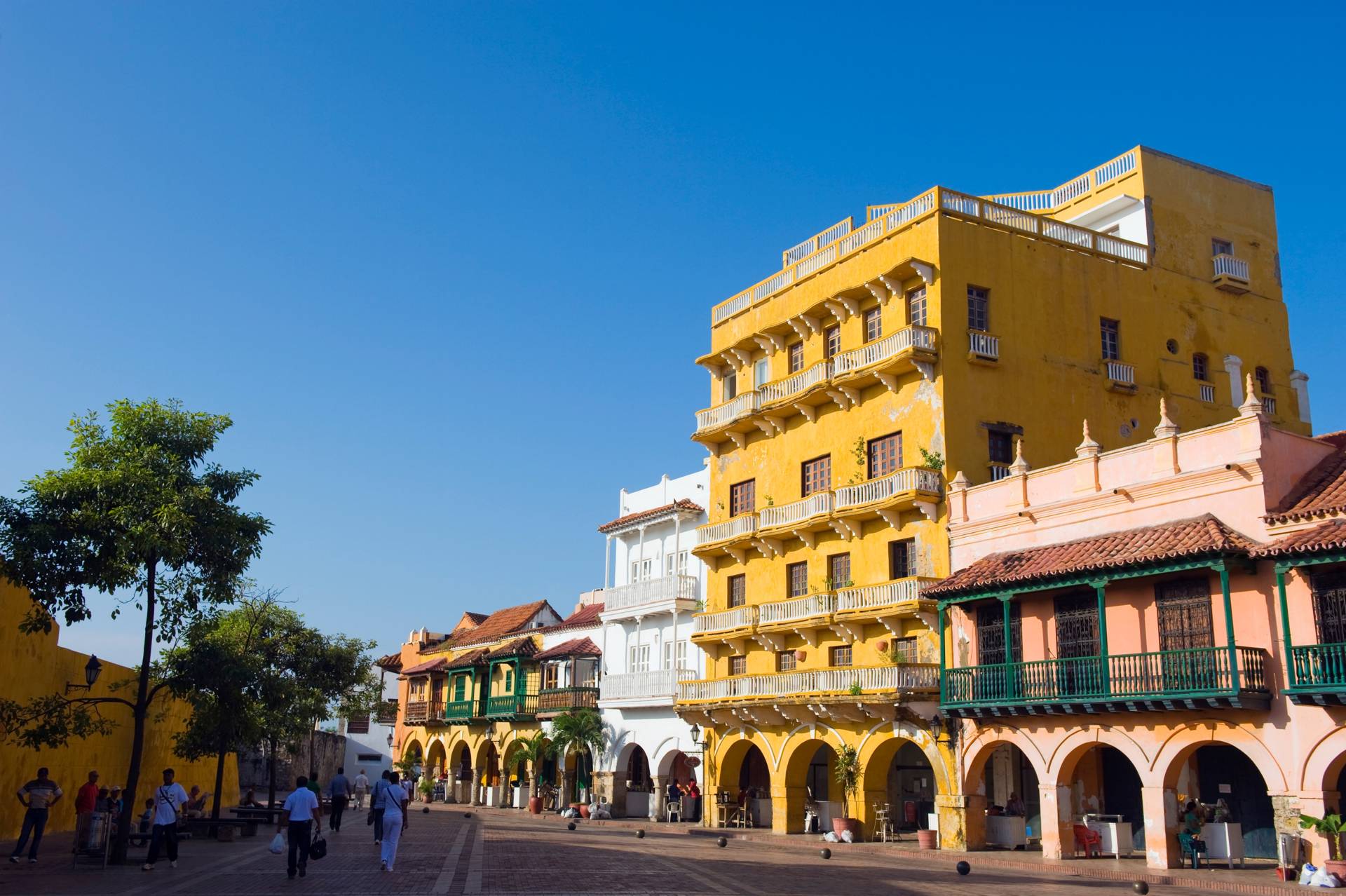
In Cartagena, every plaza tells a different story, but few carry such symbolic weight and such a strategic location as Plaza de los Coches. Positioned at the main entrance to the Walled City, this space functions as a threshold between modern Cartagena and its colonial heart. It is a constant transit point, a stage where the city’s commercial and social past can still be felt in every corner. For travelers arriving in Colombia through Arajet’s destination network and searching for what to do in Cartagena in an efficient way with real historical context, Plaza de los Coches is the perfect place to begin.
Important information before your visit
- Distance from modern Cartagena: located at the main entrance to the historic center.
- Estimated travel time: 10–20 minutes from nearby areas.
- Admission: free, as it is a public space
- Recommended visiting hours: throughout the day.
- Best time to go: early morning or at sunset, when the light is softer and temperatures are more manageable
The ideal amount of time to spend at the plaza is between 20 and 40 minutes if visiting briefly, or longer if using it as a starting point for exploring the inner streets. Its value lies not in duration, but in the context it provides.
For photography enthusiasts, Plaza de los Coches offers compelling compositions. The colonial arcades create natural frames, colorful façades add texture, and the arch leading into the Walled City serves as a strong focal point. At sunset, the golden light enhances the historic character of the space, bathing the walls in warm tones.
In terms of preparation, lightweight clothing and sun protection are recommended, especially during midday hours. The cobblestones can be uneven, so comfortable footwear is advisable. As it is a busy and frequently visited area, keeping personal belongings secure is part of responsible urban travel.
Beyond its function as a transit space, Plaza de los Coches plays a symbolic role in any trip to Cartagena: it represents the gateway to the city’s historical memory. It is the place where past and present intersect most visibly. Where goods and carriages once arrived, visitors from around the world now gather, drawn by the cultural richness of the Colombian Caribbean.
The experience also invites reflection on how the city has evolved without losing its essential structure. The plaza remains a meeting point, a space of exchange, and a prelude to something greater. That historical continuity is one of Cartagena’s most fascinating qualities.
As you leave Plaza de los Coches and move deeper into the Walled City, you carry with you a clear first impression of the destination’s character: open, vibrant, and deeply historical. The plaza may not be the climax of the journey, but it is the indispensable prologue.
For those flying with Arajet and looking for what to do in Cartagena in a smart and well-planned way, Plaza de los Coches is a strategic and meaningful stop. Accessible, historically rich, and seamlessly integrated into the historic center, it offers an ideal introduction to tourism in Colombia’s Caribbean. It proves that making the most of your time sometimes means starting at the right gateway—and letting the city reveal its story step by step.
For photography enthusiasts, Plaza de los Coches offers compelling compositions. The colonial arcades create natural frames, colorful façades add texture, and the arch leading into the Walled City serves as a strong focal point. At sunset, the golden light enhances the historic character of the space, bathing the walls in warm tones.
In terms of preparation, lightweight clothing and sun protection are recommended, especially during midday hours. The cobblestones can be uneven, so comfortable footwear is advisable. As it is a busy and frequently visited area, keeping personal belongings secure is part of responsible urban travel.
Beyond its function as a transit space, Plaza de los Coches plays a symbolic role in any trip to Cartagena: it represents the gateway to the city’s historical memory. It is the place where past and present intersect most visibly. Where goods and carriages once arrived, visitors from around the world now gather, drawn by the cultural richness of the Colombian Caribbean.
The experience also invites reflection on how the city has evolved without losing its essential structure. The plaza remains a meeting point, a space of exchange, and a prelude to something greater. That historical continuity is one of Cartagena’s most fascinating qualities.
As you leave Plaza de los Coches and move deeper into the Walled City, you carry with you a clear first impression of the destination’s character: open, vibrant, and deeply historical. The plaza may not be the climax of the journey, but it is the indispensable prologue.
For those flying with Arajet and looking for what to do in Cartagena in a smart and well-planned way, Plaza de los Coches is a strategic and meaningful stop. Accessible, historically rich, and seamlessly integrated into the historic center, it offers an ideal introduction to tourism in Colombia’s Caribbean. It proves that making the most of your time sometimes means starting at the right gateway—and letting the city reveal its story step by step.