
Plaza de Mayo is, above all, a living space. Since its origins in the colonial era, it has served as a meeting point, marketplace, and setting for celebrations, protests, speeches, and collective silences. Walking through the plaza today means stepping over layers of history stacked one upon another, where every bench, pathway, and view toward the surrounding buildings seems filled with memory. Unlike other historic sites that feel frozen in time, daily life continues here, creating a constant contrast between past and present.
The urban environment surrounding the plaza reinforces its importance. The buildings that frame it do not merely serve administrative or symbolic functions; they also narrate different chapters in the development of Buenos Aires. The plaza acts as a visual and social balance point—an open space that allows visitors to step back and observe the city from a wider perspective. This openness is key to understanding its historical role: it has always been a place where people gathered to watch, listen, demand, and celebrate.
The Casa Rosada dominates one side of the plaza with an unmistakable presence. Its distinctive color immediately sets it apart and makes it a visual reference point even for first-time visitors. Beyond its appearance, the building carries enormous symbolic weight. From its balconies, speeches have been delivered that defined entire eras, and its walls have witnessed decisions that shaped the country’s direction. Seeing it in person helps you grasp its true scale and understand its direct relationship with the public space in front of it.
Experiencing Plaza de Mayo and viewing the Casa Rosada does not require complex planning. In fact, one of its greatest strengths is how easily it fits into any urban itinerary. Located in the heart of the city and naturally connected to other central areas, it is an ideal stop even for travelers with limited time. This accessibility makes it especially attractive within Argentina tourism for visitors who want to make every transfer and every step count.
From a sensory perspective, the plaza shifts throughout the day. In the morning, the atmosphere is often calmer, with people crossing the space on their way to daily routines. The sound level is moderate, and natural light makes it easy to appreciate the surrounding architecture. As the day advances, the plaza fills with movement—conversations, footsteps, and constant activity. By sunset, softer light smooths the outlines of the buildings and creates a more contemplative mood, perfect for pausing and observing for a few minutes.
There is no fixed route through Plaza de Mayo. The space invites free movement: crossing diagonally, stopping in front of the Casa Rosada, studying architectural details, and listening to what is happening around you. This freedom strengthens the feeling of being in a truly public place, where each visitor can shape their own experience without intermediaries.
From the outside, the Casa Rosada reveals an architectural identity shaped by different eras. Its façade—balanced and instantly recognizable—speaks directly to the plaza, reinforcing the idea of closeness between political power and civic space. Even without entering the building, simply observing it from the plaza is enough to understand its central role in national life. It is a building meant to be seen, meant to live within the urban landscape and collective memory.
Historically, Plaza de Mayo has been the backdrop to events that defined Argentine identity. Without needing to dive into specific details, visitors can sense that this is not a neutral space. There is a particular energy here, a feeling of historical weight that coexists with everyday routine. That coexistence may be one of the most compelling aspects of the plaza: history is not separated—it is integrated into daily life.
For the efficient traveler, one of the greatest advantages of this stop is logistical clarity. The plaza is easy to find, open, and accessible, which means it can be visited without restrictions or cost. Before planning your visit, it helps to keep these practical points in mind:
May Square and Pink House
Buenos Aires, AR
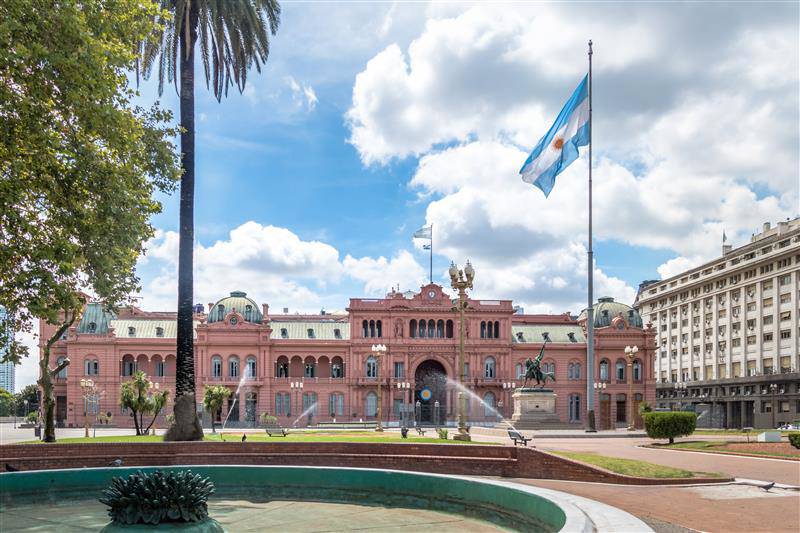
Buenos Aires is a city that explains itself through its public spaces, and none is more charged with meaning than Plaza de Mayo. This place is not merely a geographic point in the city center, but the stage where some of the most decisive moments in Argentine history have unfolded. Facing it stands the Casa Rosada, a symbol of political power and one of the country’s most recognizable buildings. For those arriving in Argentina through Arajet’s destination network and looking for what to do in Buenos Aires in an efficient yet profound way, this pairing offers an essential experience—one capable of condensing centuries of history, identity, and urban life into just a few hours.
Important information before your visit
- Distance from downtown Buenos Aires: located within the central area of the city.
- Estimated travel time: walkable from many central neighborhoods and well connected by public transit.
- Admission: free, as it is a public space.
- Recommended visiting hours: ideal to visit during daylight hours.
- Best time to go: morning or sunset, when light enhances the surroundings and the atmosphere feels most pleasant.
The time needed to explore Plaza de Mayo and appreciate the Casa Rosada is flexible. A quick visit can take 30 to 45 minutes, while a slower stop—allowing time to observe, photograph, and sit for a few minutes—can easily extend to an hour or more. This adaptability makes it a strategic anchor in a well-planned urban itinerary.
For photography lovers, the area offers multiple possibilities. The openness of the plaza makes it easy to capture wide frames that include the Casa Rosada and other surrounding buildings, placing the scene within the broader city context. Morning light enhances color and form, while sunset adds warmer tones and longer shadows that create depth. The key is simply paying attention to how the space changes across the day.
Preparation is simple. Comfortable clothing and walking shoes are enough. Since it is an open space, sun protection is advisable on clear days, as well as water if you plan to explore at a relaxed pace. Nothing more is required to enjoy the experience fully, reinforcing its accessible and efficient character.
From a time-efficiency perspective, Plaza de Mayo and the Casa Rosada serve a fundamental purpose within a Buenos Aires trip: they provide context. They allow visitors to understand the city from its historical and political core—an insight that enriches everything that comes afterward. Once you have been here, other parts of the city often feel like extensions of a story whose epicenter lies in this very space.
The plaza also functions as a point of social observation. Sitting for a few minutes and watching how people move, meet, and cross the space offers a direct reading of porteño life. This everyday layer complements the historical weight and adds a more complete understanding of the place.
As you leave the plaza and continue exploring the city, what remains is a sense of clarity. It is not only that you have seen an iconic site—you have better understood the symbolic structure of Buenos Aires. Plaza de Mayo is not just another point on the map; it is a place where the city explains itself.
For those flying with Arajet and looking for what to do in Buenos Aires in a smart and well-planned way, Plaza de Mayo and the Casa Rosada are a must. Accessible, free, and deeply meaningful, they offer one of the most complete experiences in the city within a compact space. It is a visit that proves making the most of your time does not always mean moving faster—it means choosing the places that truly define a destination.
For photography lovers, the area offers multiple possibilities. The openness of the plaza makes it easy to capture wide frames that include the Casa Rosada and other surrounding buildings, placing the scene within the broader city context. Morning light enhances color and form, while sunset adds warmer tones and longer shadows that create depth. The key is simply paying attention to how the space changes across the day.
Preparation is simple. Comfortable clothing and walking shoes are enough. Since it is an open space, sun protection is advisable on clear days, as well as water if you plan to explore at a relaxed pace. Nothing more is required to enjoy the experience fully, reinforcing its accessible and efficient character.
From a time-efficiency perspective, Plaza de Mayo and the Casa Rosada serve a fundamental purpose within a Buenos Aires trip: they provide context. They allow visitors to understand the city from its historical and political core—an insight that enriches everything that comes afterward. Once you have been here, other parts of the city often feel like extensions of a story whose epicenter lies in this very space.
The plaza also functions as a point of social observation. Sitting for a few minutes and watching how people move, meet, and cross the space offers a direct reading of porteño life. This everyday layer complements the historical weight and adds a more complete understanding of the place.
As you leave the plaza and continue exploring the city, what remains is a sense of clarity. It is not only that you have seen an iconic site—you have better understood the symbolic structure of Buenos Aires. Plaza de Mayo is not just another point on the map; it is a place where the city explains itself.
For those flying with Arajet and looking for what to do in Buenos Aires in a smart and well-planned way, Plaza de Mayo and the Casa Rosada are a must. Accessible, free, and deeply meaningful, they offer one of the most complete experiences in the city within a compact space. It is a visit that proves making the most of your time does not always mean moving faster—it means choosing the places that truly define a destination.