
From the moment you step into the square, architecture commands attention. Toronto City Hall, with its two gently curved towers leaning toward a central council chamber, creates a futuristic silhouette that contrasts strikingly with the historic stone building positioned just across from it. This architectural dialogue captures Toronto’s essence: tradition and modernity coexisting in balance.
Historically, the square opened in 1965 as part of the new City Hall complex. Its design aimed to create an open civic space capable of hosting large public gatherings while serving as a permanent meeting point for residents. Over time, it became one of Canada’s most recognizable public spaces.
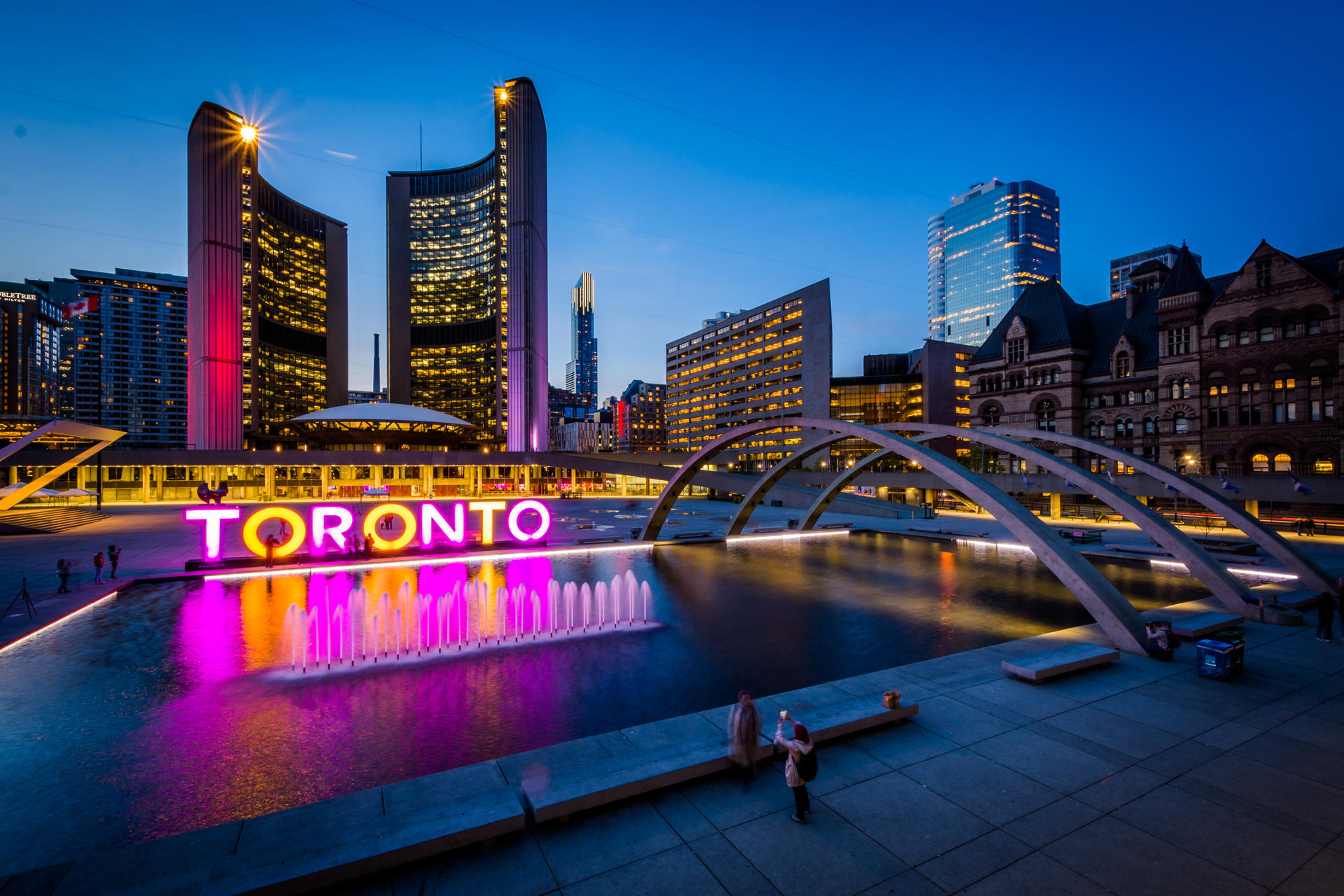
One of the plaza’s most iconic features is the illuminated “TORONTO” sign installed in front of the reflecting pool. This installation has become a must-see visual symbol for both visitors and locals. During the day, its vibrant colors stand out against the skyline; at night, it lights up dramatically, creating a lively focal point in the urban landscape.
From a sensory perspective, Nathan Phillips Square feels open and energetic. The dominant sounds are urban but balanced—conversations in multiple languages, moderate traffic from nearby streets, and occasional music from cultural events. In summer, warm air blends with the cooling presence of the reflecting pool. In winter, the atmosphere transforms entirely when the pool becomes a public ice-skating rink.
The reflecting pool itself is one of the space’s defining elements. During warmer months, it acts as a mirror, visually doubling City Hall and the surrounding towers. The water captures Ontario’s shifting skies, offering exceptional photographic opportunities throughout the day.
From a time-efficiency standpoint, Nathan Phillips Square is remarkably practical. Its central location allows it to be easily combined with other key Downtown landmarks such as the CN Tower, the Financial District, or Toronto’s underground shopping concourse. A smart strategy is to visit at sunset, when golden light enhances the architecture, and remain until the sign and surrounding buildings illuminate after dark.
For travelers who value clear logistics and efficient planning, here are key details:
Nathan Phillips Square
Toronto, CA
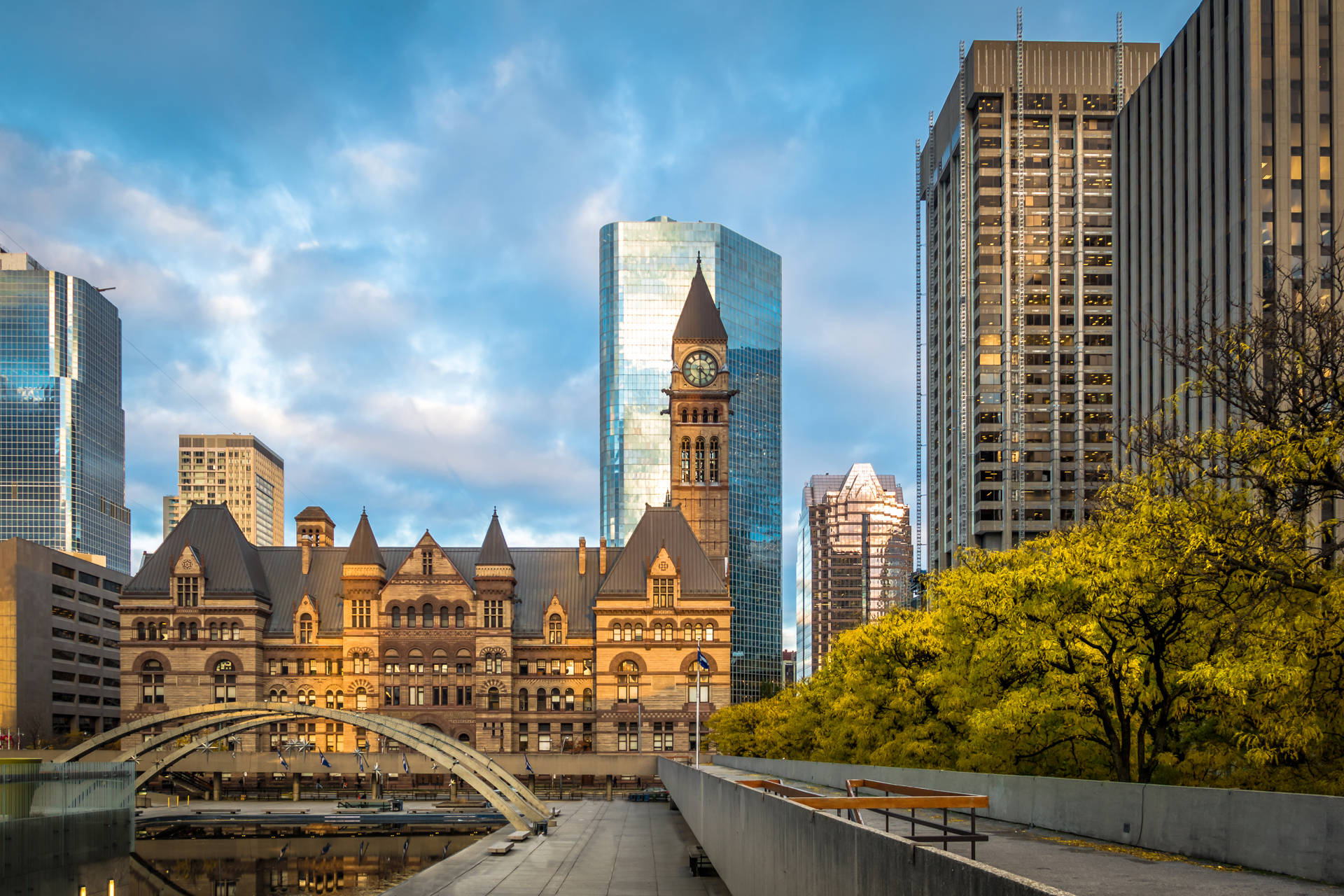
In the very heart of Downtown Toronto, surrounded by glass skyscrapers and historic buildings that reflect different stages of the city’s evolution, lies a public space that symbolizes Toronto’s contemporary identity: Nathan Phillips Square. More than just the forecourt of City Hall, this plaza is where Toronto celebrates, protests, ice skates, takes photographs, and recognizes itself as a dynamic, multicultural metropolis. For travelers arriving in Ontario through Arajet’s growing destination network and looking for what to do in Toronto while maximizing every minute, Nathan Phillips Square offers a strategic, centrally located, and highly photogenic stop that fits seamlessly into any urban itinerary.
Important information before your visit
- Location: Downtown Toronto, in front of City Hall, between Queen Street West and Bay Street
- Distance from CN Tower: Approximately 1 kilometer (0.6 miles)
- Distance from Toronto Pearson International Airport: Around 26 kilometers (16 miles)
- Estimated travel time from the airport: 25–40 minutes, depending on traffic or public transit.
- Admission: Free; it is a public space
- Recommended visit duration: 45 minutes to 2 hours.
- Best time to visit: Sunset and evening for lighting and reflections.
The ideal visit is brief yet meaningful. In under an hour, you can explore the plaza, capture photographs, and appreciate its architecture. If you happen to encounter a cultural event, market, or seasonal festival, the experience can easily extend longer.
For photography enthusiasts, the square offers compelling compositions. The reflection of City Hall in the pool creates striking symmetry. The illuminated sign provides a vibrant focal point for nighttime images. The curved towers contrast dynamically with the rectilinear skyscrapers of the Financial District.
In winter, when the reflecting pool transforms into an ice rink, the setting takes on a distinctly Canadian character. Skaters glide beneath the glowing sign and curved towers, creating an iconic seasonal scene.
Beyond its aesthetic appeal, Nathan Phillips Square holds symbolic importance within the Toronto experience. It is the city’s civic heart, hosting cultural festivals, community celebrations, and public demonstrations. The square reflects Toronto’s diversity and openness.
The space also invites observation of everyday urban life. Students eat lunch on benches, office workers cross the plaza briskly, and visitors pause to capture their moment beneath the city’s name. This constant blend of rhythms creates an authentic atmosphere.
When planning your visit, dress according to the season. In summer, sunscreen is advisable due to the open exposure. In winter, warm layers are essential if you plan to remain outdoors for extended periods.
As night falls, the plaza transforms. The illuminated sign glows in vivid colors, City Hall windows shine, and reflections in the water amplify the visual effect. It becomes one of Downtown Toronto’s most photogenic moments.
When you leave Nathan Phillips Square to continue exploring the city, you carry the impression of having stood at Toronto’s urban epicenter. It is not simply a plaza—it is a symbol of collective identity and modern Canadian confidence.
For those flying with Arajet and seeking what to do in Toronto in a smart, central, and well-organized way, Nathan Phillips Square is an essential stop. Free, accessible, and visually iconic, it delivers a representative urban experience in just a short, well-spent visit. It proves that making the most of your time also means standing in the city’s civic heart, watching modern architecture reflected in water, and discovering how Toronto celebrates its diversity in a space open to the world.
For photography enthusiasts, the square offers compelling compositions. The reflection of City Hall in the pool creates striking symmetry. The illuminated sign provides a vibrant focal point for nighttime images. The curved towers contrast dynamically with the rectilinear skyscrapers of the Financial District.
In winter, when the reflecting pool transforms into an ice rink, the setting takes on a distinctly Canadian character. Skaters glide beneath the glowing sign and curved towers, creating an iconic seasonal scene.
Beyond its aesthetic appeal, Nathan Phillips Square holds symbolic importance within the Toronto experience. It is the city’s civic heart, hosting cultural festivals, community celebrations, and public demonstrations. The square reflects Toronto’s diversity and openness.
The space also invites observation of everyday urban life. Students eat lunch on benches, office workers cross the plaza briskly, and visitors pause to capture their moment beneath the city’s name. This constant blend of rhythms creates an authentic atmosphere.
When planning your visit, dress according to the season. In summer, sunscreen is advisable due to the open exposure. In winter, warm layers are essential if you plan to remain outdoors for extended periods.
As night falls, the plaza transforms. The illuminated sign glows in vivid colors, City Hall windows shine, and reflections in the water amplify the visual effect. It becomes one of Downtown Toronto’s most photogenic moments.
When you leave Nathan Phillips Square to continue exploring the city, you carry the impression of having stood at Toronto’s urban epicenter. It is not simply a plaza—it is a symbol of collective identity and modern Canadian confidence.
For those flying with Arajet and seeking what to do in Toronto in a smart, central, and well-organized way, Nathan Phillips Square is an essential stop. Free, accessible, and visually iconic, it delivers a representative urban experience in just a short, well-spent visit. It proves that making the most of your time also means standing in the city’s civic heart, watching modern architecture reflected in water, and discovering how Toronto celebrates its diversity in a space open to the world.