
The first impression upon arrival is one of space. The sky feels wider, traffic noise fades into the background, and the water becomes the main character. The old docks act as visual axes that organize the area and naturally guide the walk. Exploring Puerto Madero requires no map or detailed planning—simply follow the waterfront and let the surroundings set the pace. This simplicity is one of its greatest strengths, especially for travelers who want to enjoy the city without complications.
Unlike other historic neighborhoods in Buenos Aires, where density and constant movement define the atmosphere, Puerto Madero offers a more unhurried experience. Wide pathways allow for comfortable strolling, pausing to observe the scenery, and continuing without interruption. The water reflects buildings, sky, and shifting daylight, creating an environment that transforms with every step. It is a place where the city feels organized and breathable.
The neighborhood’s industrial past remains visible, though reinterpreted. Former port structures add character and recall the area’s functional origins, while the present environment reflects a contemporary vision of urban living. This coexistence between old and new does not feel forced; it integrates naturally, giving Puerto Madero a distinct identity unlike any other part of Buenos Aires.
Walking through the district is a linear experience, yet never monotonous. Each stretch offers a slightly different perspective: calm water, reflections that change with the hour, and the gentle movement of people walking, jogging, or simply stopping to observe. There is no rush and no mandatory route. The neighborhood adapts to the visitor’s available time, making it an especially efficient choice within an urban itinerary.
From a sensory perspective, Puerto Madero stands out for its balance. The sounds of water and wind partially replace the constant noise of the city. The breeze is often fresher near the docks, making walks pleasant even on warm days. The view opens into long horizons—something uncommon in denser areas of the city. Everything contributes to a feeling of visual clarity and spatial order.
One of Puerto Madero’s greatest strengths is its versatility throughout the day. In the morning, the atmosphere is bright and tranquil, ideal for a relaxed walk. By mid-afternoon, the rhythm remains gentle, with people moving at an unhurried pace. At sunset, the light grows warmer and reflections over the water transform the scenery, creating one of Buenos Aires’ most striking urban postcards. This ability to change without losing identity makes even a second visit feel different.
From a time-efficiency standpoint, Puerto Madero is a smart choice. It does not demand lengthy explanations or complex routes. It is a space to experience rather than decode. This makes it an excellent pause between more intense visits, such as historic tours or high-density neighborhoods. Here, the body rests while still in motion.
For travelers who prioritize clear logistics and budget-friendly travel, the neighborhood offers another advantage: its proximity to the historic center. It can easily be integrated into a broader walking route, connecting naturally with other central areas without additional transportation. Before planning your visit, consider these practical details:
Puerto Madero
Buenos Aires, AR
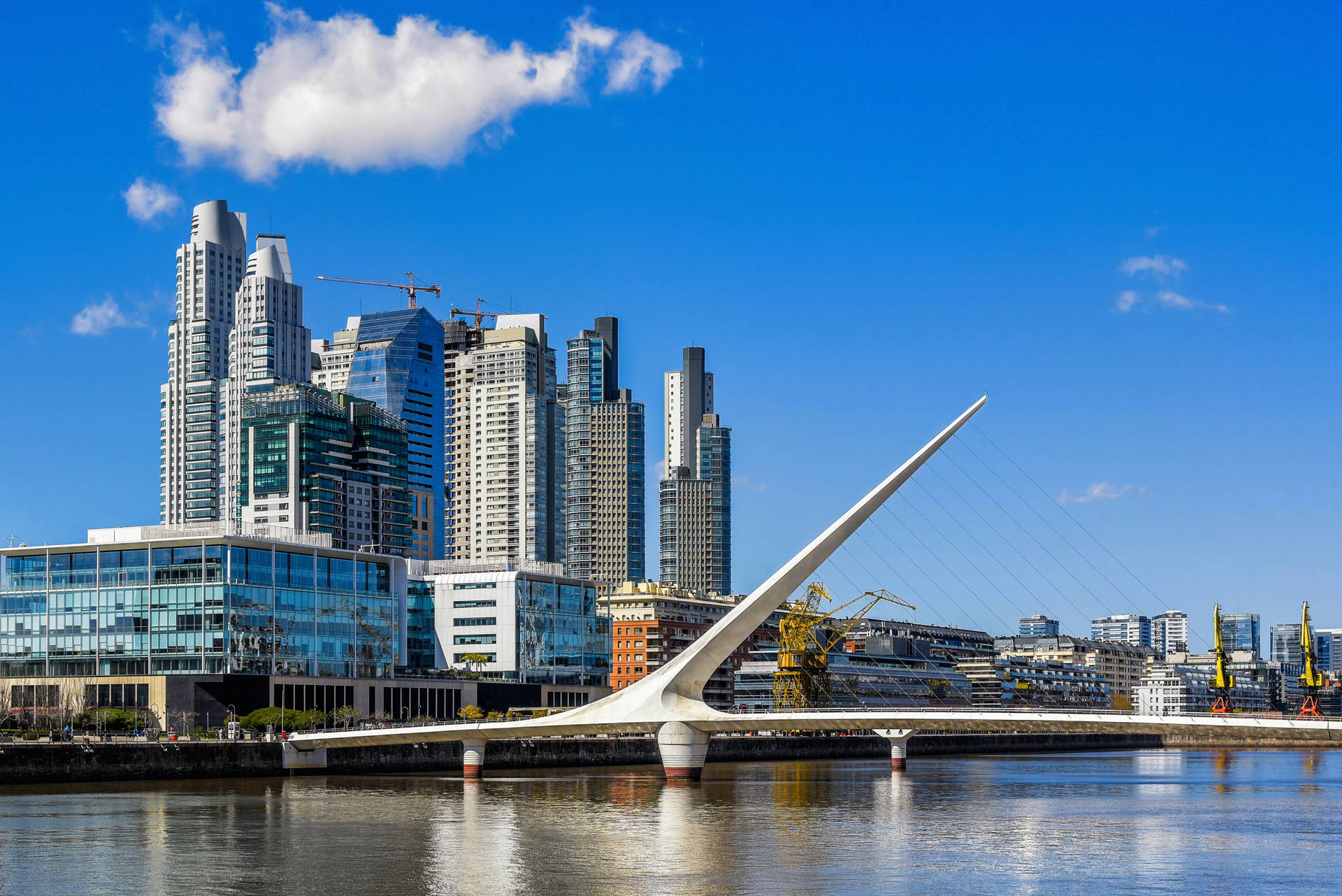
Puerto Madero is the clearest example of how Buenos Aires knows how to reinvent itself without losing its identity. Where abandoned docks and unused industrial structures once stood, today stretches one of the most modern and pleasant urban spaces in the city. For travelers arriving in Argentina through Arajet’s destination network and looking for what to do in Buenos Aires while combining walking, urban scenery, and a relaxed experience, Puerto Madero is a strategic stop that offers openness, order, and a sense of calm rarely found in a major capital.
Important information before your visit
- Distance from downtown Buenos Aires: approximately 1 kilometer from the central area.
- Estimated travel time: 10 to 15 minutes on foot from central zones.
- Admission: free, as it is a public neighborhood and open space.
- Recommended visiting hours: accessible throughout the day.
- Best time to visit: at sunset, when light and reflections create a particularly special atmosphere.
The ideal time to explore Puerto Madero depends on your approach. A simple walk can be completed in about 40 minutes, while a slower visit—with frequent pauses to observe and rest—can easily extend to an hour and a half. This flexibility makes it easy to adjust to any itinerary, especially valuable for those with limited days in the city.
For photography enthusiasts, Puerto Madero offers a privileged setting. The straight lines of the docks, calm water, and contrast between contemporary architecture and open sky provide clean, modern compositions. Light plays a crucial role: morning enhances clarity and sharpness, while sunset adds warm tones and reflections that heighten visual appeal. Rather than seeking a single iconic spot, the key is observing how the surroundings evolve along the route.
Preparation is simple. Comfortable clothing and walking shoes are sufficient. Since it is an open and exposed area, bringing sun protection and water is advisable, particularly on clear days. No special equipment or prior planning is required, reinforcing the sense of an accessible and frictionless experience.
On a deeper level, Puerto Madero fulfills a symbolic role within the city. It represents Buenos Aires’ ability to look forward, repurpose its past, and create spaces designed for people. It is not a neighborhood that tells an ancient story, but one that showcases a contemporary way of inhabiting the city. This distinction makes it an ideal complement to more traditional areas.
Observing daily life in Puerto Madero also offers insight. Individuals walking alone, couples, and small groups sharing the space without haste reinforce the feeling of order and coexistence. It is a neighborhood to be enjoyed both in motion and at rest—simply sitting by the water for a few minutes.
As the walk continues, the rest of the city feels distant, even though it is only steps away. That symbolic separation is one of Puerto Madero’s greatest achievements: offering a breath of space without truly leaving Buenos Aires. It proves that urban experiences do not always need to be intense to be meaningful.
When leaving Puerto Madero and returning to denser areas, the contrast becomes clear. Noise increases, streets narrow, and the rhythm accelerates. Yet the time spent in the neighborhood leaves a feeling of balance, as if it helped organize the day and the journey. That may be its greatest virtue.
For those flying with Arajet and searching for what to do in Buenos Aires in a smart and well-planned way, Puerto Madero is an essential stop. Accessible, free, and visually striking, it offers a different kind of urban experience—one where time is well spent without pressure and the landscape accompanies every step. It is proof that even in a great capital, there is always room to slow down, look around, and truly enjoy the journey.
For photography enthusiasts, Puerto Madero offers a privileged setting. The straight lines of the docks, calm water, and contrast between contemporary architecture and open sky provide clean, modern compositions. Light plays a crucial role: morning enhances clarity and sharpness, while sunset adds warm tones and reflections that heighten visual appeal. Rather than seeking a single iconic spot, the key is observing how the surroundings evolve along the route.
Preparation is simple. Comfortable clothing and walking shoes are sufficient. Since it is an open and exposed area, bringing sun protection and water is advisable, particularly on clear days. No special equipment or prior planning is required, reinforcing the sense of an accessible and frictionless experience.
On a deeper level, Puerto Madero fulfills a symbolic role within the city. It represents Buenos Aires’ ability to look forward, repurpose its past, and create spaces designed for people. It is not a neighborhood that tells an ancient story, but one that showcases a contemporary way of inhabiting the city. This distinction makes it an ideal complement to more traditional areas.
Observing daily life in Puerto Madero also offers insight. Individuals walking alone, couples, and small groups sharing the space without haste reinforce the feeling of order and coexistence. It is a neighborhood to be enjoyed both in motion and at rest—simply sitting by the water for a few minutes.
As the walk continues, the rest of the city feels distant, even though it is only steps away. That symbolic separation is one of Puerto Madero’s greatest achievements: offering a breath of space without truly leaving Buenos Aires. It proves that urban experiences do not always need to be intense to be meaningful.
When leaving Puerto Madero and returning to denser areas, the contrast becomes clear. Noise increases, streets narrow, and the rhythm accelerates. Yet the time spent in the neighborhood leaves a feeling of balance, as if it helped organize the day and the journey. That may be its greatest virtue.
For those flying with Arajet and searching for what to do in Buenos Aires in a smart and well-planned way, Puerto Madero is an essential stop. Accessible, free, and visually striking, it offers a different kind of urban experience—one where time is well spent without pressure and the landscape accompanies every step. It is proof that even in a great capital, there is always room to slow down, look around, and truly enjoy the journey.