
From the moment you enter the archaeological site, the scale is striking. The Avenue of the Dead, the complex’s central axis, stretches forward like a stone spine flanked by structures that once served as ceremonial centers, palaces, and ritual platforms. The sense of openness is extraordinary: the sky feels wider here, hovering above a vast plain that preserves the footprint of one of the most influential cities in the Mesoamerican world.
Teotihuacán was no minor settlement. At its peak, between the 1st and 7th centuries, it housed more than 100,000 inhabitants, making it one of the largest urban centers in the ancient world. Its influence extended across much of Mesoamerica. Yet the precise origins of the city and the identity of its founders remain subjects of debate, adding an intriguing layer of mystery to the visit.
From a sensory perspective, exploring Teotihuacán is both physical and contemplative. The stone pathways underfoot convey the site’s age. Wind sweeps freely across the plain, carrying fine dust that emphasizes the openness of the landscape. Silence dominates, interrupted only by distant footsteps and quiet conversations echoing across the structures.
The Pyramid of the Sun dominates the horizon. Its massive base and stepped design create an imposing presence visible from multiple points throughout the complex. Opposite it, the Pyramid of the Moon marks the northern end of the Avenue of the Dead, aligned with the surrounding mountains. This urban planning reflects advanced astronomical knowledge and a deliberate ceremonial vision.
Walking along the Avenue of the Dead reveals the city’s original urban magnitude. Though the side platforms now appear as silent ruins, they were once covered in stucco and vibrant paint. Imagining the city in its prime adds depth and perspective to the experience.
From a time-efficiency standpoint, Teotihuacán is a highly practical excursion from Mexico City. Leaving early in the morning helps avoid heavy traffic and intense midday heat. With proper planning, visitors can explore the essential highlights in approximately three to four hours, returning to the capital by late afternoon.
For travelers who value clear logistics and budget-conscious planning, consider the following practical details:
Teotihuacan
Ciudad de México, MX
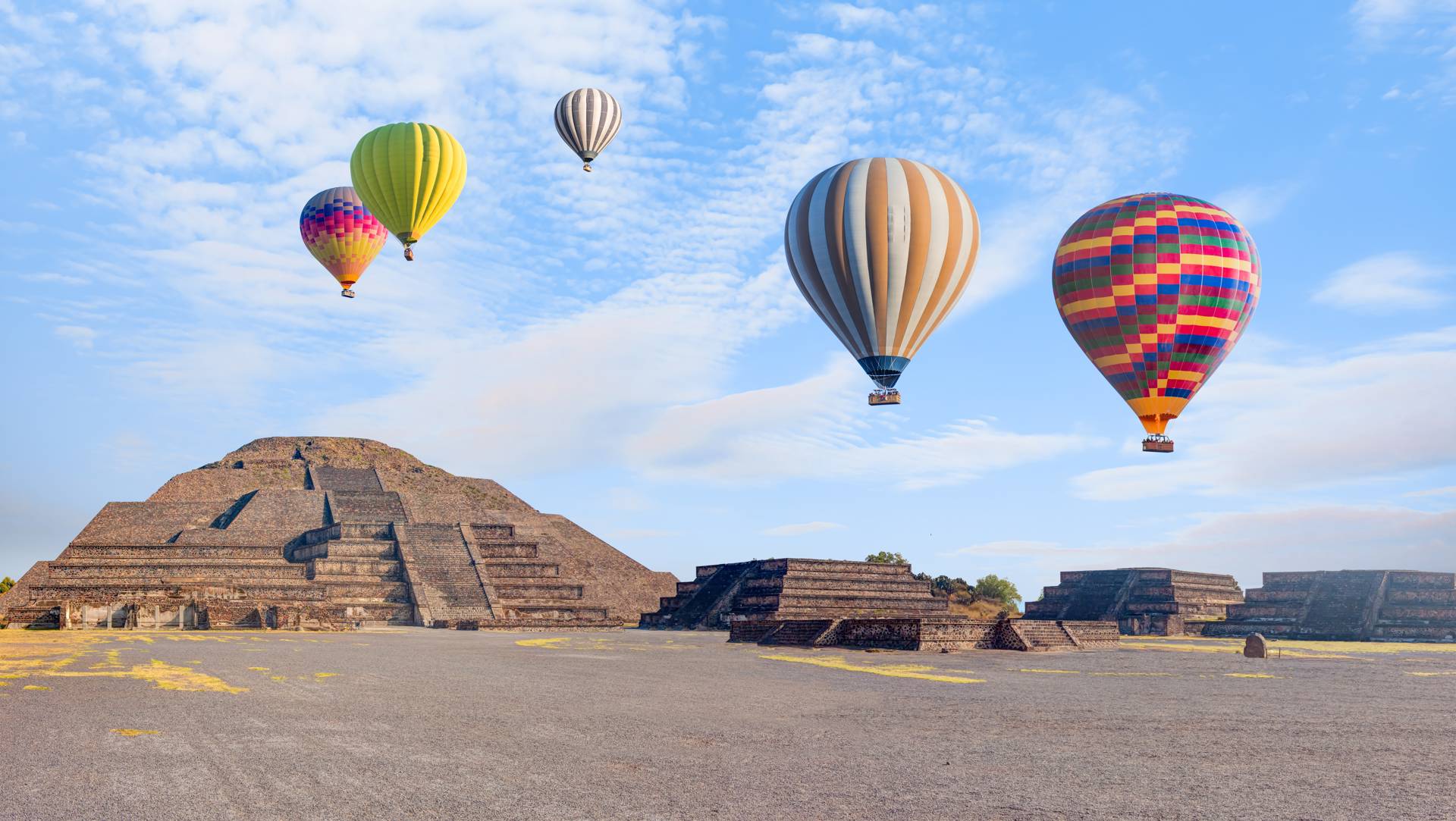
Less than an hour from Mexico City lies one of the most imposing archaeological complexes in the Americas: Teotihuacán. Its name means “the place where the gods were created,” and walking along its ancient avenues quickly reveals why early civilizations regarded it as sacred. For travelers arriving through Arajet’s expanding destination network and wondering what to do in Mexico City while optimizing their itinerary, Teotihuacán offers a strategic half-day or full-day excursion that combines history, monumentality, and deep cultural immersion in one well-organized experience.
Important information before your visit
- Location: Municipality of Teotihuacán, State of Mexico
- Distance from Mexico City Historic Center: approximately 50 kilometers
- Estimated travel time: 1 hour to 1 hour and 20 minutes, depending on traffic.
- Admission: Entrance fee required
- Hours: Generally open daily from morning until mid-afternoon
- Best time to visit: Early morning to avoid heat and peak crowds.
To fully experience Teotihuacán at a relaxed pace—including the Avenue of the Dead, the main pyramids, and residential complexes such as the Palace of Quetzalpapálotl—plan for four to five hours. If time is limited, a well-organized three-hour visit allows you to cover the most iconic landmarks.
For photography enthusiasts, Teotihuacán offers monumental perspectives unlike anywhere else. Standing at the base of the Pyramid of the Sun highlights the dramatic contrast between human scale and ancient architecture. The view toward the Pyramid of the Moon framed by the mountains is especially powerful. During golden hour, the stone takes on warm tones that intensify the landscape’s visual drama.
Preparation is essential. Wear sturdy, comfortable footwear, as the terrain can be uneven. Sun protection is indispensable—hat, sunglasses, and sunscreen are strongly recommended due to direct exposure. Bringing water is crucial, particularly on sunny days, since the visit involves extended walking in open space.
Beyond its monumentality, Teotihuacán plays a fundamental role in understanding Mexico’s historical depth beyond the colonial period. It stands as tangible evidence of the urban, architectural, and astronomical sophistication of Mesoamerican civilizations.
The experience also invites reflection. Standing quietly before the Pyramid of the Sun, observing its geometric precision beneath an expansive sky, often evokes a profound sense of humility before time. Each stone was placed more than a thousand years ago, yet the complex continues to project grandeur.
Returning to Mexico City after the visit gives the capital new dimension. Realizing that the modern metropolis rises within a territory shaped by millennia of human development transforms the perception of the journey.
For those flying with Arajet and seeking what to do in Mexico City in a smart, cultural, and carefully planned way, Teotihuacán is an essential experience. Monumental, historic, and strategically accessible, it offers one of Latin America’s most impactful archaeological excursions within a single well-planned day. It proves that making the most of your time sometimes means stepping beyond the city for a few hours—walking among ancient pyramids, traversing ceremonial avenues, and connecting with a civilization that left an indelible mark on Mexico’s history.
For photography enthusiasts, Teotihuacán offers monumental perspectives unlike anywhere else. Standing at the base of the Pyramid of the Sun highlights the dramatic contrast between human scale and ancient architecture. The view toward the Pyramid of the Moon framed by the mountains is especially powerful. During golden hour, the stone takes on warm tones that intensify the landscape’s visual drama.
Preparation is essential. Wear sturdy, comfortable footwear, as the terrain can be uneven. Sun protection is indispensable—hat, sunglasses, and sunscreen are strongly recommended due to direct exposure. Bringing water is crucial, particularly on sunny days, since the visit involves extended walking in open space.
Beyond its monumentality, Teotihuacán plays a fundamental role in understanding Mexico’s historical depth beyond the colonial period. It stands as tangible evidence of the urban, architectural, and astronomical sophistication of Mesoamerican civilizations.
The experience also invites reflection. Standing quietly before the Pyramid of the Sun, observing its geometric precision beneath an expansive sky, often evokes a profound sense of humility before time. Each stone was placed more than a thousand years ago, yet the complex continues to project grandeur.
Returning to Mexico City after the visit gives the capital new dimension. Realizing that the modern metropolis rises within a territory shaped by millennia of human development transforms the perception of the journey.
For those flying with Arajet and seeking what to do in Mexico City in a smart, cultural, and carefully planned way, Teotihuacán is an essential experience. Monumental, historic, and strategically accessible, it offers one of Latin America’s most impactful archaeological excursions within a single well-planned day. It proves that making the most of your time sometimes means stepping beyond the city for a few hours—walking among ancient pyramids, traversing ceremonial avenues, and connecting with a civilization that left an indelible mark on Mexico’s history.