
The transformation is immediate upon entering one of the park’s main gates. The sound of traffic fades, replaced by birdsong and the soft crunch of leaves underfoot. Wide paths, centuries-old trees, and artificial lakes create an atmosphere that contrasts sharply with the surrounding urban density. The sensation is one of openness and fresh air.
The name Chapultepec comes from Nahuatl and means “Hill of the Grasshopper.” This natural hill, located within the park, was a strategic site in pre-Hispanic times. For the Mexica civilization, it held both symbolic and practical value, offering a vantage point over the Valley of Mexico. Later, during the colonial period and after independence, the site gained further historical importance.
One of the park’s most iconic landmarks is Chapultepec Castle, perched atop the hill. From below, its silhouette rises above the treetops, inviting visitors upward. The walk to the summit is moderate and accessible, offering progressively wider views of the city along the way. At the top, the horizon opens dramatically, revealing the vast scale of Mexico City.
From a sensory perspective, Chapultepec is a true pause. The scent of earth and vegetation fills the air. A steady breeze moves through the tall trees, softening the temperature even on sunny days. Reflections of the sky shimmer across the lakes, creating peaceful scenes where time seems to slow.
Beyond the castle, the park is home to internationally significant cultural and museum spaces. This concentration makes Chapultepec one of the most strategic destinations for travelers seeking efficient and budget-friendly experiences: in a single location, it is possible to combine nature walks with cultural exploration—without long transfers across the city.
From a time-efficiency standpoint, Chapultepec is remarkably flexible. It can be explored in segments. A smart approach is to dedicate the morning to walking through the park’s historic section, climb to the castle, and then descend toward the lakes for a contemplative break. Alternatively, visitors can prioritize museums and conclude with a relaxed walk-through shaded paths.
For travelers who value clear logistics and smart planning, consider the following practical details:
Chapultepec Forest
Ciudad de México, MX
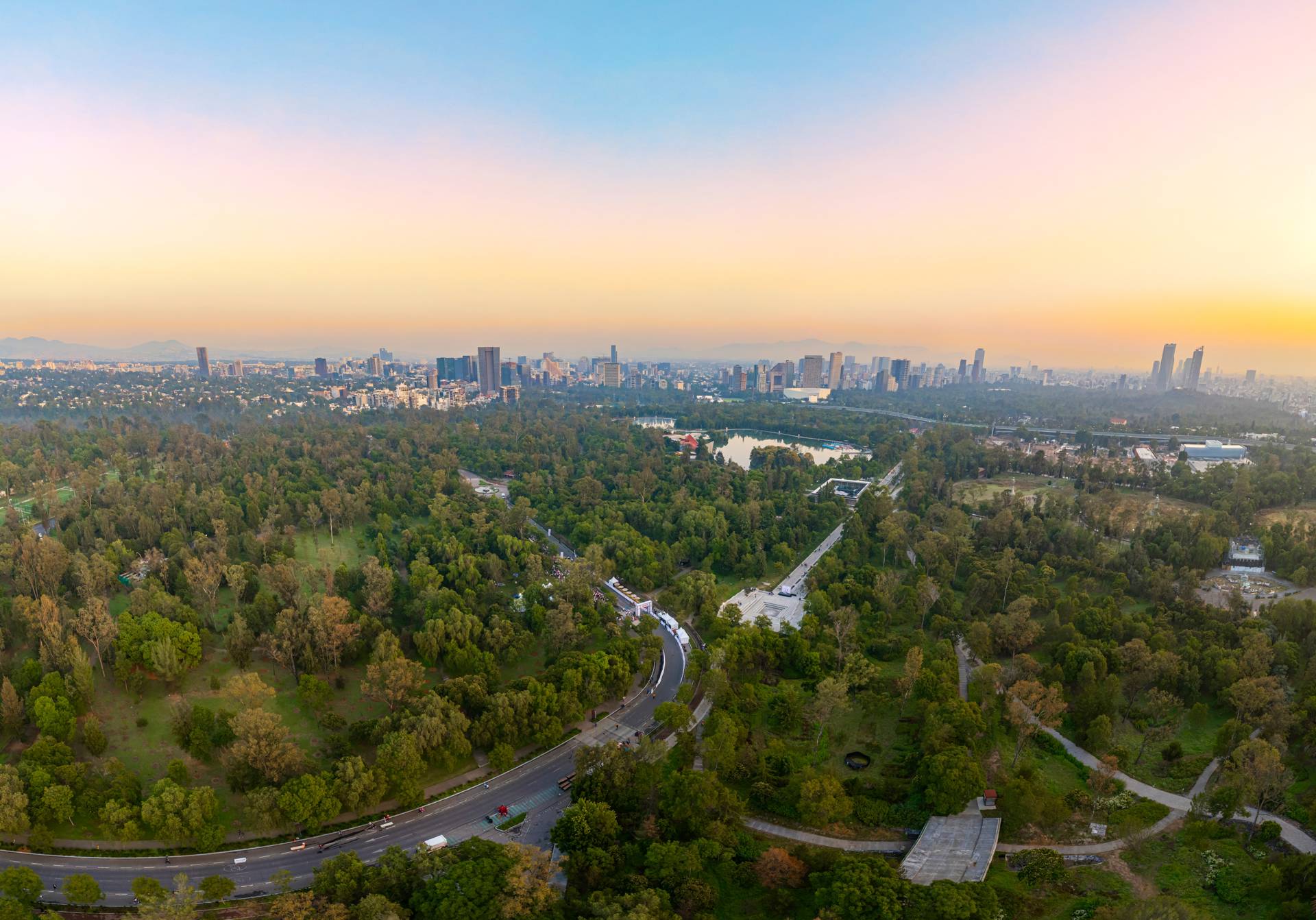
In one of the largest and most dynamic cities in the world—where constant movement and urban energy rarely slow down—there is a space that breathes at its own rhythm: Chapultepec Park. This vast green lung, one of the largest urban parks in the Western Hemisphere, is far more than a recreational area. It is a place where pre-Hispanic history, colonial legacy, cultural modernity, and nature coexist within the same landscape. For travelers arriving through Arajet’s growing destination network and looking for what to do in Mexico City while optimizing their itinerary, Chapultepec offers a strategic experience: nature, culture, and panoramic views combined in a flexible half-day or full-day plan.
Important information before your visit
- Location: Western area of Mexico City
- Distance from the Historic Center: approximately 6 kilometers
- Distance from Mexico City International Airport: around 15 kilometers
- Estimated travel time from the airport: 30–50 minutes, depending on traffic.
- Park admission: Free (specific attractions may require tickets)
- Hours: Open early in the morning; some areas have individual schedules
- Best time to visit: Early morning for tranquility or weekdays to avoid larger crowds.
The ideal amount of time to experience Chapultepec depends on your interests. A focused visit centered on the castle and lakes can take three to four hours. A more in-depth exploration, including museums and extended walking paths, can easily fill an entire day.
For photography enthusiasts, the park offers diverse visual opportunities. From the castle terraces, sweeping panoramic views of Paseo de la Reforma create striking compositions. The lakes reflect trees and sky in near-symmetrical frames. Tree-lined paths capture beautiful transitions between light and shadow.
Preparation is straightforward. Comfortable shoes are recommended for moderate walking distances. Sun protection is useful, although many areas provide natural shade. Carrying water helps maintain energy, especially when combining outdoor exploration with museum visits.
Beyond its recreational function, Chapultepec plays a key role in understanding Mexico City’s urban identity. It demonstrates how a massive metropolis integrates large-scale green spaces into its fabric. Nature here is not secondary—it is central.
The experience also encourages reflection. Sitting beside a lake and watching the gentle movement of the water offers a temporary escape from the city’s intensity. Listening to the wind through the trees creates a valuable mental pause within a busy travel itinerary.
As evening approaches, the light softens, and the park takes on warmer tones. Shadows stretch along the paths, and the atmosphere becomes quieter. It is an ideal moment for a final walk before returning to the city center or heading toward Paseo de la Reforma.
Leaving Chapultepec often brings the feeling of having experienced a more balanced side of Mexico City. The capital is not only historic and cultural—it also provides generous spaces to breathe.
For those flying with Arajet and planning what to do in Mexico City in a smart, nature-oriented, and well-organized way, Chapultepec Park is an essential stop. Expansive, accessible, and strategically located, it allows visitors to combine history, panoramic views, and green landscapes within just a few efficiently planned hours. It proves that making the most of your time also means finding balance—between monuments and trees, between city and silence—in the green heart of Mexico’s capital.
For photography enthusiasts, the park offers diverse visual opportunities. From the castle terraces, sweeping panoramic views of Paseo de la Reforma create striking compositions. The lakes reflect trees and sky in near-symmetrical frames. Tree-lined paths capture beautiful transitions between light and shadow.
Preparation is straightforward. Comfortable shoes are recommended for moderate walking distances. Sun protection is useful, although many areas provide natural shade. Carrying water helps maintain energy, especially when combining outdoor exploration with museum visits.
Beyond its recreational function, Chapultepec plays a key role in understanding Mexico City’s urban identity. It demonstrates how a massive metropolis integrates large-scale green spaces into its fabric. Nature here is not secondary—it is central.
The experience also encourages reflection. Sitting beside a lake and watching the gentle movement of the water offers a temporary escape from the city’s intensity. Listening to the wind through the trees creates a valuable mental pause within a busy travel itinerary.
As evening approaches, the light softens, and the park takes on warmer tones. Shadows stretch along the paths, and the atmosphere becomes quieter. It is an ideal moment for a final walk before returning to the city center or heading toward Paseo de la Reforma.
Leaving Chapultepec often brings the feeling of having experienced a more balanced side of Mexico City. The capital is not only historic and cultural—it also provides generous spaces to breathe.
For those flying with Arajet and planning what to do in Mexico City in a smart, nature-oriented, and well-organized way, Chapultepec Park is an essential stop. Expansive, accessible, and strategically located, it allows visitors to combine history, panoramic views, and green landscapes within just a few efficiently planned hours. It proves that making the most of your time also means finding balance—between monuments and trees, between city and silence—in the green heart of Mexico’s capital.