
The district’s origins date back to the 19th century, when it operated as the largest distillery complex in the British Empire. For decades, industrial production shaped the landscape, with warehouses, smokestacks, and loading yards defining the area’s character. As industrial activity declined, the site was eventually abandoned—until the late 20th century, when it was carefully restored and transformed into a pedestrian enclave dedicated to art, culture, and gastronomy.
Today, walking through the Distillery District feels immersive. Cobblestone streets crunch underfoot, and the red brick façades retain their original character. There is no vehicular traffic within the historic core, creating an intimate and tranquil atmosphere that contrasts sharply with the fast pace of Downtown.
From a sensory perspective, the neighborhood is enveloping. The aroma of roasted coffee and artisanal goods blends with the fresh air drifting from nearby Lake Ontario. Conversations flow in multiple languages, reflecting Toronto’s multicultural identity. In winter, visible breath in the cold air enhances the historic ambiance of the surroundings.
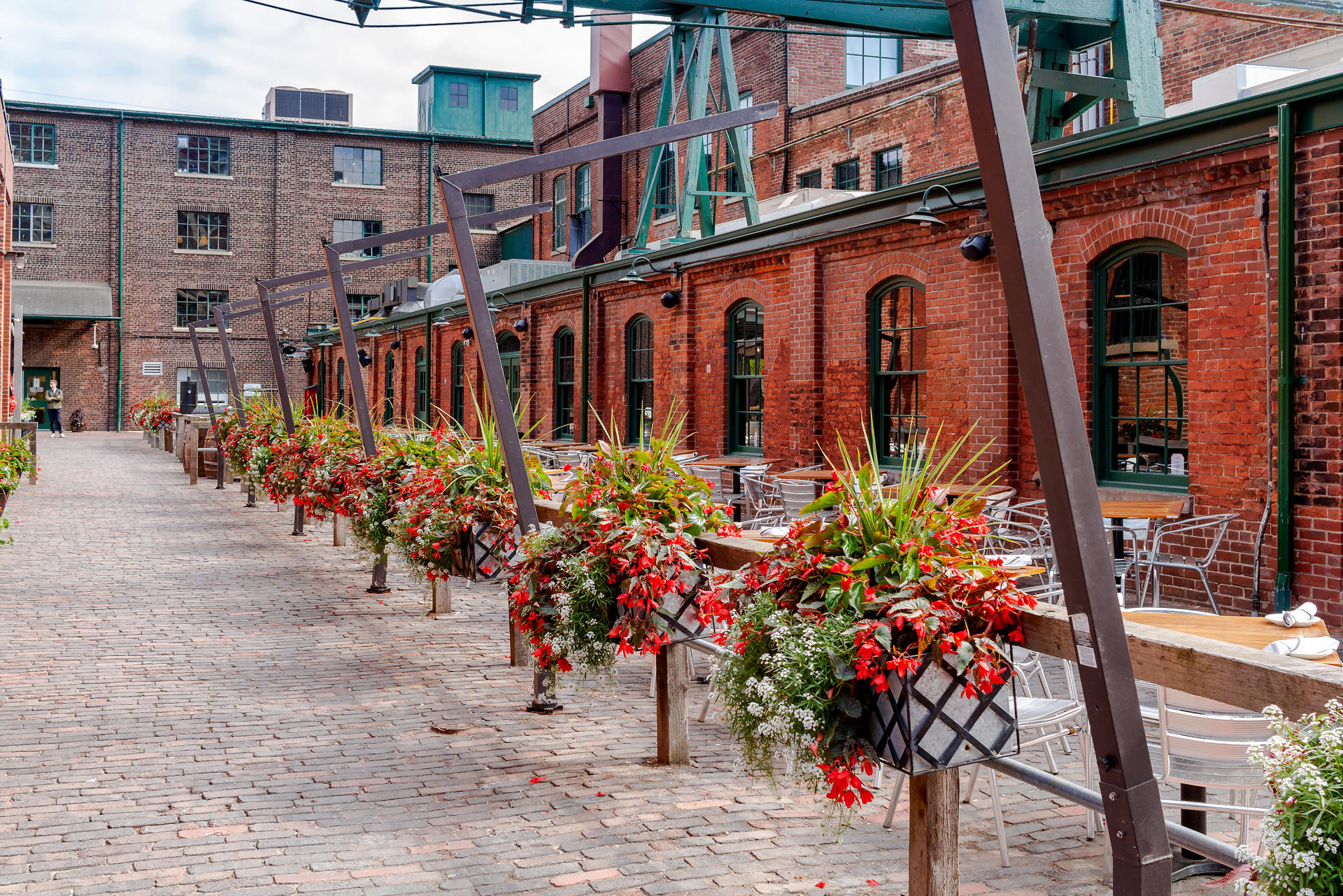
One of the district’s greatest strengths is its architectural cohesion. Unlike many revitalized areas, the Distillery District preserved the integrity of its Victorian industrial structures. Iron beams, arched windows, and internal courtyards create an atmosphere reminiscent of historic European quarters.
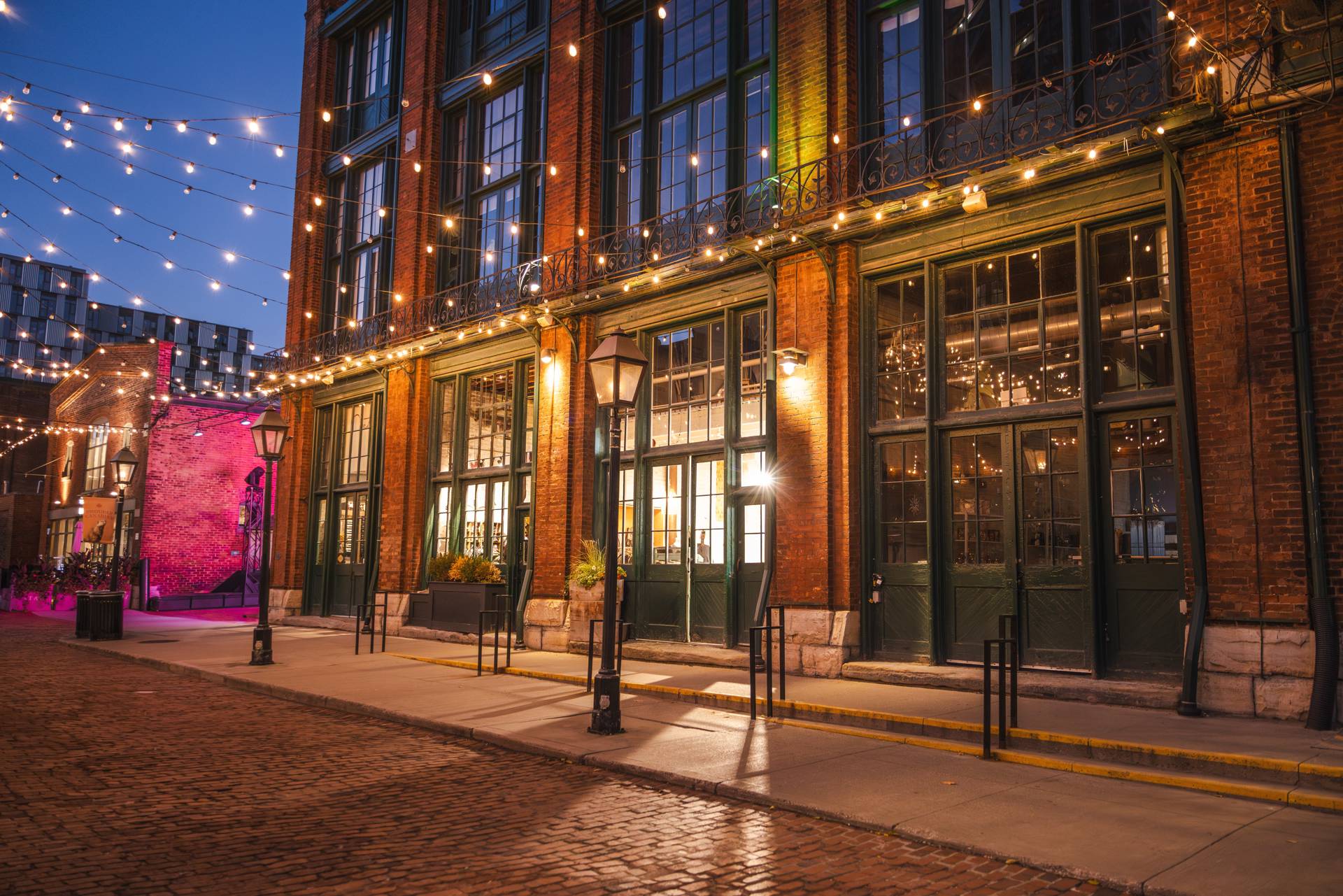
From a time-efficiency standpoint, the Distillery District is remarkably practical. Its compact layout allows visitors to explore it in approximately 2 to 3 hours. A smart strategy is to visit in the late afternoon, when natural light intensifies the rich red tones of the brick and stay through dusk to appreciate the soft ambient lighting that transforms the neighborhood.
For travelers who value clear logistics and efficient planning, here are key details:
Distillery District
Toronto, CA
In a city known for its modern skyline and cultural diversity, there is a corner where time seems to pause among red brick buildings, cobblestone streets, and elegantly restored industrial structures: the Distillery District. Located just east of Downtown Toronto, this historic neighborhood is one of North America’s finest examples of urban revitalization. For travelers arriving in Ontario through Arajet’s expanding destination network and looking for what to do in Toronto while maximizing every minute, the Distillery District offers a strategic, compact, and deeply atmospheric experience that can be explored in just a few hours without sacrificing cultural richness.
Important information before your visit
- Location: East of Downtown Toronto, near Lake Ontario
- Distance from the Financial District: Approximately 2 kilometers (1.2 miles)
- Distance from Toronto Pearson International Airport: Around 28 kilometers (17 miles)
- Estimated travel time from the airport: 30–45 minutes, depending on traffic.
- Access: Free; it is a public pedestrian district
- Recommended visit duration: 2 to 4 hours.
- Best time to visit: Late afternoon or during seasonal events.
The ideal visit is about half a day if you wish to combine the stroll with art galleries and cultural spaces. For tighter itineraries, a two-hour visit is enough to capture its architectural essence.
For photography enthusiasts, the district offers unique compositions. The straight industrial lines of former warehouses contrast beautifully with Victorian ornamental details. Cobblestone streets add texture in the foreground. At night, warm string lights installed between buildings create a romantic and cinematic ambiance.
In winter, the district becomes especially magical during seasonal markets and decorative light installations. Snow dusting the red brick creates a striking visual contrast. In summer, open-air patios and internal courtyards foster a lively yet relaxed atmosphere.
Beyond its aesthetics, the Distillery District plays an important role in the Toronto experience: it demonstrates the city’s ability to reinvent industrial spaces without losing historical identity. It stands as an example of how heritage can be seamlessly integrated into contemporary life.
The space also invites pause. Sitting in one of the inner courtyards and observing the steady flow of visitors creates the sensation of being in a European square—without leaving Canada. The atmosphere feels sophisticated yet accessible.
When planning your visit, comfortable footwear is recommended due to uneven cobblestone surfaces. Depending on the season, appropriate outerwear is essential, especially in winter when temperatures can drop significantly.
As night falls, the Distillery District transforms. Subtle lighting highlights arches, balconies, and historic chimneys. The mood becomes more intimate and artistic—ideal for a final evening stroll before returning to your hotel.
When you leave the district and reenter modern Downtown Toronto, the contrast is immediate. Glass-and-steel skyscrapers replace Victorian façades. Yet the memory of the neighborhood lingers as one of the most authentic experiences of the journey.
For those flying with Arajet and seeking what to do in Toronto in a smart, cultural, and well-organized way, the Distillery District is an essential stop. Pedestrian-friendly, compact, and rich in historic character, it delivers a distinct urban experience in just a few well-spent hours. It proves that making the most of your time also means walking among century-old brick buildings, discovering contemporary art in former warehouses, and understanding how Toronto honors its industrial past while moving confidently into the future with creativity and elegance.
For photography enthusiasts, the district offers unique compositions. The straight industrial lines of former warehouses contrast beautifully with Victorian ornamental details. Cobblestone streets add texture in the foreground. At night, warm string lights installed between buildings create a romantic and cinematic ambiance.
In winter, the district becomes especially magical during seasonal markets and decorative light installations. Snow dusting the red brick creates a striking visual contrast. In summer, open-air patios and internal courtyards foster a lively yet relaxed atmosphere.
Beyond its aesthetics, the Distillery District plays an important role in the Toronto experience: it demonstrates the city’s ability to reinvent industrial spaces without losing historical identity. It stands as an example of how heritage can be seamlessly integrated into contemporary life.
The space also invites pause. Sitting in one of the inner courtyards and observing the steady flow of visitors creates the sensation of being in a European square—without leaving Canada. The atmosphere feels sophisticated yet accessible.
When planning your visit, comfortable footwear is recommended due to uneven cobblestone surfaces. Depending on the season, appropriate outerwear is essential, especially in winter when temperatures can drop significantly.
As night falls, the Distillery District transforms. Subtle lighting highlights arches, balconies, and historic chimneys. The mood becomes more intimate and artistic—ideal for a final evening stroll before returning to your hotel.
When you leave the district and reenter modern Downtown Toronto, the contrast is immediate. Glass-and-steel skyscrapers replace Victorian façades. Yet the memory of the neighborhood lingers as one of the most authentic experiences of the journey.
For those flying with Arajet and seeking what to do in Toronto in a smart, cultural, and well-organized way, the Distillery District is an essential stop. Pedestrian-friendly, compact, and rich in historic character, it delivers a distinct urban experience in just a few well-spent hours. It proves that making the most of your time also means walking among century-old brick buildings, discovering contemporary art in former warehouses, and understanding how Toronto honors its industrial past while moving confidently into the future with creativity and elegance.