
From a distance, the castle commands respect. Its stone walls adapt to the irregular shape of the hill, creating a stepped silhouette that seems to grow organically from the terrain itself. This is not a symmetrical or ornamental fortress—it was built to resist. That sense of functionality is evident even before entering. The pale stone, worn by centuries of Caribbean sun and wind, reflects a long history of confrontations and military strategy.
The ascent begins at the base of the hill, where the tropical heat can feel intense. As you climb ramps and stairways, the city gradually unfolds beneath you. Each level gained reveals a broader view of Cartagena, from the historic center to the coastline. The physical effort is moderate but steady, and it forms an essential part of the experience. This is not a passive visit—it is an active exploration.
The Castle of San Felipe was constructed to defend the city from both maritime and land-based attacks. Its design includes sloped walls, internal tunnels, and elevated platforms from which approaching threats could be monitored. Walking through these spaces allows visitors to understand the defensive logic of the era. It is not merely about observing old stone structures—it is about seeing how military engineering adapted to climate, terrain, and constant threats.
One of the most fascinating features of the castle is its network of underground tunnels. These narrow, strategically designed passageways served communication and defense purposes. Today, walking through them adds a distinct sensory layer to the visit. The temperature drops slightly, sounds echo differently, and the light becomes dimmer. The feeling is that of being inside a once-operational defensive system that shaped the fate of the city.
From a sensory perspective, the experience blends intensity with contemplation. The Caribbean sun illuminates the walls with almost blinding clarity, while the breeze at higher levels offers welcome relief from the heat. The sound of wind mixes with faint echoes inside the tunnels. From the highest points, the view is expansive and revealing: the Walled City, the sea, and the modern skyline appear like a three-dimensional map.
The value of the castle lies not only in its architecture but also in its historical context. It was the setting for decisive battles that shaped control of the Caribbean. Understanding its strategic importance helps visitors connect the fortress to Cartagena’s broader role as a key colonial trade port. That connection transforms the visit into both a visual and educational experience.
From a time-efficiency standpoint, the Castle of San Felipe is a highly practical stop. In approximately two hours, visitors can explore its main levels, walk through the tunnels, and enjoy panoramic views without feeling rushed. This concentration of history and scenery makes it an ideal choice for travelers seeking to maximize their itinerary.
For those who value clear logistics and budget-conscious planning, here are some practical details to consider:
San Felipe de Barajas Castle
Cartagena, CO
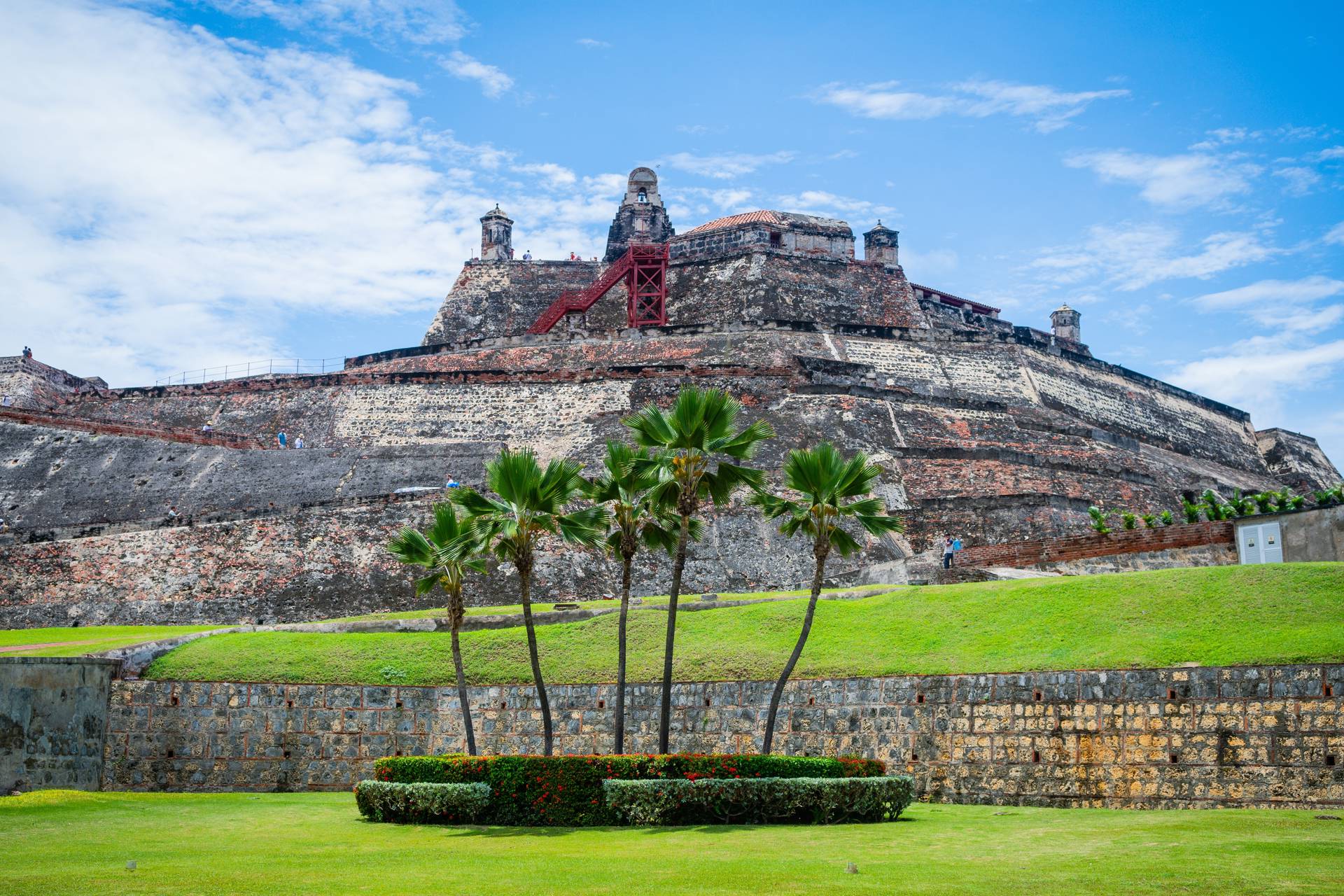
Cartagena is a city best understood through its defensive system, and no structure symbolizes that history more clearly than the Castle of San Felipe de Barajas. Rising above the city on a strategic hill, this military complex dominates the urban landscape and serves as a reminder that Cartagena was, for centuries, one of the most coveted ports in the Caribbean. For travelers arriving in Colombia through Arajet’s destination network and searching for what to do in Cartagena in a way that is strategic, culturally enriching, and time-efficient, the castle offers a powerful experience: military history, panoramic views, and defensive architecture concentrated in a single visit.
Important information before your visit
- Distance from the Walled City: approximately 2 kilometers
- Estimated travel time: 10–20 minutes from the historic center.
- Admission: entrance fee required
- Recommended visiting hours: morning through mid-afternoon.
- Best time to go: early morning or late afternoon, when temperatures are less intense
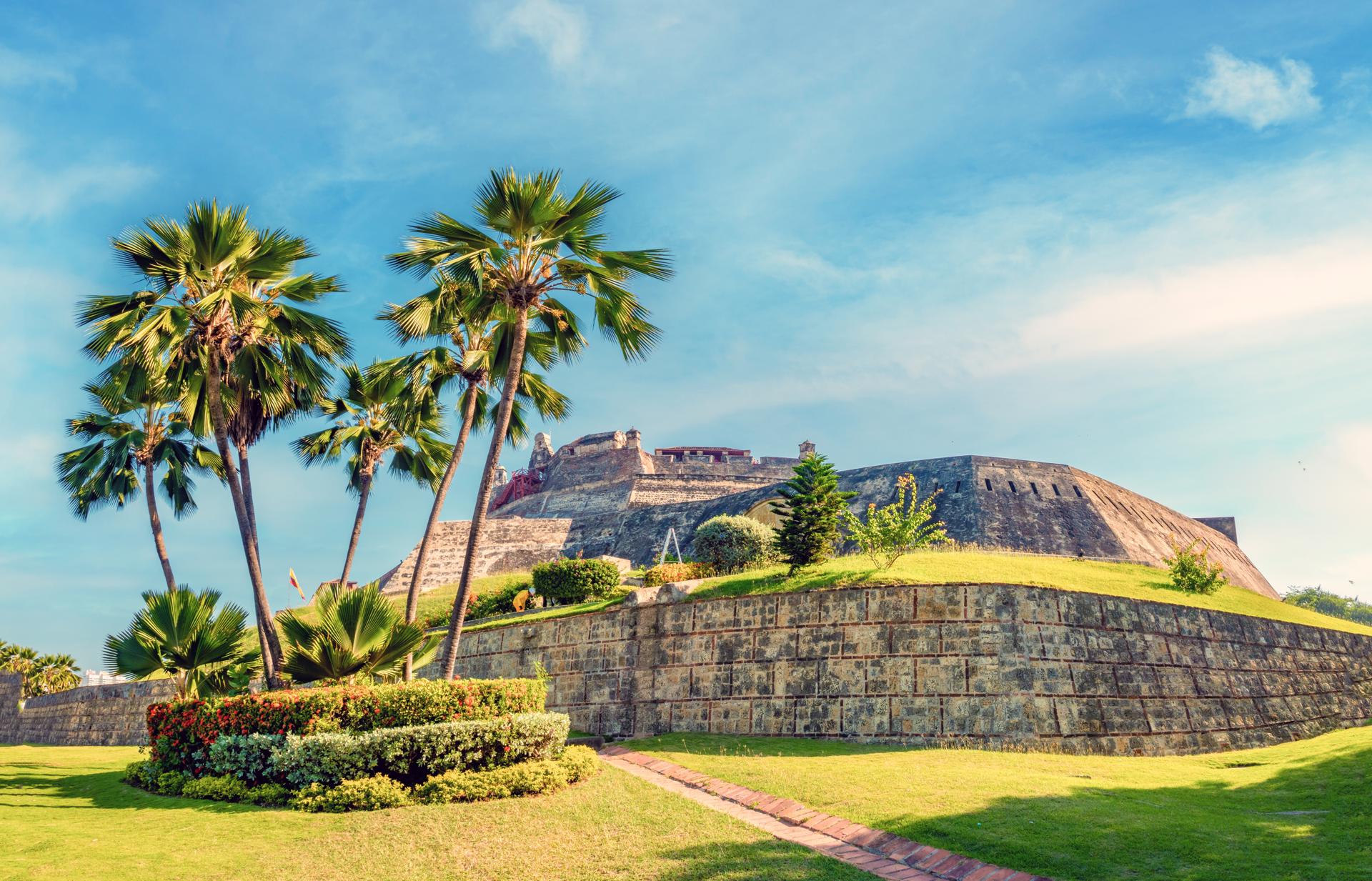
The ideal visit typically lasts between 1.5 and 2 hours. This allows time to explore different levels, pause to admire the city from above, and walk through the tunnels without rushing. History and military architecture enthusiasts may easily extend their stay to explore details more deeply.
For photography lovers, the castle offers striking compositions. Diagonal wall lines, contrasts between pale stone and deep blue sky, and sweeping city views create visually powerful images. Sunrise and sunset are especially favorable, as golden light softens textures and adds depth to shadows.
In terms of preparation, lightweight and breathable clothing is highly recommended, along with sun protection. The heat can be intense, especially around midday. Comfortable shoes are essential for navigating uneven surfaces and climbing ramps. Bringing water is key to staying hydrated throughout the visit.
Beyond its historical significance, the Castle of San Felipe plays a symbolic role in any trip to Cartagena: it represents the city’s resilience and strategic importance in the Caribbean. Its commanding presence reminds visitors that Cartagena was not only a place of trade and colonial beauty, but also a site of conflict and defense.
The experience also invites reflection on the relationship between architecture and power. Every wall, tunnel, and elevated platform reflects a logic of protection and control. Walking through these spaces is like tracing a strategy carved directly into stone.
As you descend and return to the city, Cartagena appears different. The walls of the historic center gain deeper meaning once the full defensive system is understood. The city is no longer just a collection of colorful streets—it reveals itself as a carefully planned stronghold shaped by centuries of strategy.
For those flying with Arajet and searching for what to do in Cartagena in a smart, culturally enriching, and well-organized way, the Castle of San Felipe de Barajas is an essential visit. Accessible, visually striking, and rich in history, it offers one of the most complete experiences in Colombian tourism within just a few hours. It proves that making the most of your time sometimes means climbing to the places where history was defended stone by stone—and where today the Caribbean can be seen from an entirely new perspective.
For photography lovers, the castle offers striking compositions. Diagonal wall lines, contrasts between pale stone and deep blue sky, and sweeping city views create visually powerful images. Sunrise and sunset are especially favorable, as golden light softens textures and adds depth to shadows.
In terms of preparation, lightweight and breathable clothing is highly recommended, along with sun protection. The heat can be intense, especially around midday. Comfortable shoes are essential for navigating uneven surfaces and climbing ramps. Bringing water is key to staying hydrated throughout the visit.
Beyond its historical significance, the Castle of San Felipe plays a symbolic role in any trip to Cartagena: it represents the city’s resilience and strategic importance in the Caribbean. Its commanding presence reminds visitors that Cartagena was not only a place of trade and colonial beauty, but also a site of conflict and defense.
The experience also invites reflection on the relationship between architecture and power. Every wall, tunnel, and elevated platform reflects a logic of protection and control. Walking through these spaces is like tracing a strategy carved directly into stone.
As you descend and return to the city, Cartagena appears different. The walls of the historic center gain deeper meaning once the full defensive system is understood. The city is no longer just a collection of colorful streets—it reveals itself as a carefully planned stronghold shaped by centuries of strategy.
For those flying with Arajet and searching for what to do in Cartagena in a smart, culturally enriching, and well-organized way, the Castle of San Felipe de Barajas is an essential visit. Accessible, visually striking, and rich in history, it offers one of the most complete experiences in Colombian tourism within just a few hours. It proves that making the most of your time sometimes means climbing to the places where history was defended stone by stone—and where today the Caribbean can be seen from an entirely new perspective.