
The experience begins even before reaching land. The ferry ride from Toronto’s waterfront is an essential part of the visit. As the boat pulls away from the dock, the skyline gradually unfolds in full scale. The CN Tower, glass-and-steel skyscrapers, and the nearby stadium align in a composition that feels almost cinematic. This brief crossing over Lake Ontario—approximately 10 to 15 minutes—offers a clean, open perspective that immediately reveals the city’s architectural magnitude.
Historically, the islands were formed by sandbars shaped by lake currents. During the 19th and early 20th centuries, they became a popular recreational retreat for Toronto residents, complete with hotels, picnic areas, and beaches. Although many early structures disappeared over time, the area’s leisure-oriented spirit remains intact.
From a sensory perspective, the contrast with Downtown is immediate. Traffic noise fades, replaced by wind moving through trees, birdsong, and the gentle rhythm of waves along the shoreline. The air feels fresher and lighter, especially during the warmer months.
Once on the islands, visitors discover a network of paved trails ideal for walking or cycling. Green spaces alternate with sandy beaches that face either the open lake or the city skyline. The sensation is one of complete openness—the horizon stretches endlessly, while the city stands in the distance as a dramatic backdrop.
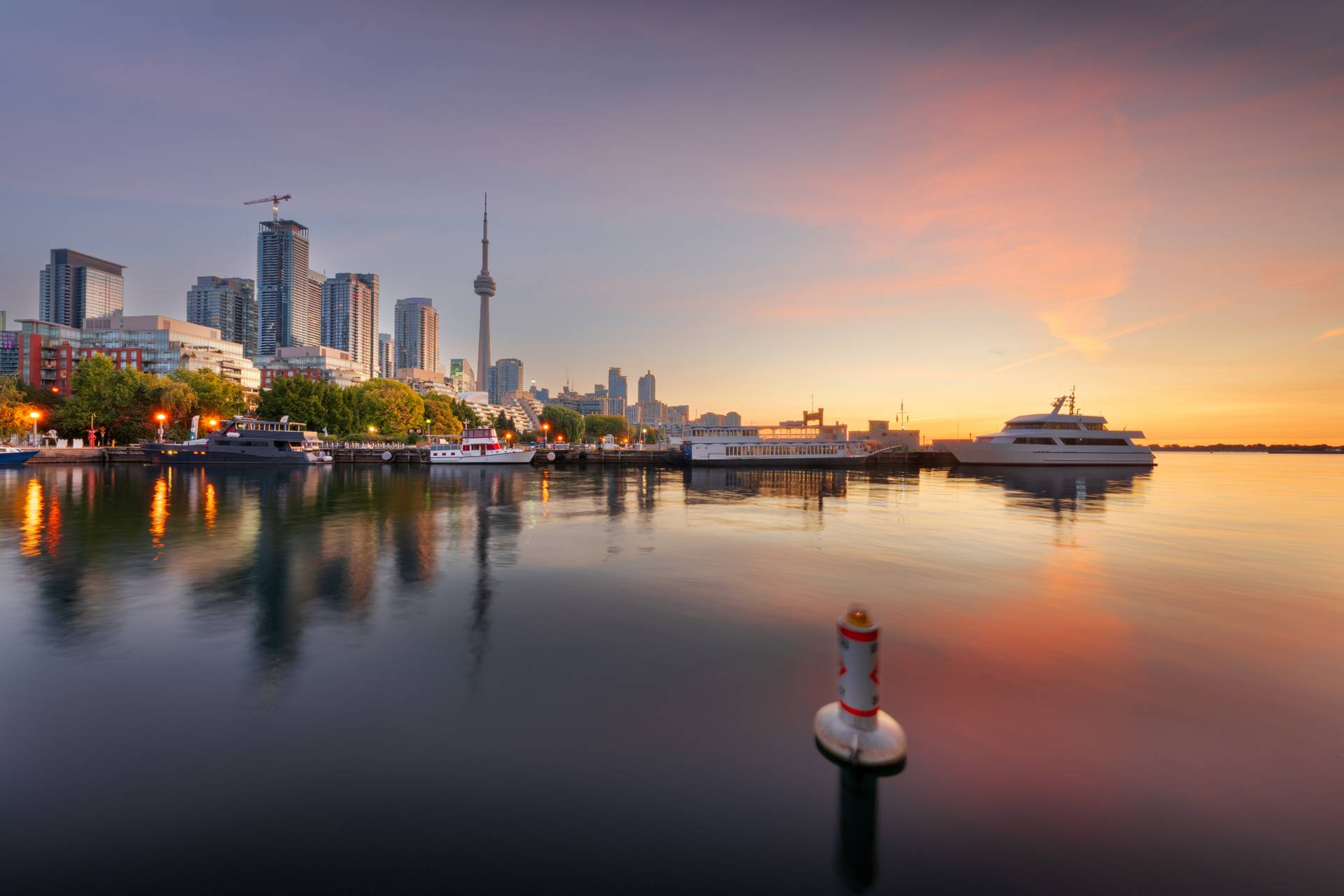
One of the greatest highlights of the Toronto Islands is the unobstructed skyline view from the northern shoreline. From here, Toronto appears almost like a perfectly arranged model: aligned buildings, reflections shimmering on the water, and the CN Tower rising as a focal point. It is, without question, one of the best locations to capture the city’s iconic image.
From a time-efficiency standpoint, the visit is highly practical when well planned. A smart strategy is to take a morning or early afternoon ferry, explore one of the main islands by foot or bicycle, and remain until sunset to photograph the changing light over the skyline.
For travelers who value clear logistics and efficient planning, here are key details:
Toronto Islands
Toronto, CA
Facing Toronto’s imposing skyline, beyond the constant movement of Downtown and the vertical profile dominated by Canada’s most iconic tower, lies an unexpected oasis: the Toronto Islands. This interconnected archipelago forms a natural barrier between the city and Lake Ontario, offering urban beaches, tranquil trails, and one of the most spectacular panoramic views of the skyline. For travelers arriving in Ontario through Arajet’s growing destination network and looking for what to do in Toronto while maximizing every minute, the Toronto Islands provide a strategic, nature-focused, and visually striking experience that blends disconnection and photography into a perfectly organized half-day escape.
Important information before your visit
- Location: Archipelago off Downtown Toronto on Lake Ontario
- Distance from ferry terminal: Approximately 1.5 kilometers (1 mile) by water
- Ferry duration: 10–15 minutes
- Distance from Toronto Pearson International Airport to ferry terminal: About 28 kilometers (17 miles)
- Estimated travel time from the airport: 30–45 minutes, depending on traffic.
- Access: Ferry ticket required; beaches and park areas are free
- Recommended visit duration: 3 to 6 hours.
- Best time to visit: Spring and summer, or sunset for panoramic views.
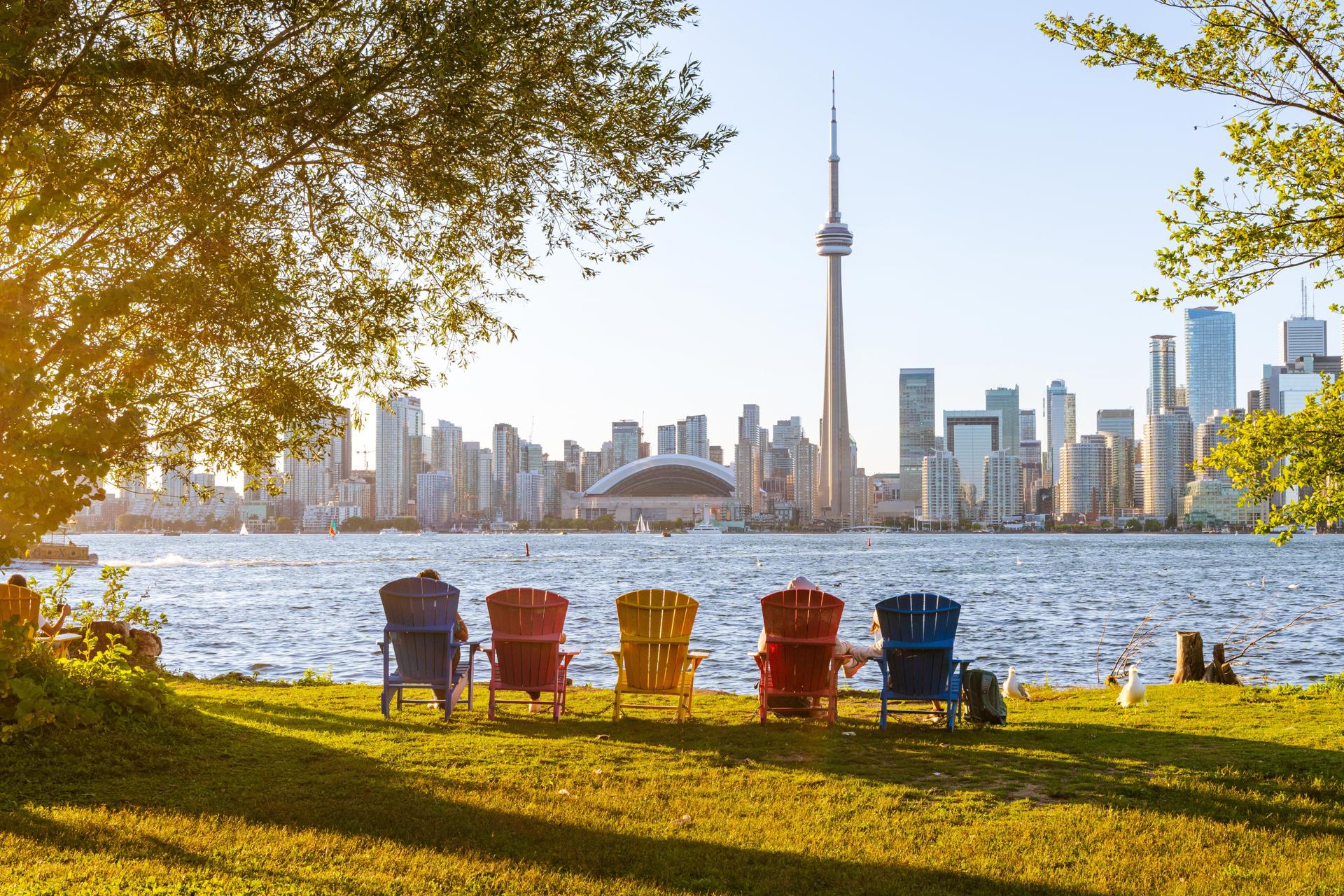
The ideal timeframe is half a day, allowing time to stroll without rush, relax in green spaces, enjoy the urban beaches, and return before nightfall. For those seeking a slower pace, it can easily extend into a full-day excursion.
For photography enthusiasts, the islands offer a privileged vantage point. The southern perspective of the skyline provides a wide, unobstructed composition rarely found elsewhere. During golden hour, buildings reflect warm tones across the water. On clear days, visibility allows surprisingly sharp architectural detail.
In summer, beaches become lively gathering spaces where residents and visitors relax under the sun. In autumn, colorful foliage adds red and amber hues to the landscape. Even in winter—though access may be weather-dependent—the sight of a partially frozen lake creates a striking minimalist scene.
Beyond natural beauty, the Toronto Islands play a key role in understanding the city: they reveal Toronto’s intimate relationship with Lake Ontario. From the islands, it becomes clear how the water functions both as a natural boundary and as a recreational extension of the urban environment.
The experience also invites intentional pause. Sitting by the lake and gazing toward the open horizon generates a sense of calm rarely found in a metropolis of this scale. It becomes a strategic breath within an otherwise energetic urban itinerary.
For preparation, comfortable footwear is recommended for walking or cycling. Sun protection is essential in summer due to open exposure. A light layer can be useful year-round, as lake breezes may intensify even on warm days.
As evening approaches, the return ferry ride delivers one of the most memorable moments of the day. The skyline begins to illuminate as the sun sets behind the city. Reflections shimmer across the lake, creating a powerful and elegant visual transition.
Upon arriving back in Downtown Toronto, the perception of the city feels different. After observing it from a distance, its scale and design appear more harmonious and comprehensible.
For those flying with Arajet and seeking what to do in Toronto in a smart, nature-driven, and well-organized way, the Toronto Islands are an essential stop. Accessible, panoramic, and strategically positioned across from the skyline, they deliver one of the destination’s most complete experiences in just a few well-spent hours. They prove that making the most of your time also means crossing Lake Ontario, breathing fresh air by the water, and watching Toronto rise majestically between nature and modern architecture.
For photography enthusiasts, the islands offer a privileged vantage point. The southern perspective of the skyline provides a wide, unobstructed composition rarely found elsewhere. During golden hour, buildings reflect warm tones across the water. On clear days, visibility allows surprisingly sharp architectural detail.
In summer, beaches become lively gathering spaces where residents and visitors relax under the sun. In autumn, colorful foliage adds red and amber hues to the landscape. Even in winter—though access may be weather-dependent—the sight of a partially frozen lake creates a striking minimalist scene.
Beyond natural beauty, the Toronto Islands play a key role in understanding the city: they reveal Toronto’s intimate relationship with Lake Ontario. From the islands, it becomes clear how the water functions both as a natural boundary and as a recreational extension of the urban environment.
The experience also invites intentional pause. Sitting by the lake and gazing toward the open horizon generates a sense of calm rarely found in a metropolis of this scale. It becomes a strategic breath within an otherwise energetic urban itinerary.
For preparation, comfortable footwear is recommended for walking or cycling. Sun protection is essential in summer due to open exposure. A light layer can be useful year-round, as lake breezes may intensify even on warm days.
As evening approaches, the return ferry ride delivers one of the most memorable moments of the day. The skyline begins to illuminate as the sun sets behind the city. Reflections shimmer across the lake, creating a powerful and elegant visual transition.
Upon arriving back in Downtown Toronto, the perception of the city feels different. After observing it from a distance, its scale and design appear more harmonious and comprehensible.
For those flying with Arajet and seeking what to do in Toronto in a smart, nature-driven, and well-organized way, the Toronto Islands are an essential stop. Accessible, panoramic, and strategically positioned across from the skyline, they deliver one of the destination’s most complete experiences in just a few well-spent hours. They prove that making the most of your time also means crossing Lake Ontario, breathing fresh air by the water, and watching Toronto rise majestically between nature and modern architecture.